About
Gonzaga’s Jesuit, Catholic, Humanistic education will challenge and inspire you.
The People For & With Others LLC, in partnership with the Center for Community Engagement (CCE), is designed for students who are excited to participate in community service around Spokane. If you are looking for a place that supports your willingness to care for and serve others, then this LLC is for you!
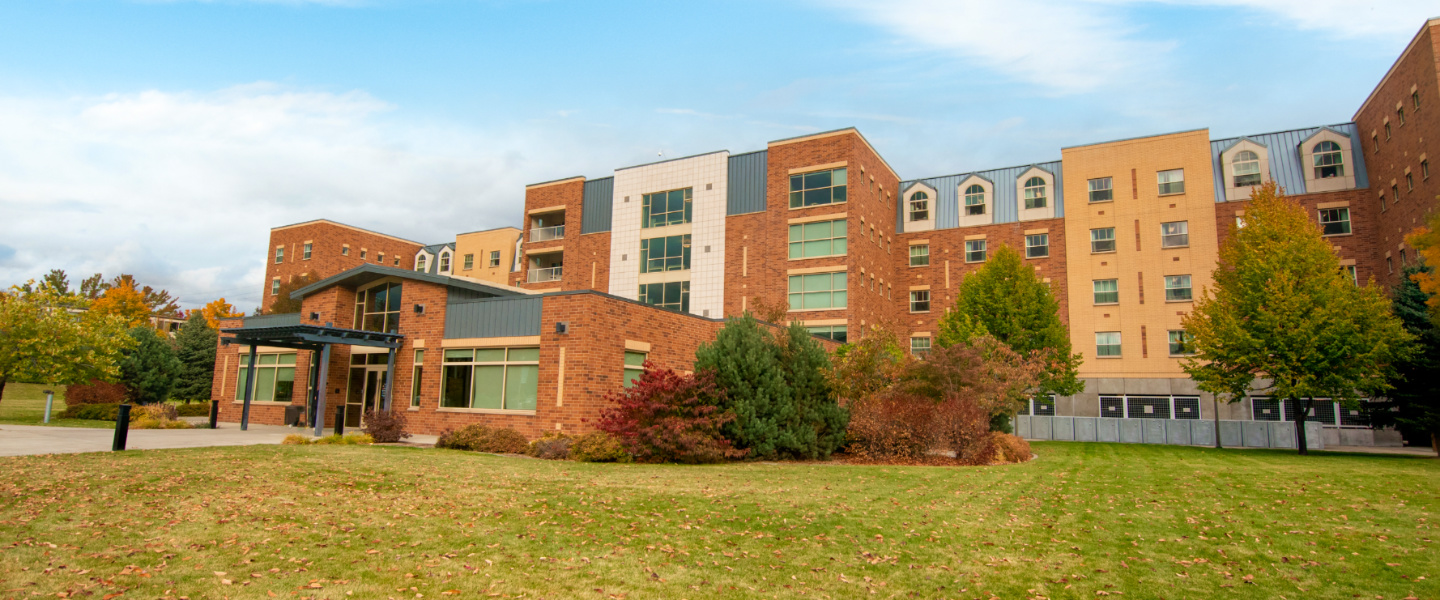
 | The People For and With Others 1st Year LLC is located in Coughlin Hall | The People For and With Others 1st Year LLC is tentatively located on the 2nd Floor | |
 | 1st Year People For and With Others LLC residents can only be roommates with residents in the following LLCs:
| Linked Course Required for LLC Residents:
|
Amy Pistone: Dr. Pistone is an Associate Professor in the Classical Civilizations Department (which means she studies Ancient Greece and Rome!) and she's very excited to teach this new Magis Seminar about "breaking bread" and the long history of hospitality and people coming together over shared meals. When she isn't thinking about food, she works on a wide range of topics related to Ancient Greece including sports, Greek tragedy, and Sappho (one of the only ancient female poets whose work survives). She also really likes to study the use of Greek mythology and culture in modern pop culture (most recently, in the Wonder Woman comics). And when she isn't doing any of those things, she's usually hanging out with her very cute dog or refereeing college football games.
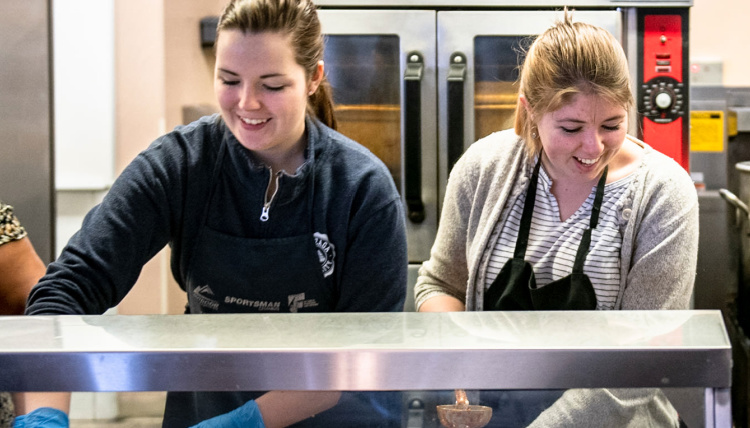
"The People For and With Others LLC is about finding your place in your community, how you impact it, and then giving back to it. It is a great way to learn how to grow as a person and inspire others to do the same." - Kaitlin L., 2021-22 RA
RELI 193, FYS: Difference and Dialogue - Bridges to Civic Pluralism. (Sec. 02 LLC) Americans are perhaps more polarized than ever, political, ethnic, and religious others being portrayed as agents of irrationality and evil. Most people are siloed in their echo chambers with news and social media algorithms just repeating back to them what one already believes. Those we disagree with we quickly dismiss by assigning simplistic, disparaging labels. Even if we avoid politics and religion in conversations, previously “safe” topics like the weather or one’s health can quickly become an angry monologue to the other about climate change or the merits of vaccines. Yet if we are going to solve real problems, we need to learn to talk to one another, be in authentic relation with each other across seemingly ocean wide chasms of difference in ways that affirm the dignity and infinite value of each other, as we grow friendship and stand for justice for all people, not just our own tribe. In this course we will support each other to practice dialoguing to learn about, from and with each other, and consulting together to better solve important issues. Dialogue topics include majors and careers, religious diversity, partisan politics, race, social class, gender, sexuality, disabilities, ageism, and the environment. Most classes will require preparation of a personal reflection on one’s background with an issue and an individual response to a short reading (2-4). Students are invited to become “bridgebuilders” in which they too become intentional protagonists of building unity in diversity in community. The crowning project is working in a small team to organize, advertise, facilitate, and reflect upon two “bridgebuilding” gatherings related to one of the above topics. Grades are not on a curve; students who conscientiously complete each requirement can expect full credit for the course.
Dr. Daniel Azim Pschaida was born (accidentally) at home, three weeks late, yet within an hour of his mother’s water breaking in Southern California. He grew up playing soccer, basketball, and tennis, reading, and learning the clarinet. His family heritage comes from all over Europe and family’s religious background includes Catholics from his father, Jewish from his mother, and African American Southern Baptist from his stepfather, while he was raised in the Bahá’í Faith. At around age fourteen he had a "one-sixth life crisis" and realized he should figure out the meaning of life before he got any closer to his death bed, which set him on a path to study the various religions and philosophies and find out what they said about this most pressing issue, which likely also was the springboard for his current career teaching about religious diversity in a pluralistic way. Finding high school too random, he left after his sophomore year, attending a community college. He volunteered in the Mapuche region of Chile when 18-19, then returned to finish a Child Development degree at San Diego State University. After pursuing a teaching credential, he taught at an international school in Macau, China for a period. At that time, he was looking to establish model schools based on what we know about how children grow, develop, and learn. In 2006, he entered graduate school, earning his M.A. in Religious Studies in 2009, focusing on Islam and Christianity and processes of conversion to these religions. In 2015, he completed his PhD at the University of California Riverside, also in Religious Studies, focusing on Religions in America and Islamic Studies, writing his dissertation on Muslim students' ways of articulating and living their religion on campuses in California (& University of Washington). He taught at Northern Arizona University for two years before moving to his wife Tiara's home city of Spokane. He has taught religious studies at Gonzaga since 2018.
Professor Pschaida’s research and teaching focus on questions of cosmopolitanism—becoming global citizens who in the American microcosm of our planet’s diversity come together across religious, racial, class, gender, and sexual lines who learn with and from each other’s heritage, traditions, religions, and philosophies to create communities of deep friendships that solve problems and nurture human development. He explores these questions in contexts of religion in America, Islamic studies, and Bahá’í studies.
When he is not preparing lessons, grading, writing research papers, or meeting with students, you can find him out hiking a mountain, reading, trying new restaurants with his wife, studying Persian and Arabic, visiting the literature of the Harry Potter world, and most often shooting hoops on the courts of the Zag Field House in Rudolf Fitness Center.
Gonzaga Faculty Profile: https://www.gonzaga.edu/college-of-arts-sciences/faculty-listing/detail/pschaida