Research Opportunities

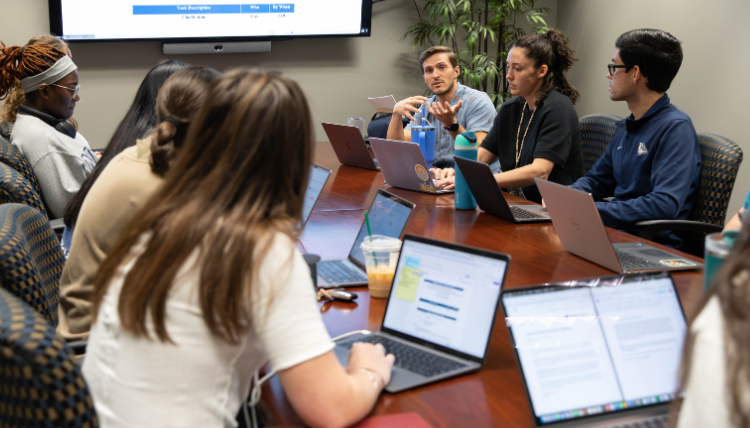
Students and faculty from the School Psychology department sit around a table with their laptops open

Research in the School Psychology Department focuses on applied, collaboratively constructed, and actionable projects. Through research teams, students gain experience, such as creating survey documents and promoting recruitment to research conceptualization and intervention creation. Our program promotes single subject, quantitative, and qualitative work across many domains.

Research teams may be aligned with one faculty member or be held by multiple members. Faculty in the School Psychology program have interests that include student mental health interventions, promoting a positive school climate for underserved students, implementing equitable systems, investigating current trends of practice in school psychology, and behavioral change.

Importantly, research teams in our department serve as places of community because connecting with peers and engaging in projects that align with your interests is key. Research can be fun! The SEE (Systems, Emotions, and Equity in Schools) research team, held weekly by Dr. Maggie Cox and Dr. John Gallo promotes engagement in research that investigates the implementation of mental health and behavioral systems to benefit minoritized students. During the 2025-2026 school year, 10 students (~30% of our on campus students) attended and contributed to the team. Students ranged from first year Ed.S. students to fifth year Psy.D. doctoral candidates. Notably, two projects have been funded by competitive internal grants at Gonzaga University, and many members have presented their contributions at local, state, and national conferences.

Explore Gonzaga University's research database.

Please read more about our students’ experiences with research…

School Psych Student

Kiannah, Class of '27

"I have absolutely loved my experience being a part of the school psychology department’s research team. Since joining, I have been able to participate in various faculty-led research and community engagement projects. Some of the work I have specifically done has included co-leading an Acceptance and Commitment Therapy-based counseling intervention for high school students, submitting a research proposal for implementing a mindfulness-based yoga interventions to probationary youth, and supporting the delivery of professional development sessions to school teams in the local area.

My favorite experience has been participating in a community engagement project that involves administering reading assessments and providing reading intervention services to high school students at an alternative education center. These experiences have not only allowed me to gain much greater understanding of developing and conducting research, but they also have provided me with many opportunities to directly apply skills I have learned throughout my coursework, particularly with more diverse student populations. My favorite part of being a research team member has been the ability to work more closely with students from other cohorts and develop relationships with faculty members in a context outside of weekly classes."

School Psych Student

Makayla, Class of '28

"True to the Gonzaga culture, there is an emphasis on service within the School Psychology program. The School Psychology research team has welcomed me into various hands-on community outreach projects in my first semester here. It has been humbling to apply the skills we learn in the program, and serve in classrooms within our community.

I have gained experience administering CBM’s, as well as building and implementing reading interventions within these schools. This application of skills has expanded my understanding of the impact our work as school psychologists has on schools. Watching these students make academic progress is the most rewarding as it opens up so many avenues of opportunity for them to explore their personal passions.

In addition to the experience the professors can speak from, I am grateful to have the opportunity to collaborate with other Ed.S. and Psy.D. students from the research team, as well. I feel so fortunate to learn from their lived experiences and apply their knowledge to projects we are working on. Collaborating on these service projects has allowed me to work closely with professors and peers to ensure we have the best plan to move forward with for these students. I am grateful to have experienced a collaborative effort while working on these projects because their knowledge benefits and broadens my outreach moving forward."