
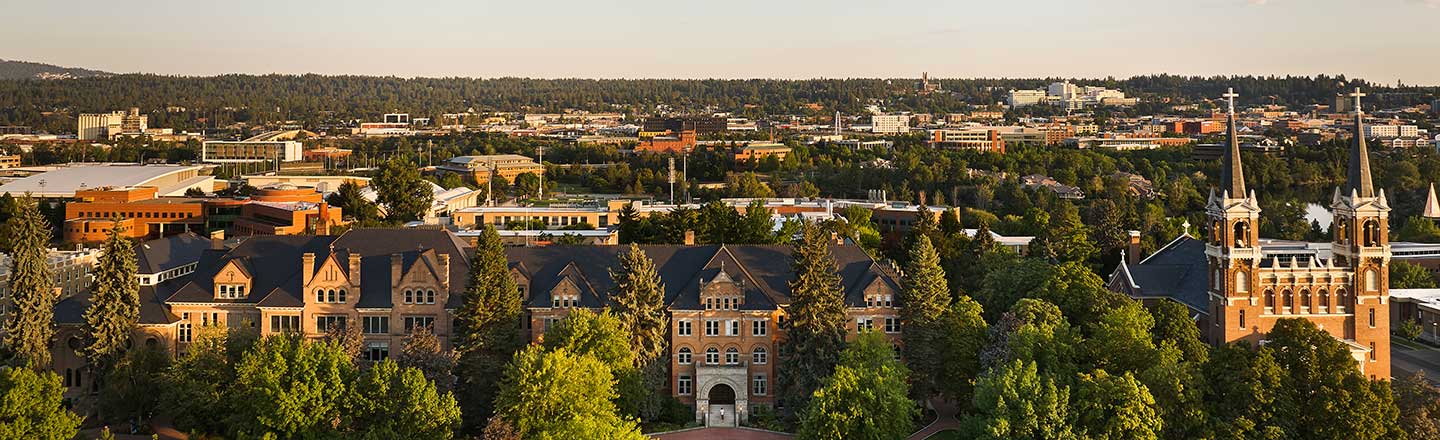
Arial view of college campus.
Presidential Task Force on Accompaniment, Safety & Belonging

A University United Against Racism

Our Guiding Commitment

During the spring 2026 semester, students reported language and behaviors that were racist and threatening at on- and off-campus events. These incidents have left some students, particularly those from historically underrepresented and marginalized communities, feeling unsafe and unwelcome in our Gonzaga community. This is unacceptable, and antithetical to Gonzaga’s Mission as a Catholic, Jesuit, humanistic institution of higher learning where all are welcomed and valued.

Gonzaga is committed to fostering a campus climate where every student experiences respect, dignity, and a true sense of belonging. Racism, harassment, and threats are taken seriously and addressed fairly and as swiftly as possible. Student agency and well-being guide our work as we strive for meaningful, lasting change that strengthens strengthen safety, belonging, and care across our University.

Work Completed to Date

On March 5, 2026, President Katia Passerini formed the Presidential Task Force on Accompaniment, Safety and Belonging and charged it with working with students, faculty and staff to address the incidents reported, as well as overarching concerns about safety and campus climate raised by student groups such as the Black Student Union (BSU) and Unity Alliance of Cultural Clubs (UACC).

Key accomplishments of the Task Force are listed below. For more detail, read the Summer 2026 Progress Report.

Top Accomplishments

1. Increased Transparency Around Accountability and Outcomes

  • The incidents reported last spring were addressed through the University's established review and student conduct processes, which have now concluded. Because federal privacy laws protect the privacy of student records, the University cannot comment on individual cases or outcomes but can confirm that the matters were processed consistent with University policies and procedures. Conduct processes have been clarified and Conduct Outcome Guidelines have been posted. These are intended to provide greater transparency about how concerns are addressed and what outcomes may result after considering the specific facts and circumstances of a particular conduct case.
  • Flowcharts have been posted that explain how bias reports, Title IX complaints, harassment and discrimination cases, campus security responses, student conduct cases, and referrals for the Resolution Center for Student Conduct and Conflict (RC3) move through university processes.  When a report is submitted, the corresponding process flowchart will be shared with the reporting individual. The flowcharts will be updated and republished as workflows evolve.

2. Created a One-Stop Reporting System

  • A single "Report a Concern" portal now allows students, faculty and staff to submit Title IX, harassment and discrimination, BIAS, and student conduct concerns through one centralized entry point. The link is available in the footer of all gonzaga.edu and myGU webpages.

3. Created a Paid Student Liaison Position

  • This position will help strengthen communication between the Unity Alliance of Cultural Clubs and Gonzaga University leadership. It was created to support channels for dialogue, transparency, and trust across the University community and ensure student perspectives remain central to conversations about campus climate and student experience. The position was posted in late August and has been promoted with a web story and social media posts from Gonzaga University on Instagram Story (expired), Facebook and LinkedIn.  Applications are due September 25, 2026.

4. Implemented a Unified Case Management Approach

  • Conduct, bias, harassment and discrimination, and Title IX cases are being handled in a shared, web-based case management system to improve coordination, communication, tracking, and follow-up. This will help ensure relevant information is shared across departments and reduce the time it takes to adjudicate cases and determine outcomes.

5. Affirmed the University's Stance Against Racism

  • Multiple presidential communications and the Task Force's guiding commitment statement affirmed Gonzaga's condemnation of racism and its Mission-based commitment to dignity, respect, and belonging.

6. Updated Technology and Digital Conduct Policies

  • The updated Information Technology Use Policy clarifies that University-issued email address (i.e. Zagmail) may not be used to engage in any behavior or communication that violates the law or University policy, including harassment or discrimination. This means that using a University-issued email address to create an account on a social media platform (such as Fizz) and posting harassing, discriminatory or obscene content is a violation of this policy and may result in disciplinary action as prescribed in the Student Code of Conduct, the Gonzaga University Policies and Procedures Manual, the Faculty Handbook, and other applicable documents.

7. Redesigned Orientation and Welcome Programs Around Belonging

  • New Student Orientation and Fall Welcome Weekend were restructured to emphasize belonging, community connection, inclusion, mission, and human dignity.

8. Enhanced Student Leadership and Inclusive Excellence Training

  • Established a framework for a campus-wide Inclusive Excellence training model for student leaders. Program planning will occur during the Fall 2026 semester with a goal of pilot implementation in the Spring semester. Cross-campus membership includes the Payne Center for Leadership Development (PCLD), Housing & Residence Life (HRL), Lincoln LGBTQ+ Resource Center (LLRC), Student Employment, Office of Inclusive Excellence, Center for Student Involvement (CSI), and the Unity Multicultural Education Center (UMEC).
  • Additional trainings included: programs on belonging and community offered during Summer Orientation sessions; a keynote speaker during Welcome Weekend; and a Restorative Practices training pilot introduced during the August Community of Leaders program, followed by monthly circles occurring through fall 2026.

9. Reformed Student Governance Structures

  • Gonzaga Student Body Association (GSBA) bylaws, constitution, and code of ethics have been revised, incorporating feedback from students, staff, and administration. These revisions allow GSBA to better address any conduct concerns that may arise involving GSBA in elected and hired positions. Work will occur during the fall semester to determine processes between offices (including CSI, GSBA and the Resolution Center for Student Conduct and Conflict) that will allow full implementation of the code of ethics changes.

10. Expanded Recruitment, Retention and Student Support Pathways

  • The Task Force highlighted a broad network of existing recruitment and student success initiatives, including the Unity Scholars Program, Gonzaga Access Pledge, Cristo Rey Scholarship program, BRIDGE, Launch Northwest, Catalyst College Immersion, Tribal Relations programming, and numerous K-12 partnerships in Spokane. These efforts engage hundreds of students annually, creating pathways to higher education for students from historically underserved communities. The need and resources for an expansion of the BRIDGE are being explored and increased pathways for local students and transfers are being developed.
  • Data show measurable growth in outreach and enrollment outcomes. Since Fall 2020, the number of Black students who have applied to Gonzaga has increased 41%, from 474 to 668, and confirmed enrollments have risen 61%, from 33 to 53. Applications from Spokane County students increased 79%, from 343 to 411, while confirmed enrollments grew 92%, from 82 to 147. Among BIPOC students from Spokane County, confirmed enrollments nearly doubled from 26 to 50 during the same period.

Additional Accomplishments

  • Advanced several faculty-related initiatives including training on belonging and student support; developing action plans to address student concerns in the classroom; began development of faculty mentoring and classroom climate resources; and reviewing the Faculty Handbook expectations for professional responsibilities to students, classroom climate, and communication.
  • Campus Security & Public Safety officers completed hate-crime investigation training.
  • Dedicated belonging spaces were explored, yielding some potential options that will be shared with students this fall for feedback and to help inform next steps.
  • Initial planning for a Spokane cultural resource directory initiative with stakeholders from the City of Spokane. Continued progress will depend partially on engaging partners form the City, other local universities, and businesses in this shared initiative.
  • Donor-funded institutional resources have been identified to support a student publication. Potential options will be discussed with students this fall.
  • On September 15, the Spokane Police Department will meet with students on the importance of reporting crimes and hate or bias incidents, including those that occur off campus. They will also provide transparency on what happens after an incident is reported.

Making Gonzaga the best it can be, and ensuring every student is heard, respected, and a valued member of our community is work that all of us must do together, proactively and thoughtfully.

Mission-Centered Inclusive Excellence Leadership

Following University organizational changes, the Office of Inclusive Excellence has been added to the Office of Mission integration. This realignment grounds this work more deeply in our Catholic, Jesuit identity, reinforcing that the responsibility for fostering a culture of belonging is shared across all divisions and roles.

The following entities are coordinating this work.

Office of Inclusive Excellence

The Office of Inclusive Excellence, led by Dr. Nick Wright, assistant vice president of diversity,  continues to steward the implementation of the University’s Inclusive Excellence Strategic Plan, guide campus climate reporting and responsive action, and coordinate efforts that strengthen an institutional culture grounded in community, inclusion, and connection.

Title IX and harassment and discrimination work that previously resided within the Office of Inclusive Excellence has moved into an Equity & Compliance office within Human Resources that contains other internal audit and compliance functions. This shift makes the experience of reporting and investigation clearer and more supportive for our community. By bringing these functions together under one division, students, faculty, and staff have a straightforward path to raise concerns and access resources.

Academic and Administrative Affairs Council

The Academic and Administrative Affairs Council (AAAC) strengthens alignment between academic and administrative efforts to advance a culture of belonging for all members of Gonzaga University. In partnership with the Cabinet and President Passerini, the AAAC monitors institutional progress on inclusion and belonging across divisions, ensures that programs and services reflect our Jesuit commitment to cura personalis, and upholds shared accountability for this work.

To lead this work across the institution, the following individuals have been named as Special Advisors to the President and co-chairs of the AAAC:

  • Dr. Nick Wright, assistant vice president of diversity, will advance and guide inclusivity and belonging through Mission Integration.
  • Dr. Yoli Gallardo, dean of the School of Education, will guide implementation through the lens of academic leadership.

Distributed Leadership Model

Inclusive Excellence work is supported across multiple offices and programs, including:

  • Office of Inclusive Excellence
  • Unity Multicultural Education Center
  • Lincoln LGBTQ+ Resource Center
  • Student Affairs
  • Human Resources
  • Academic Affairs
  • Faculty leadership and advisory groups
  • Student leadership organizations and liaisons

Each University division is responsible for advancing Inclusive Excellence goals within its area and is accountable through established university leadership structures and AAAC oversight.

    Task Force Stories

    Reporting, Safety and Support Resources

    In Case of Emergency

    First and foremost, if you feel unsafe or witness an incident in which any member of the Gonzaga community is at physical risk or needing immediate attention, call Campus Security and Public Safety (CSPS) at 509-313-2222 or dial 911.

    Report Safety Concerns, Bias, Harassment, Discrimination and More

    Gonzaga University is committed to maintaining a safe, inclusive, and supportive campus community for every student, faculty, and staff member. If you have experienced or witnessed an incident involving safety, bias, discrimination, sexual misconduct, or a student in need of support, we encourage you to report a concern.

    Campus Safety Resources

    If you are concerned about your safety on campus or in the immediate vicinity of campus, there are several resources available:

    • If you are facing an immediate threat to life or property, call 911.
    • Security Escort (myGU) – Call 509-313-2222 to request a security escort to any part of campus and portions of the Logan neighborhood.
    • Blue Light Phones (myGU) – Available across campus. Use any of them to reach Campus Security and Public Safety immediately.
    • Rave Guardian app – a user-friendly resource to keep the Gonzaga community safe and informed around campus.
    • Security Patrols – Campus Safety and Public Security officers patrol campus, including inside buildings, 24 hours a day, 7 days a week, 365 days a year.
    • Spokane Police Department (SPD) – If you are off campus and are a victim or witness to a crime, call 911 or Crime Check at 509-456-2233.

    Student Care

    If you or someone you know is struggling due to racism and/or harassment, please make use of and share links to Gonzaga’s Student Support Resources. This portal offers access and guidance on the various resources available, including the Center for Cura Personalis, Counseling Services, Resolution Center, and University Ministry. Staff from one of these offices will contact you as soon as possible to assist.