
About
Gonzaga’s Jesuit, Catholic, Humanistic education will challenge and inspire you.
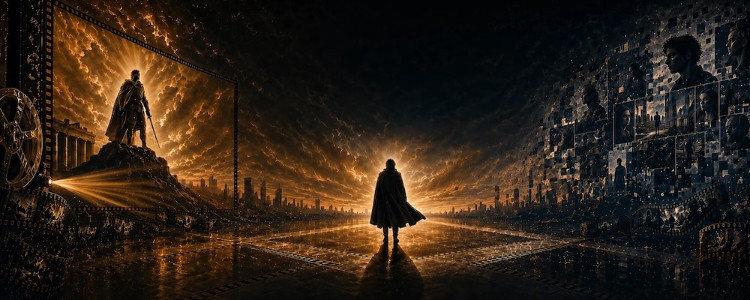
Film treatment of the traditional hero is at a crossroads. The harsh naturalism of recent decades has punctured idealizing portrayals of the heroic. Revisionist treatments of the hero have emphasized human limitations, mixed motivations, fallenness, and vicious degradation. At the same time, a relentless postmodern drive to find hints of the heroic at the margins has functioned as an implicit critique of traditional ideas of heroism especially in its masculine form, in effect offering a deconstructive genealogy of the “heroic” that exposes its deep flaws and uneven record in promoting human flourishing.
In recent years, however, hints have appeared of a rethinking of the idea of the heroic, such as the quiet and sacrificial family leader of A Quiet Place (Krasinski 2018), the stolid anti-Nazi conscientious objector of A Hidden Life (Malick 2019), a vulnerable and unironic Superman (Gunn 2025), the physically imposing but humble-hearted Knight of the Seven Kingdoms (Harris & Smith 2026), and the reluctant and self-effacing astronaut of this year’s Project Hail Mary (Lord & Miller 2026).
What are the continuing prospects for cinematic depictions of the hero and the heroic? Is the traditional hero dead? Can revisions and reboots of the heroic continue to refresh it in new and meaningful ways? In what ways can cinematic heroes challenge and inspire people today?
Students, faculty, staff, and community are invited to attend any of these events.
All events are FREE admission.
Monday, October 12, 7 pm: series opening plenary talk: Heroism for a New Age
Richard McClelland (Philosophy, Gonzaga University [retired]; coeditor of The Philosophy of Clint Eastwood [2014])
Wolff Auditorium (Jepson 114)
Tuesday, October 13, 7 pm: faculty panel: What is the Future of the Cinematic Hero?
Gloria I-Ling Chien (Religious Studies, Gonzaga)
Justin Martin (Asst Prof & Chair of Psychology, Whitworth University)
Amy Pistone (Classics, Gonzaga)
Dan Webster (movie critic, Spokane Public Radio)
Local Spokane film and culture experts discuss of the meaning and future of heroes in contemporary popular film.
Wolff Auditorium (Jepson 114)
Wednesday, October 14, 7 pm: student panel: Reconsidering the Cinematic Hero
Theodore Ferro “Reconsidering the Cinematic Hero: Jon Snow”
Olaf Solem “Admiration for the Complicated Hero”
Connor Comfort “True Heroism Is Service and Self-Sacrifice”
Hemmingson Auditorium (HEMM 004)
Thursday, October 15, 7 pm: plenary talk: Violent Redeemers in American Cinema: Are These the Heroes We Need?
John C. Lyden (Religious Studies, University of Nebraska at Omaha; author of Film as Religion: Myths, Morals and Rituals [2nd ed 2019]; editor of Routledge Companion to Religion and Film [2009]; editor of Journal of Religion & Film)
Wolff Auditorium (Jepson 114)
Friday, October 16, 7 pm: plenary talk: Good but Not Safe: The Promise of Heroic Re-enchantment
Micah Watson (Politics and Economics, Calvin University; coeditor of Film and Faith: Modern Cinema and the Struggle to Believe [2024])
Wolff Auditorium (Jepson 114)
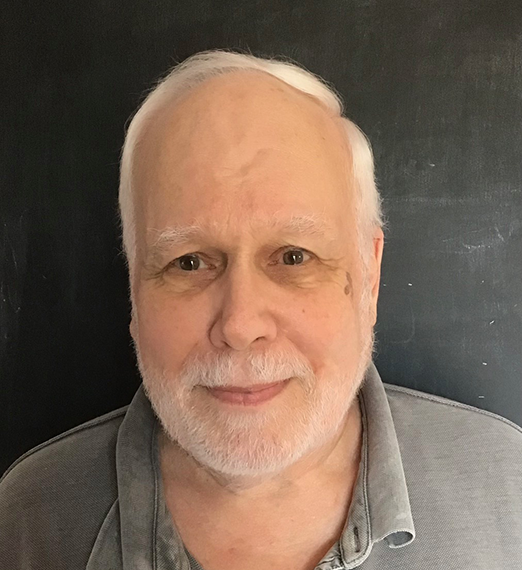
Richard McClelland grew up in southeast Washington State, attending public schools in Richland, Washington with a strong interest in mathematics and science. He graduated from Reed College (BA, 1970), and the universities of Oxford (MA, 1980) and Cambridge (PhD, 1985). He taught philosophy for 33 years, first at the University of Notre Dame (1981-1985), then at Seattle Pacific University (1985-1992), Seattle University (1993-1999), and finally at Gonzaga University (1999-2014), retiring as a tenured full professor in early 2014. In retirement he has continued an active program of research and writing for publication, with interests at the intersection of various topics in the philosophy of mind with relevant empirical sciences, including evolutionary psychology. His interest in philosophical examination of films led him to help organize the first Faith, Film, Philosophy Seminar at Gonzaga in 2007, to offer a public talk as part of Faith, Film, Philosophy in 2016, and also to co-edit The Philosophy of Clint Eastwood (University of Kentucky, 2014).
Analyzing the changing role of heroes in recent film requires a clear definition of “heroism,” but I argue such a definition is hard to come by. Instead, I will focus on description of heroic actions, particularly the basis of such actions in human neurobiology, especially as it is shaped by human evolution. Since the grounds for heroic action are found in the “human alarm system,” which is common to all human individuals, heroic action can be expected to be activated in just about anyone in the right circumstances, a view sometimes called the “banality of heroism.” I argue that there are persuasive reasons for this view, and examine implications of it for the social dimensions of human action stretching to groups, institutions, and cultures. Finally, I address several ways that aspects of heroic action find expression in films: in a bias toward depictions of male heroism and the magical form of heroism found in superhero films. I end with discussion of two groups of films that focus on the banality of heroism in highly realistic ways: two films of Tom Hanks (Bridge of Spies, 2015; Sully, 2016); and two films about resistance to totalitarian regimes (The Lives of Others, 2006; A Hidden Life, 2019).
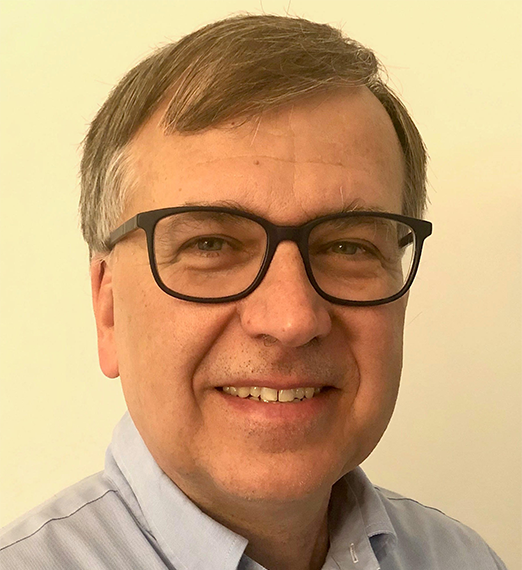
John C. Lyden is Chair and Blizek Professor of Religion and Film at the University of Nebraska at Omaha, where he has been teaching since 2020. He holds degrees in Philosophy and Theology from Wesleyan University, Yale University, and the University of Chicago. He has produced several key texts in religion and film: Film as Religion: Myths, Morals, and Rituals (NYU Press, 2003 and 2019), The Routledge Companion to Religion and Film (editor, 2009) and The Routledge Companion to Religion and Popular Culture (co-editor, 2015). He is also the co-editor of The Myth Awakens: Canon, Conservatism, and Fan Reception of Star Wars(Wipf and Stock, 2018). He has been editor of the Journal of Religion & Film since 2011, and in that role has attended the Sundance Film Festival several times to review films as well as participated in international conferences hosted by the Journal in Omaha, Toronto, Halifax, and Istanbul. He regularly teaches on Religion and Film and World Religions.
In their 2002 book, The Myth of the American Superhero, John Shelton Lawrence and Robert Jewett argued that there is a monomyth at work in American films in which the hero operates largely outside the law to deliver freedom and justice to the oppressed by means of violence. Although America did not invent the idea of heroes using violence to destroy evildoers and protect the weak, there is a distinctively American form of this myth which views America as savior of the world with the right to intervene violently whenever we decide. While I disagree with Lawrence and Jewett on a variety of points—notably, that these myths are inherently fascist or anti-democratic—I agree with them that, historically, Americans have had a great deal of confidence in the use of violence as a legitimate and effective means for conquering evil, and films have supported this myth. Yet many Americans have come to question this myth, as they increasingly doubt the justice of US military actions as well as the extent of violence done by law enforcement. This talk will examine how films have expressed both the myth of the violent heroic redeemer as well as critiques of this myth, and will consider the extent to which films demonstrate a shift in our cultural myths—which may give us models of heroes who do not require violence as they seek justice, as well as mercy, for others.
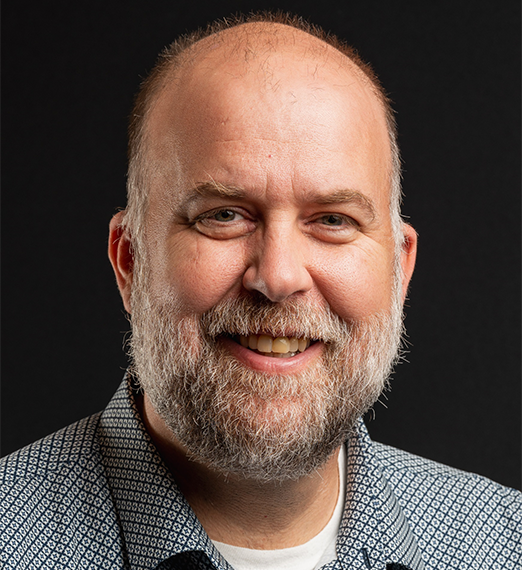
Micah Watson is Paul Henry Professor of Christianity and Politics at Calvin University, where he also directs the Henry Institute for the Study of Christianity and Politics and teaches in the Politics & Economics department. He is the coeditor of Film and Faith: Modern Cinema and the Struggle to Believe (2024) and Natural Law and Evangelical Political Thought (2012) and the coauthor of C.S. Lewis on Politics and Natural Law (2016) and Hopeful Realism: Evangelical Natural Law and Democratic Politics (2025). He teaches political theory, the American constitutional tradition, and the relationship between religion and politics.
Ancient wisdom has it that there is nothing new under the sun. We have always told stories, and always yearned for the new and surprising as well as the comforting and familiar. The child’s refrain of “Tell it again!” or “Show it again!” testifies to our hunger for heroic portrayals of courage, nobility, and virtue. And yet the pervasive brokenness and radical evil of the world can tempt us to think of child-like wonder and heroism as merely childish, and naïve. Disenchantment beckons, as brilliantly portrayed by characters like Unforgiven’s William Munny (Clint Eastwood) and Gone Girl’s Amy Dunne (Rosamund Pike). We should visit those disenchanted characters and places—they have lessons to teach too—but we should not live there. Heroic re-enchantment offers a better way, as seen through figures like Mattie Ross in True Grit (Hailee Steinfeld) and “the man” in The Road (Viggo Mortenson). Heroic re-enchantment acknowledges the brokenness without giving it the final word.
If you have any questions regarding the Faith, Film, and Philosophy 2026 Series, please contact David H. Calhoun, Gonzaga Faith & Reason Institute, at faithandreason@gonzaga.edu.