
About
Gonzaga’s Jesuit, Catholic, Humanistic education will challenge and inspire you.
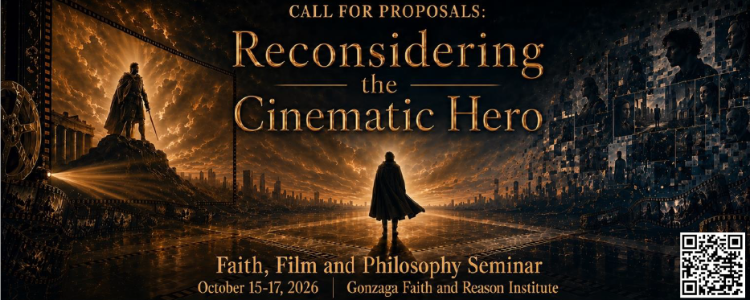
Film treatment of the traditional hero is at a crossroads. The harsh naturalism of recent decades has punctured idealizing portrayals of the heroic. Revisionist treatments of the hero have emphasized human limitations, mixed motivations, fallenness, and vicious degradation. At the same time, a relentless postmodern drive to find hints of the heroic at the margins has functioned as an implicit critique of traditional ideas of heroism especially in its masculine form, in effect offering a deconstructive genealogy of the “heroic” that exposes its deep flaws and uneven record in promoting human flourishing.
In recent years, however, hints have appeared of a rethinking of the idea of the heroic, such as the quiet and sacrificial family leader of A Quiet Place (Krasinski 2018), the stolid anti-Nazi conscientious objector of A Hidden Life (Malick 2019), a vulnerable and unironic Superman (Gunn 2025), the physically imposing but humble-hearted Knight of the Seven Kingdoms (Harris & Smith 2026), and the reluctant and self-effacing astronaut of this year’s Project Hail Mary (Lord & Miller 2026).
What are the continuing prospects for cinematic depictions of the hero and the heroic? Is the traditional hero dead? Can revisions and reboots of the heroic continue to refresh it in new and meaningful ways? In what ways can cinematic heroes challenge and inspire people today?
You are invited to take part in an engaging interactive conversation on “Reconsidering the Cinematic Hero” with a group of 12-15 film scholars and fans over the weekend from Thursday evening, October 15, to Saturday evening, October 17, 2025 on the campus of Gonzaga University, in Spokane, WA. The Seminar employs a unique approach in which scholars read one another's work prior to the seminar and then discuss that work in a collegial setting over a weekend. Participants of the Seminar have in past years found the conversations that take place very helpful for polishing work in progress to move it closer to publication.
DEADLINE EXTENDED: PROPOSALS ACCEPTED UNTIL FRIDAY, SEPTEMBER 4, 2026
Proposals are due via email to faithandreason@gonzaga.edu (.doc, .docx, or .pdf format) by midnight Friday, September 4, 2026
Get details about the seminar topic and instructions regarding proposal submission.
| Friday, September 4, 2026, 12 midnight: Proposals are due. Submit a proposal now. |
| Friday, August 21, 2026: Acceptances communicated |
| Wednesday, September 23, 2026: Final papers due for distribution to seminar participants |
| Thursday, October 15, 2026: Seminar begins |
The Faith, Film, and Philosophy Seminar is part of a week of film-related events on the Gonzaga University campus, the 2026 Faith, Film, and Philosophy Series, which include a series of lectures, a film screening and panel discussion, and a student panel, all related to the seminar theme of “Reconsidering the Cinematic Hero.” Members of the seminar are welcome to attend any of these events.
The Seminar will begin with a public lecture on Thursday night, October 15. A second public lecture will be delivered on Friday night, October 16. Both featured speakers will will participate in the seminar discussion.
Richard McClelland grew up in southeast Washington State, attending public schools in Richland, Washington with a strong interest in mathematics and science. He graduated from Reed College (BA, 1970), and the universities of Oxford (MA, 1980) and Cambridge (PhD, 1985). He taught philosophy for 33 years, first at the University of Notre Dame (1981-1985), then at Seattle Pacific University (1985-1992), Seattle University (1993-1999), and finally at Gonzaga University (1999-2014), retiring as a tenured full professor in early 2014. In retirement he has continued an active program of research and writing for publication, with interests at the intersection of various topics in the philosophy of mind with relevant empirical sciences, including evolutionary psychology. His interest in philosophical examination of films led him to help organize the first Faith, Film, Philosophy Seminar at Gonzaga in 2007, to offer a public talk as part of Faith, Film, Philosophy in 2016, and also to co-edit The Philosophy of Clint Eastwood (University of Kentucky, 2014).

John C. Lyden is Chair and Blizek Professor of Religion and Film at the University of Nebraska at Omaha, where he has been teaching since 2020. He holds degrees in Philosophy and Theology from Wesleyan University, Yale University, and the University of Chicago. He has produced several key texts in religion and film: Film as Religion: Myths, Morals, and Rituals (NYU Press, 2003 and 2019), The Routledge Companion to Religion and Film (editor, 2009) and The Routledge Companion to Religion and Popular Culture (co-editor, 2015). He is also the co-editor of The Myth Awakens: Canon, Conservatism, and Fan Reception of Star Wars(Wipf and Stock, 2018). He has been editor of the Journal of Religion & Film since 2011, and in that role has attended the Sundance Film Festival several times to review films as well as participated in international conferences hosted by the Journal in Omaha, Toronto, Halifax, and Istanbul. He regularly teaches on Religion and Film and World Religions.
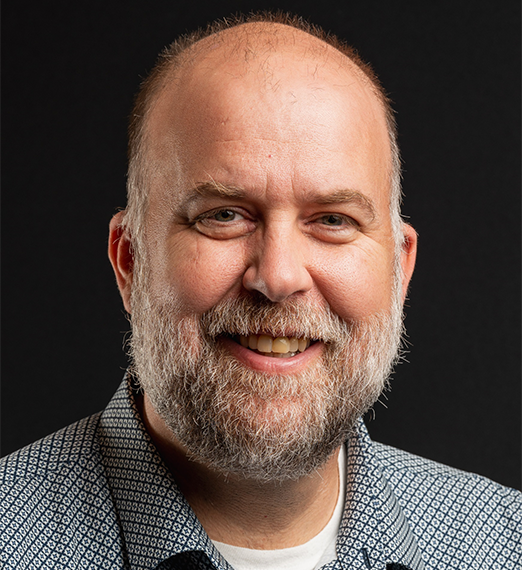
Micah Watson is Paul Henry Professor of Christianity and Politics at Calvin University, where he also directs the Henry Institute for the Study of Christianity and Politics and teaches in the Politics & Economics department. He is the coeditor of Film and Faith: Modern Cinema and the Struggle to Believe (2024) and Natural Law and Evangelical Political Thought (2012) and the coauthor of C.S. Lewis on Politics and Natural Law (2016) and Hopeful Realism: Evangelical Natural Law and Democratic Politics (2025). He teaches political theory, the American constitutional tradition, and the relationship between religion and politics.
If you have any questions or encounter any problems with submitting your proposal, please contact David H. Calhoun, Gonzaga Faith & Reason Institute, at faithandreason@gonzaga.edu.