Library Research
I. Introduction to the Foley Library
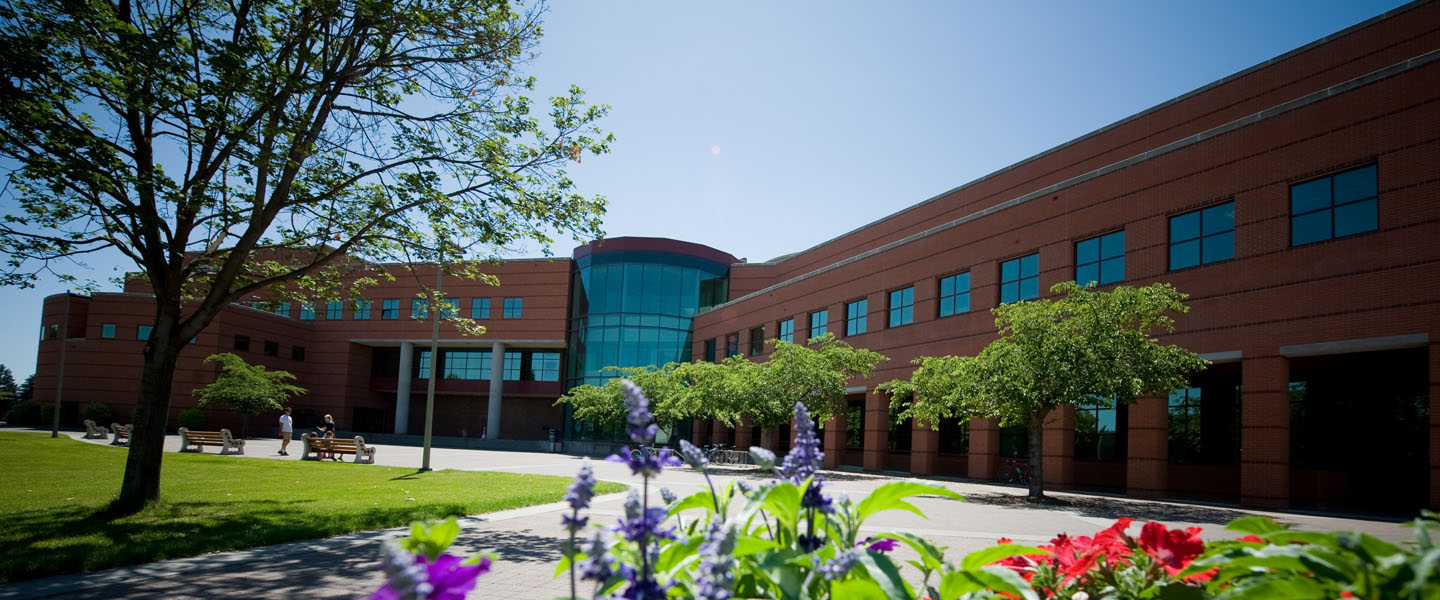
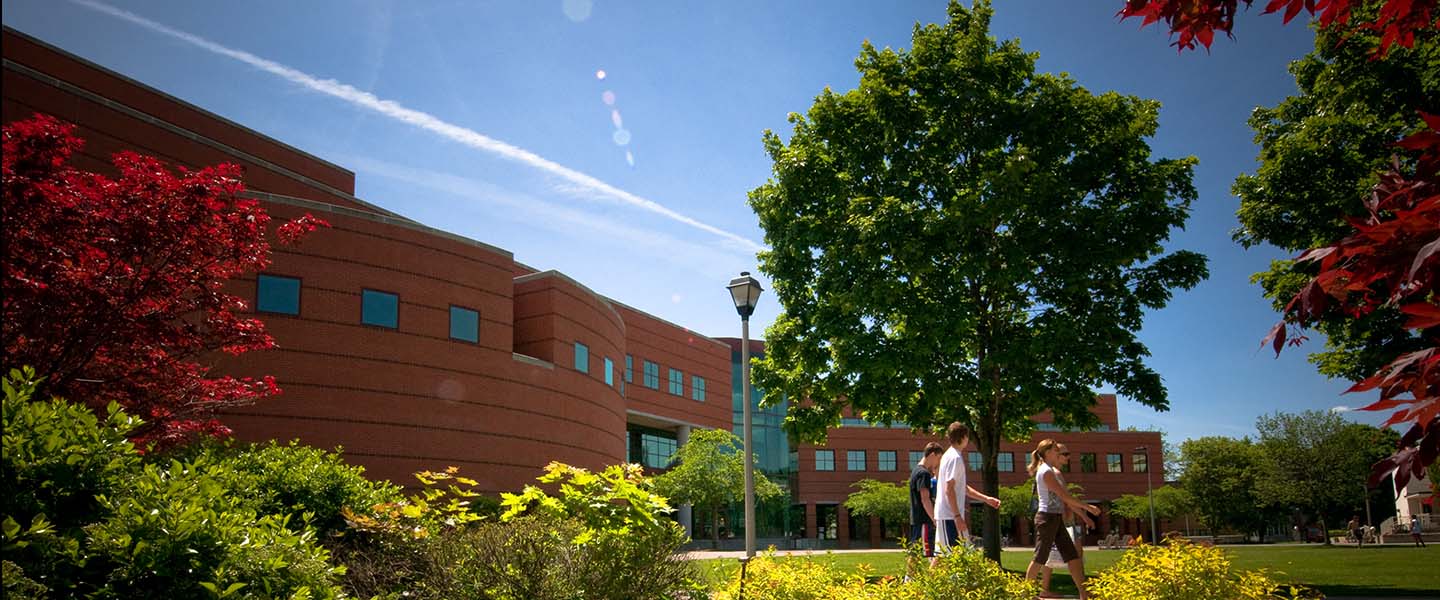
Welcome to the Foley Center Library, where our faculty and staff are here to assist you in all your research needs. The library has four floors accessible to the public. The lower level, first floor and second floor have student computer terminals for your use. In the lower level computer lab, you can do word-processing on both PCs and Macs.
When looking for materials in the stacks, please notice we use a call number system that may differ from other libraries you have used. This alpha-numeric system is the Library of Congress call number system. If you require assistance, please consult the staff of the reference desk.
The reference desk is staffed by a librarian during most operating hours. The reference librarian is there to help you in the research process. Librarians are trained to identify good sources of information, so please consult them. Also, near the reference desk is an information kiosk. The kiosk holds over forty handouts which can be used to navigate the library, the catalog, databases, and several academic subjects. These handouts can also be found online. Simply follow these directions:
- Go to the Foley homepage at www.foley.gonzaga.edu
- Select "Subject Guides" from the left-hand menu
- Select the preferred subject guide from the list.
Lower Level:
On this floor, you will find the periodicals, newspapers, and the student computer lab. There are also viewing stations for watching videos and DVDs and a large group study room that is available by reservation.First Floor:
On this floor, you will find the reference desk, circulation desk, government documents, and the A-BZ portion of the circulating collection.Second Floor:
On this floor is the C-QZ portion of the circulating collection, several small group study rooms and the Curriculum Center.Third Floor:
This floor has the R-ZZ portion of the circulation collection, and is a quiet study area. The floor is mostly occupied by the Special Collections department, located near the front of the stairwell.Copiers are available on the Lower Level, First Floor and Second Floor, with both Copy Card and coin-operated machines for your convenience. Networked printers on the Lower Level and First Floor supply the printing needs for the student computers and require a copy card for payment. Copy cards can be purchased at the Circulation Desk.
Remember:
Foley library has wireless access available for your laptop computer. In order to access the wireless network, your laptop will require a "wireless card." WCs can be purchased at the bookstore. You can also check out laptops from the circulation desk. Never leave your laptop unattended while in the library.II. The Library Catalog
What is it? What does it have in it?
The library catalog is a database which locates books, serials, videos, DVDs, government documents and curricular materials. The library catalog can be searched in a variety of ways, and instructions are provided below. If you are searching on a topic, the most useful way to search is by keyword.
By using the library catalog, you can find books, serials, videos, DVDs, government documents, and curriculum materials. The Foley library catalog also contains materials found only in the Chastek Law Library. Therefore, if you wish to find materials in the Foley library, choose the Only Foley option in the Quick Limit box.
Remember:
you can find the titles and locations of journals, magazines and newspapers in the library catalog, but in order to find articles, citations, or abstracts, you must use a database under the Indexes and Databases link on the Foley Library homepage.Searching options in the Catalog:
Keyword (Boolean)
searching retrieves words and phrases found anywhere (title, table of contents, publication information, etc.) Boolean operators (and, or, not) help to relate search terms and phrases. Using 'and' will broaden a search, while 'or' will narrow. 'Not' also narrows by excluding terms from a search.Keyword (relevance)
searching locates words and phrases found anywhere (title, table of contents, publication information, etc.) by relevance. Retrieved items are ranked by the number of occurrences of the keyword(s) in the record: the more occurrences the higher the relevance/ranking.Title Browse
allows searching by the title of a book or periodical or, by the first few words of the title. Make sure to exclude articles such as: a, an, the.Author Browse
allows searching by the author's last name followed by first name. If the correct spelling is not known, it is possible to search the first several letters of the name and browse through all retrieved items.Remember:
If you would like to have more searching options, click on "Advanced Search." If you want to limit your search according to language, location, or item type, try the "Set Limits" button.III. LOCATING PERIODICALS, NEWSPAPERS AND MICROFORMS IN FOLEY LIBRARY
Journal and newspaper articles often provide the most recent information available on a research topic. Databases of journal articles are frequently discipline-oriented in their coverage. For example, there are several specialized databases in health sciences, such as Medline and CINAHL. Some databases, however, offer a general overview of several academic subjects (Proquest, Academic Search Premiere). Use a database to identify journal articles and research studies on a topic.
When searching for these materials, your search will usually be a two-step process:
You will first search one of our databases, such as Proquest or Academic Search Premiere. If your article is NOT full-text, then:
You will print or copy the citation, and then search Periodicals at Foley to see if we have the journal. If we have the journal here in the building, there will be a link to In Foley. Clicking on that link will take you to the catalog record which will give you the holdings and location of the journal.
Searching Periodicals at Foley will also let you know if an article is available online through a different database from the one you were searching and provide links to that database.
If we do not have the journal online or in the library, then you can request the article via interlibrary loan (see section V).
All electronic databases hosted on the library site can be searched from any computer on campus; simply click on the database link and you will be re-directed automatically. When accessing the databases from off-campus, you will be asked for your login and password.
LOG IN INFORMATION:
"username" - your first initial followed by your last name up to 8 characters Ex: dcopperf
Your password is the first two letters of your "username" followed by the last four digits of your social security number (lowercase, no spaces, not your Gonzaga ID number). Ex: dc1234
Remember:
Databases and indexes often contain articles and/or citations of both popular and scholarly (or "peer-reviewed") periodicals. As you gather sources of information on your topic, you may wish to emphasize peer-reviewed sources. A peer-reviewed source, such as Current History or World Affairs, publishes articles which meet stringent academic standards. If you have questions about a particular source, please consult a librarian.Current periodicals:
Current periodicals are arranged by title (in alphabetical order) on the display shelves in the center of the lower level of Foley. Generally, you should find the most recent three to ten issues of a volume on the shelf covering few weeks, a few months, or most of a year, depending on how frequently the periodical is published.Bound periodicals:
Once a complete volume of a periodical has been received, the issues are bound in book covers or placed in boxes. When the volume is bound, it is assigned a call number. For this reason, you will need to look up the call number for the journal to find back issues. Call numbers are also provided in a paper list of current periodicals available at both the reference desk and the periodicals service desk.For the most current information, use the Periodicals at Foley option in the library catalog. You can search according to periodical title or keyword.
Microforms:
Many journals and newspapers are received by the library in micro-formats. Microfilm and microfiche are located in the microform cabinets under the stairs on the lower level. Microform reader/printer/scanner machines are available nearby. It is a good idea to ask for assistance when using microform items for the first time.Full-text periodical articles:
The full-text of many articles is accessible through the Foley homepage. ProQuest and Ebsco databases such as Academic Search Premiere provide full text of selected articles and can be accessed under "Indexes and Databases." The Periodicals at Foley option also provides links to full-text articles in other databases including Proquest, Academic Search Premiere, Business Source Premiere and many others.IV. Fundamental Library Resources: What are they? Where are they located?
Fundamental library resources are often referred to as "reference works". Reference works provide not only quick answers to easy questions (what is the annual rainfall of Seattle?), but detailed analysis for difficult questions such as: "how has Marxism influenced Catholic theology?" Reference works provide you with a general overview of your topic, directions for further research, and an understanding of key terms and ideas.
For best results
: You may want to note the key terms you encounter in reference works. These words will come in handy when you navigate Foley's databases for articles. By using a vocabulary list derived from reference works, your search will be more accurate and will take less time.RESEARCH HANDBOOKS / GUIDEBOOKS
Handbooks or Guidebooks will identify and discuss the reference sources, periodical indexes, bibliographies and major publications pertinent to research in your subject area. These sources will often give information on how to do research in a particular discipline. Example: Hoover's Handbook of American Business
ALMANACS
Almanacs are compendiums of information (mostly statistics) on countries, weather, events, and personalities. Use an almanac to find the capitol of a country or state, the annual amount of rainfall in Burma, or a short biography of President Bush. Example: 2002 World Almanac
BIOGRAPHICAL DICTIONARIES
Biographical dictionaries are compendiums of brief biographies of notable people. These small biographies are usually 500-2000 words in length. Example: Current Biography.
DIRECTORIES
Directories are used to find the contact information for associations, businesses, and people. Example: National Faculty Directory
DICTIONARIES, THESAURI, AND ENCYCLOPEDIAS
Specialized dictionaries and encyclopedias exist for many fields and disciplines. Use these sources to understand terminology, obtain background information, identify issues, and get names, dates and an initial literature review. Examples: Webster's Dictionary, Thesaurus of ERIC Descriptors, and Encyclopedia of Human Rights.
GOVERNMENT DOCUMENTS
Materials in these collections are selected by the library in support of curricular and community interests and include both Federal and Washington State documents. Many documents are filed by either the Superintendent of Documents (SuDOCS) number or by the Washington State documents number. Collections are located on the main floor of the Foley Center next to the Reference area. Example: Report to the President, by the President's Commission on Aviation Security and Terrorism
STATISTICAL SOURCES
Use statistical sources to gather relevant statistics and other numerical data on your topic. Statistics can be useful in proving the importance of a chosen issue or in justifying a hypothesis or viewpoint on an issue. Example: Statistical Record of Women Worldwide
Remember:
If you are looking for a subject specific source, consult the subject guides in the information kiosk, or consult a reference librarian for a list of sources most relevant to your research.
V. Interlibrary Loan
Interlibrary Loan (ILL) provides access to books, journal articles, and other documents not available online through one of our many full-text databases or in paper format here at Foley Center. These materials are borrowed from other libraries or ordered from document delivery sources. Interlibrary loan is a free service to you, but it is expensive for us, so we ask your cooperation in only ordering what is necessary for your research.
Before ordering a book through ILL, you should always check the library catalog to be sure it is not available in the library.
Before ordering an article, always check Periodicals at Foley to be sure the article isn't available in one of the journals Foley carries or in one of the full-text databases.
Remember:
In order to use Foley ILL service, you must register for an ILLiad account. http://illiad.gonzaga.edu/illiad/firsttime.html . You can use your ILLiad account to:1. Access request forms for books, articles or dissertations
2. Access your electronically delivered articles
3. Check on the status of your current ILL requests
4. Review the history of past requests.
When searching the databases if an article you need is not available online or through Foley Library, use the "Send request by ILLiad" link.
Allow plenty of time! Many articles will be delivered to your ILLiad account within a few days and books often arrive within 10-14 days, but hard-to-find items like dissertations can take much longer.
When books arrive, they are checked out on our circulation system, you are notified by email or telephone, and the book is held for pick-up at the Circulation Desk or if you live 50+ miles from Spokane, the book will be mailed to you.
Due dates for books borrowed from another library are determined by the lending library, not by Foley!!
Read the abstract of any article you are considering requesting to make sure it is worth your time!
Please limit your requests to 10-15 per week.
If you need assistance with the ILL process, contact the Foley ILL Department, at 509-323-6534.
VI. Researching Your Topic: A Few Recommendations
Define and narrow your topic.
Decide what you want to prove, find out, report or comment upon. Consider the goals of your report or paper. Will it present a particular viewpoint or opinion? Make your topic specific. If it is too broad, your paper will be superficial and it will difficult to deal with the subject adequately. For example, "leadership" is too broad a topic; "leadership styles for the elementary school principal" or "women as student leaders" is more focused.Articulate the goals of your project before you come to the library.
Be prepared to answer questions about how in-depth your research will be, what kinds of data you will be looking for, and what types of resources you need. Some examples might be:Place your topic within a discipline, such as business, history or education.
Some topics are best identified by these large categories; others will be more workable by considering a specific area within the discipline, such as Personnel Management, American History or Special Education.Design a plan that moves you from general sources to increasingly specific and specialized sources
. This method will lead you to library materials in various formats, including in print, databases, and Internet sources.05/05 –tk