Gonzaga History 1990-present
 crew
 [Gonzaga Crew, ca.1986]
For two weeks in July 1990, Gonzaga campus was the site of the Goodwill Games Athlete’s Village.  About 250 athletes from 21 countries were housed in Catherine/Monica.  Spokane hosted women’s volleyball, rhythmic gymnastics, and weightlifting.  The international village was to remain the athletes’ sanctuary; nobody except for athletes and workers were allowed in the village.  In all, 21 events were staged in seven Washington cities, including Spokane and Seattle.
     
Gonzaga began competing for the first time in rowing as an intercollegiate sport in 1990.  Previously, Fr. Mike Siconolfi got crew started in 1983, when it was only a club sport.  Excellent skills, coaching, and financial support from Claire and Bob McDonald led to Gonzaga’s success in the sport.  Today, both the men’s and women’s crew teams compete nationally. 
     
 Foley Center
[Foley Center, 1992]
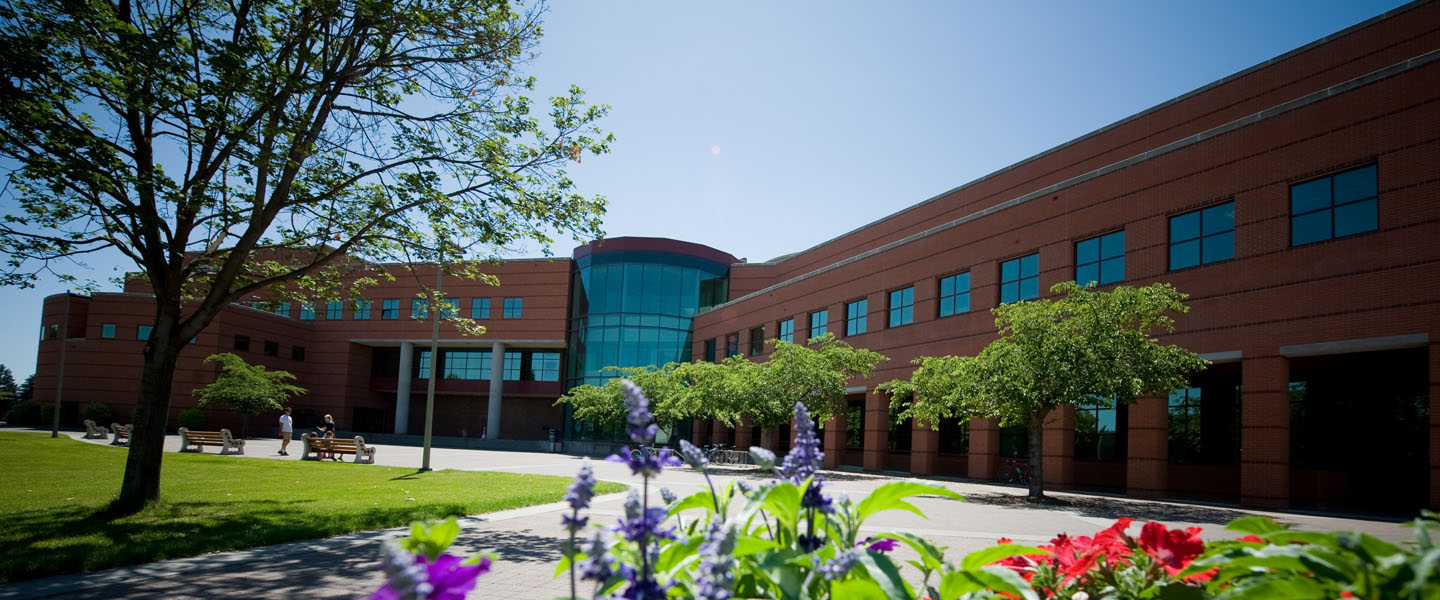
By the beginning of the 1990s, another new library was needed to accommodate the growing number of students (undergraduate enrollment in the fall of 1990 was 4,176) and the new technology and information resources. During planning and construction, the building was called Center for Information Technology Transfer (C.I.T.T).  However, it was officially named for Senator Tom Foley’s parents.  The Ralph E. and Helen Higgins Foley Center was dedicated in September 1992.  This 137,000 square foot facility cost $20 million.  Almost half of the money came from federal funds for the “library of the future.” The following fall the former library was converted to the Crosby Student Center. 
   
 Rosauer Center
 [Rosauer Center, 1994]
Named after donors Jessie and Mert Rosauer, in April 1994, the Rosauer Center opened to house Gonzaga’s School of Education.  This 34,800 square foot facility cost $4.3 million to build and equip. The building included faculty offices, technologically equipped classrooms, general purpose classrooms, seminar rooms, training rooms, computer labs, a media instruction room and counseling clinic.
     
 women's golf
[Women’s golf team, 1997]
Gonzaga formed its first women’s golf team in 1993.  At first there was limited funding and support for the team.  They would lose tournaments by as many as 200 strokes.  Travel destinations included Cheney, Moscow and Missoula.  Four years later, with increased funding and player commitment, the women’s golf team, a member of the WCC, became more competitive and played at courses in Arizona, Utah, and California.
     
 Basketball
 [John Rillie helped lead Gonzaga
  to its first NCAA tournament, 1995]
During the 1993-1994 Bulldog basketball seasons, both the men’s and women’s teams achieved success.  The men’s team captured its first West Coast Conference title.  The women’s team also won more games than ever (21).  Both teams for the first time appeared in Division 1 postseason play by earning trips to the national invitational tournaments.  The following year, the men’s Bulldog team competed in its first NCAA tournament after winning the WCC tournament.  The men’s team would continue to make annual post season appearances.  In 1999, Gonzaga appeared in its first NCAA Elite Eight game.  In more recent years the Lady Bulldogs have had success in making it to post season play. 
     
 Jundt Center
[Jundt Art Center and
Museum, c.1995]
The Jundt Art Center and Museum was dedicated on October 27, 1995.  James and Joann Jundt provided the lead gift to fund its construction.  With its copper roof and steeple, the 47,000 square foot building offered seven spacious studios for 300 art students, lecture hall, offices, and patio kiln yard.  Its three exhibition areas made it the largest and most sophisticated art gallery in the Inland Northwest.  Duff and Dorothy Kennedy donated a Dale Chihuly chandelier, which measured 2000 pounds and contained 800 pieces of glass.
     
 student
 [Student using his computer in his room, 2002]
ZagNet debuted in the fall of 1997.  More than 1,300 students living on campus would be able to surf the Internet from their own rooms.  They were also able to access the Foley Center Library, campus computing resources, electronic mail, and other internet services.  A help desk was established to support students.  Additionally, Gonzaga provided a server for students’ World Wide Web pages, added labs, and network connections at various campus locations. 
     
The same year, to combat hate through research, education, and advocacy, Gonzaga University Institute for Action Against Hate was founded.  For three consecutive years beginning in 1995, African American students in the School of Law were the targets of racist mail and phone calls.  The Law School and Gonzaga’s Committee on Racial Equality and Cultural Understanding developed the Institute whose primary goal was to focus multi-disciplinary academic resources on the causes and effects of hate and find potential strategies for combating hate.
     
 Fall Family Weekend
[Fall Family Weekend, c.1999]
In 1997, Parents’ Weekend was renewed and shifted to the fall instead of the spring.  It was redubbed as Fall Family Weekend.  With this new weekend event, the academic side of Gonzaga was emphasized.  Parents were invited to accompany their student to class, attend an opening reception, watch a play, and/or view sporting events.  In 2006, over 3,000 people including the students participated in the Fall Family Weekend. 
     
 Father Spitzer
[President Robert J.
Spitzer, S.J., c.1998]

On September 17, 1998, Fr. Robert J. Spitzer became the 25th President at Gonzaga replacing the short tenure of Fr. Glynn.  Prior to Fr. Spitzer’s arrival, Harry Sladich was the acting president.  Fr. Spitzer’s appointment came at a time when the school needed a leader to continue its reputation for excellence.  President Spitzer, a 1974 graduate of Gonzaga, said his primary purpose would be to help Gonzaga enhance its profound mission toward its students and the Inland Northwest. 


 Law School
[Gonzaga University School of
Law building, c.2000]
Just prior to the fall semester of 2000, the Gonzaga University School of Law building was opened on time and under budget.  The 110,000 square foot building costing $17.5 million was a vast improvement over the former elementary school, where the law school had resided for almost 40 years.
     
 Dillon Hall
 [Dillon Hall, c.2002]
As Gonzaga entered the new millennium, student enrollment continued to accelerate.  In the fall of 2001, there were 5,300 students.  Consequently, the University needed additional space for student housing.  The following fall semester identical residence halls, Dillon and Goller Halls, were opened to house about 2,050 students.  These two halls were identical.  Previously, Gonzaga had constructed the Dussault Apartments (1995), Burch Apartments (1996) and Corkery (2001) to help with the housing crunch.  At one point at the turn of the century, Gonzaga leased an addition from a local hotel, which was a popular choice for 82 students.
     
 Hughes Hall
[Hughes Hall addition, c.2004]
Major campus improvements were under way in the fall of 2003.  No other single year in Gonzaga’s history had seen as much campus construction.  Some of the construction included: a new 18-foot-wide, red-brick walkway form Astor Street to the Crosby Center; a 37,000-square-foot addition and greenhouse to Hughes Hall; a 30,000 square foot addition to the Jepson Center for the School of Business Administration to be completed in the following fall; a new west wing of Cataldo Hall; remodeling of the Administration Building; and improvements to the COG.
     
 McCarthey Athletic Center
 [McCarthey Athletic Center, c.2004]
Due to the success of the men’s and women’s basketball teams, an arena was built and opened for the 2004-2005 season.  It was named for the main donors, the McCarthey family.  The McCarthey Athletic Center cost about $23 million.  In addition to hosting Gonzaga sporting events, the 6,000 seat arena would provide a location for entertainment opportunities, educational events, and meetings.  Bill Cosby would be the first, non-sporting event, to perform. 
     
 Kennedy Apartments
[Kennedy Apartments, 2007]

The Kennedy Apartments at Sharp and Pearl streets opened in April 2007.  A year previously, the apartment complex was completely destroyed by arson.  The 75 unit structure, which housed 220 students, also included a Gonzaga apparel store and coffee shop.  The second section to mirror the first complex is currently under construction. 
     

 Patterson Field
[Patterson Complex]

For 36 years, Pecarovich Field, later August/ART Stadium, was home to Zag baseball.  This facility was torn down to make room for the McCarthey Athletic Center.  While a new baseball stadium was being built at a new location just to the south of the old field, Gonzaga baseball was played at Avista Stadium, home to the Spokane Indians.  Named for the major contributor to the project, the Patterson Baseball Complex opened in spring 2007 with the field known as the Washington Trust Field, after another major supporter, Washington Trust Bank.  The $7 million facility provided home and visitors’ locker rooms, baseball offices, laundry, training equipment, batting cages, and a natural grass field.
     
Today, Gonzaga University looks much different than its humble beginnings in 1887.  Fr. Cataldo could never have imagined that his school would become such a big business in Spokane.  Gonzaga’s operating budget for the fiscal year 2007-2008 is almost $174 million with an endowment of almost $152 million.  Instead of the initial 20 boys attending, Gonzaga now has a coed enrollment over 5,000.  Fr. Cataldo’s original purchase of 320 acres has diminished.  Over time, Jesuit officials sold most of the property to individuals for neighborhood homes.  Gonzaga continues to purchase some of that property back to house today’s expanding facilities.  The campus now includes 94 buildings on 131 acres with a physical plant and equipment value of $174.8 million.  Instead of 17 Jesuits educating the young boys, today Gonzaga employs over 1,200 people.  (Today, only 17 are Jesuits, same as 1887.)  Consequently, Gonzaga University is one of the major employers in Spokane. 
     
Although physically and financially Gonzaga does not resemble the institution of 1887, Gonzaga has never lost its primary goal.  As written in the 1887 catalog, Gonzaga’s object is to offer students “the facilities for securing a solid and complete education, based on the principles of religion and calculated to fit them for a successful career in life.”  For 120 years, Gonzaga University continues to offer a quality Jesuit education to its students.
     
(All photos unless noted differently are from the Gonzaga University Archives.)

Stephanie Plowman, Special Collections Librarian
September 2007

Use of the image requires written permission from Special Collections.
It may not be sold or redistributed as a photograph, electronic file,
or any other media. The user is responsible for all issues of copyright.
Please credit: Special Collections, Gonzaga University.
 

 For more information, please contact Stephanie Plowman, Special Collections Librarian, plowman@gonzaga.edu