
Bringing the Ancient World to Gonzaga
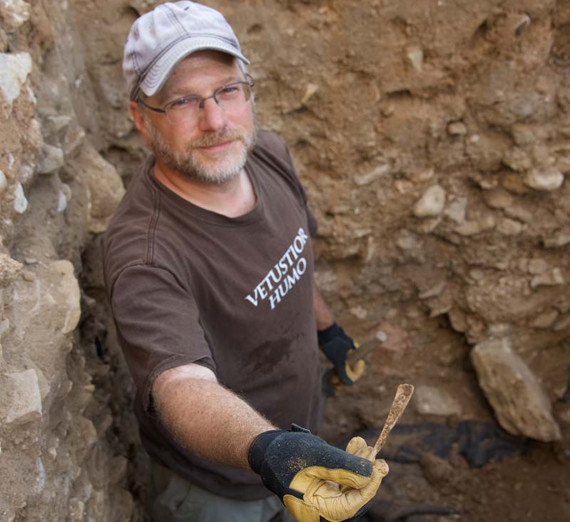
Rethinking What We Know About the Ancient Mediterranean
While the world of the ancient Mediterranean lies far distant from us in both time and space, there is a common perception that it is well explored and well known through its gladiators and emperors, its coins, statues and ruins. Little could be further from the truth. Each passing year, as new archaeological sites are explored and new facts emerge, we are forced constantly to reassess – sometimes radically – what we know about the peoples and cultures of our collective human past.
A Career Dedicated to Making the Past Come Alive
Keeping up with the changing past is a problem that Dr. Andrew Goldman has wrestled with constantly during the nearly 25 years he has taught in the History Department at Gonzaga. Seeking to bring this ancient world alive to those in the Pacific Northwest, he has experimented with virtual reality reconstructions in his classroom, brought innovative lecturers to Gonzaga and the Spokane community, led study abroad programs in search of Alexander the Great, and investigated in his own archaeological fieldwork ancient sites in Turkey, Cyprus and Sicily. Most summers he can be found in the Black Sea and Mediterranean regions, working with colleagues and students from the U.S. and abroad to uncover the past and shed new light on the lives of the ancients, in particular those of the Romans, from whom we have much to learn.
Teaching the Ancient World from Rome
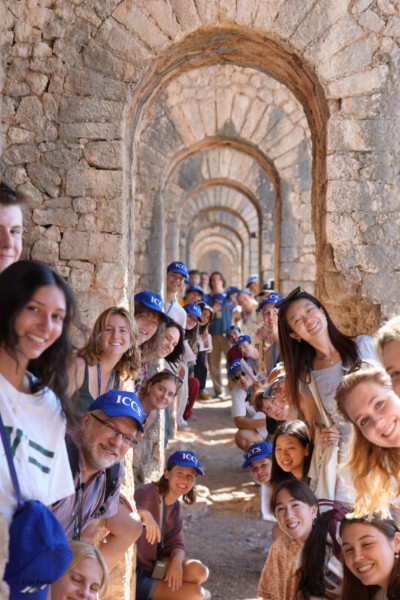
In order to teach Gonzaga students about the most recent groundbreaking discoveries taking place across the Atlantic, Dr. Goldman has set off on a new venture: an academic year in Rome as the Professor-in-Charge of the Intercollegiate Center for Classical Studies in Rome (ICCS, or the Centro). Now in its 60th year, the Centro remains the premier U.S. undergraduate study abroad program for ancient history, archaeology and the Classical languages. As is the case for those who study in Florence, it is a program near to his heart—one in which Dr. Goldman himself studied as an undergraduate. Coming around full circle, he is now endeavoring to reveal the world of the Romans to a group of 36 students from more than 30 U.S. undergraduate institutions.
Learning Through Experience, Not Just Texts
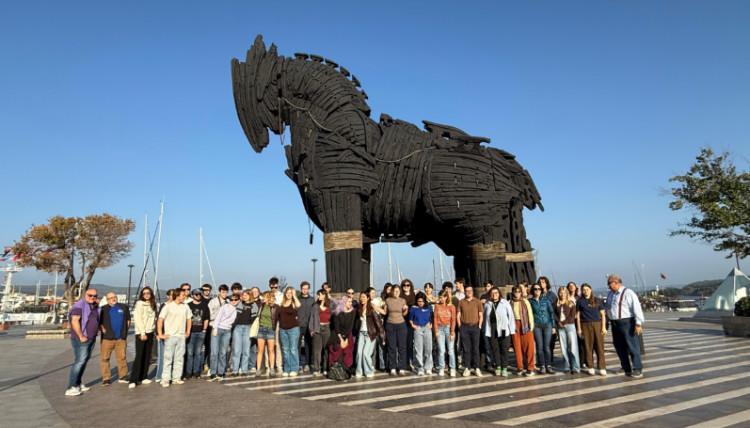
And he is doing so in a markedly different manner: experientially. For the past semester, Dr. Goldman, his three colleagues and their students have moved out of the classroom and into the ancient world itself, traveling from site to site and from museum to museum—Pompeii, Herculaneum, Ephesus, Troy and, of course, Rome itself. Three days a week, they have set out to experience firsthand the cities built by the Romans, the houses in which they lived, and the tombs in which they interred their dead. Lectures, exercises and exams are all offline; their tools are notebooks, sketch paper and digital recording. Every subject is open for exploration: identity and gender, the elite and non-elites, Roman religion and early Christianity, daily life and recreation, to name just a few.
Bringing New Perspectives Back to Campus
Sadly, the ICCS semester program is not one that can be translated to or recreated on our campus in Spokane, even with the incredible range of digital tools now available. Yet when Dr. Goldman returns to campus next fall, he looks forward to bringing back with him new perspectives on—and new facts about—the ancient world, inspired by his travels across Italy and his research at the American Academy in Rome. And in doing so, in journeying far and wide across the Roman world, he hopes to bring ancient peoples and cultures more alive and relevant to the world we live in today.
Learn How Gonzaga Brings History to Life
Interested in exploring the past and its impact on the present? Connect with our faculty and discover more about our programs.