
Timothy O’Leary, S. J. Distinguished Scientist Lecture
Event Date
February 19, 2026
7:30 pm
Event Location
Wolff Auditorium at Jepson Center
Find us on social media.
InstagramInstagramFacebookFacebook
YouTubeYouTube
The 2026 Timothy O’Leary, S. J. Distinguished Scientist Lecture
Public Lecture Speaker: Dr. Karen Goldberg from the University of Pennsylvania
"Developing Alternatives to Oil as Feedstocks for our Chemicals and Liquid Fuels"
It is widely accepted that decarbonization of our energy systems will have the largest impact on mitigation of climate change. With a move away from oil as a primary energy source, we will need to develop other sustainable sources for our liquid fuels, and we will also need to reinvent our chemical industry and economy. While gasoline and other liquid fuels are the major products that are made from oil, oil is also the source of most of the chemicals that are used to make all the consumer goods that we have come to rely on. Our medicines, body-care products, detergents, paints, plastics, fibers, fabrics, and essentially everything we use every day, are currently derived from petroleum. The carbon-based building blocks used to make all these consumer goods have been available in sufficient supply and at low cost due to the economy of scale of our enormous oil refining industry. Fundamentally new pathways, from new sources, to the chemicals and liquid fuels that we depend on must be developed to successfully transition to a sustainable future. In this presentation, I will describe how we arrived at our current energy landscape, projections on where we are going, and present some of the exciting strategies that scientists are pursuing to allow us to use natural gas, carbon dioxide and even waste plastic, to prepare our chemicals and fuels in the future.
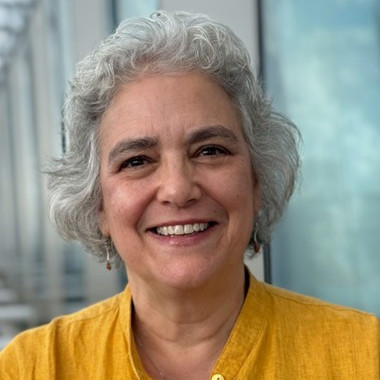
Karen Goldberg is the Vagelos Professor in Energy Research and Chemistry, and the inaugural Director of the Vagelos Institute for Energy Science and Technology at the University of Pennsylvania (Penn). She earned her A.B. in chemistry from Barnard College and her Ph.D. in chemistry from the University of California, Berkeley. Following postdoctoral study at The Ohio State University, Goldberg joined the faculty at Illinois State University, a primarily undergraduate institution, and then in 1995, moved to the University of Washington (UW) in Seattle. From 2007-2017, she served as Director of the first NSF Phase II Center for Chemical Innovation, the Center for Enabling New Technologies through Catalysis (CENTC). In 2017, she moved to her current position at Penn. Goldberg is best known for her work developing mechanistic understanding of fundamental organometallic reactions and for application of that knowledge to the creation and optimization of new catalytic systems. Goldberg is a Fellow of the American Association for the Advancement of Science (AAAS) and of the American Chemical Society (ACS). She received the ACS Award for Organometallic Chemistry in 2016 and has been elected to the American Academy of Arts and Sciences and the National Academy of Sciences. More than 85 graduate students and postdoctoral research associates and over 75 undergraduate students have trained in her laboratories.
Learn more about Dr. Goldberg.
Scientific Lecture for Students:
"Organometallic Complexes and Molecular Oxygen: Developing Mechanistic Understanding"
Molecular oxygen represents the ideal oxidant to use in chemical oxidation reactions. It is abundantly available, inexpensive (particularly if used without separation from air) and environmentally benign. However, more expensive and/or hazardous oxidants are more often employed in homogeneous metal-catalyzed organic oxidations. A limiting factor in the development of organometallic catalytic systems for aerobic oxidations has been a lack of mechanistic understanding of exactly how transition metal complexes react with molecular oxygen. Traditionally, organometallic chemists rigorously protect their compounds from oxygen and so our knowledge of the reactivity of organometallic compounds and oxygen is severely underdeveloped. In this presentation, kinetic and mechanistic studies of the reactions of molecular oxygen with several late metal complexes will be presented along with our nascent understanding of the various mechanistic pathways available for oxygen insertion reactions. The opportunities and potential for the incorporation of such reactions into hydrocarbon functionalization strategies will also be discussed.
About the O’Leary Lecture Series:
The lecture series is presented by the GU science departments in honor of the late Father Timothy O’Leary, S.J., devoted priest and chemistry professor at Gonzaga University. Rev. O’Leary was described by his students as a superb lecturer, and his classes were known for their clarity of presentation.