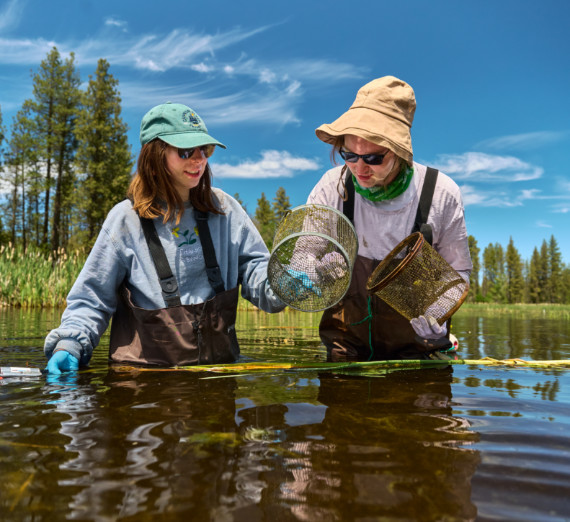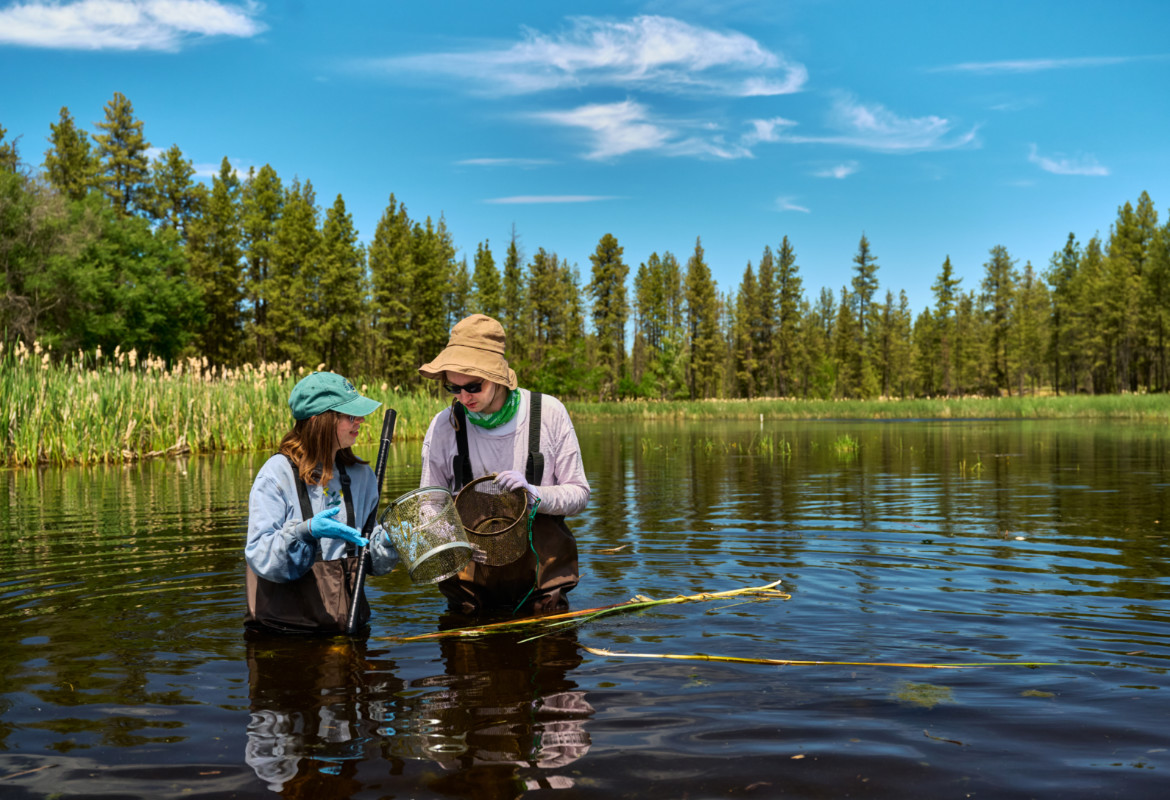
Charlie Wyman ('26) and Lauren Lee ('26) check for insects and fish in a trap. We leave traps out overnight to catch animals that are active at night or are otherwise hard to catch in our nets.
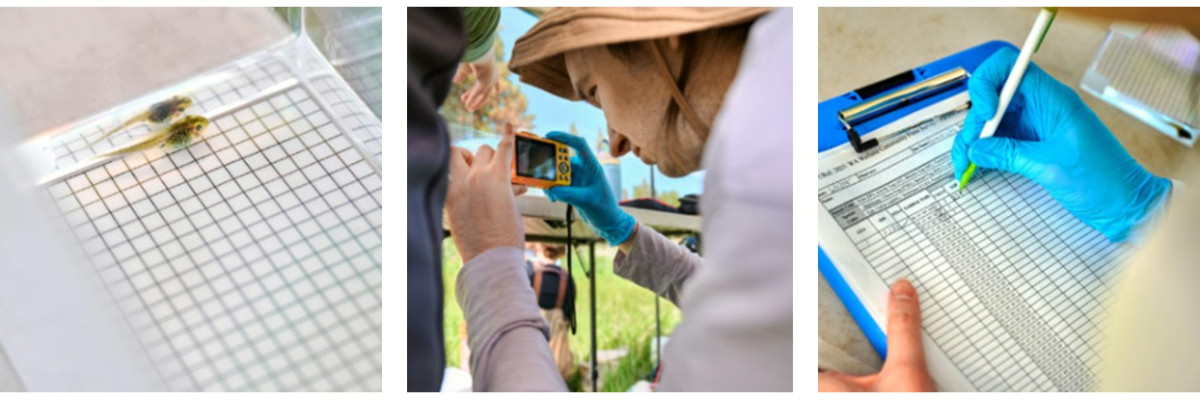
Left: Amphibian larvae like this Pacific chorus frog tadpole have an amazing ability to respond to changes in their environment by changing their morphology. Tadpoles have been shown to have different body shapes and tail shapes based on the number and type of predators in their environment.
Center: Charlie Wyman ('26) captures a photo of a tadpole for later morphological analysis.
Right: For every tadpole, frog, salamander, or fish we find, we photograph it so we can identify the species and measure the size of the animal. We take lots of photos, so we have to keep careful track of each one in our datasheets. Body size is important in freshwater systems because it can determine the outcome of competition between animals, or even which animal gets eaten when two predators meet.
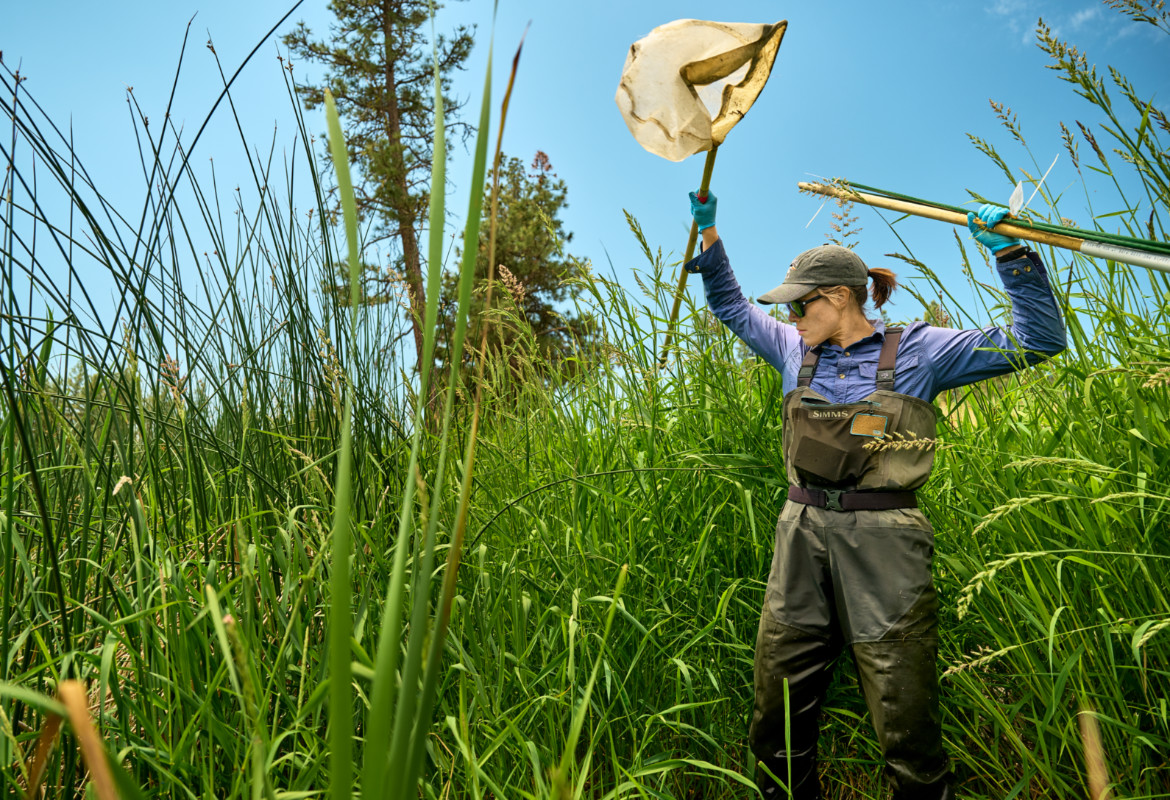
Oregon State University graduate student Courtney Hendrickson collecting a dipnet sample.
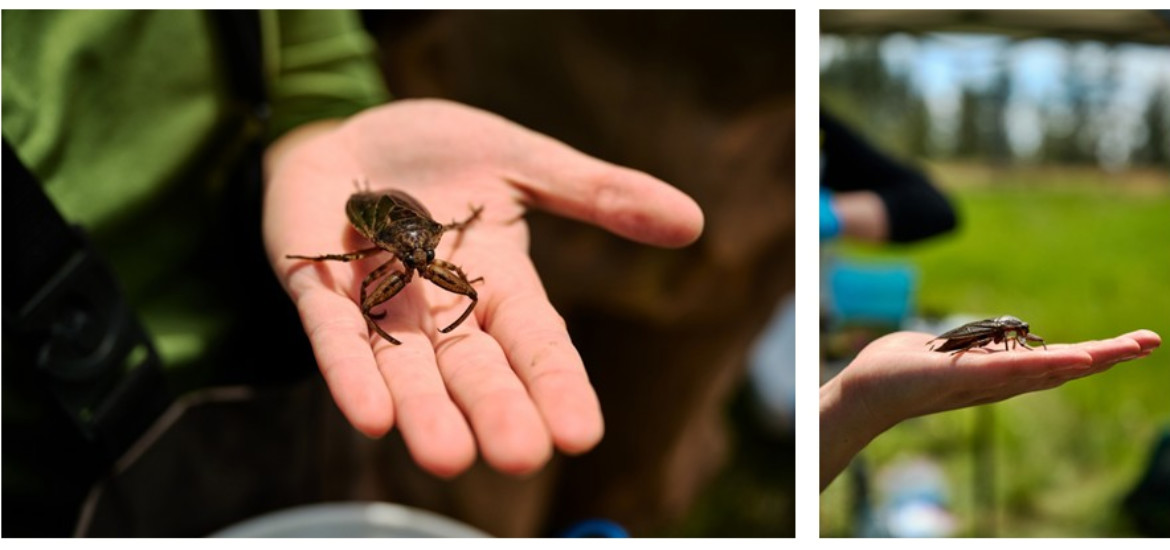
Giant water bugs don't have gills. Instead, they carry air pockets under their wings so they have a source of oxygen during dives.
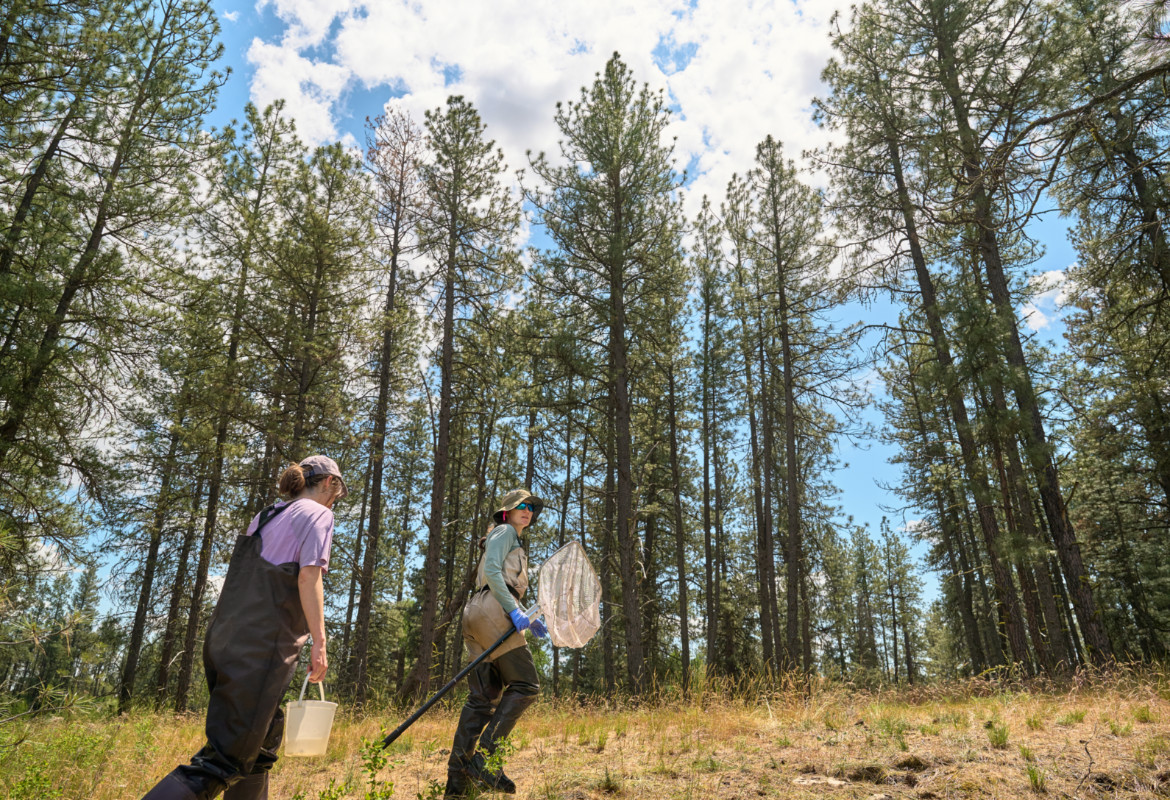
Students carry dipnet samples around the pond to our sorting station.
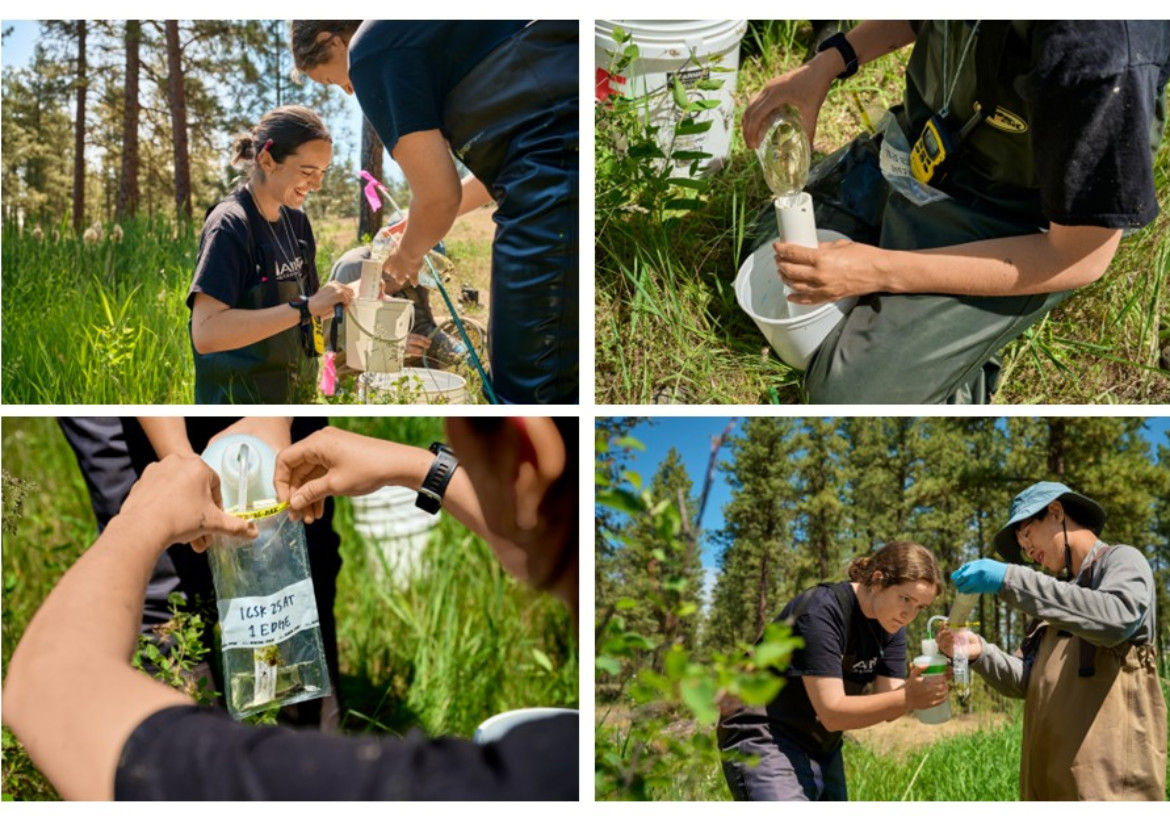
Top: Clare McGowan ('26) and Katie Ellis ('26) work together to collect animals from an overnight trap. Field work and large-scale ecological research like this requires students to work together and builds communication skills.
Bottom: Here Clare McGowan ('26) holds a sample bag while David Nguyen ('27) fills it with preservative. Each sample is carefully labeled so we know where it was in the pond.
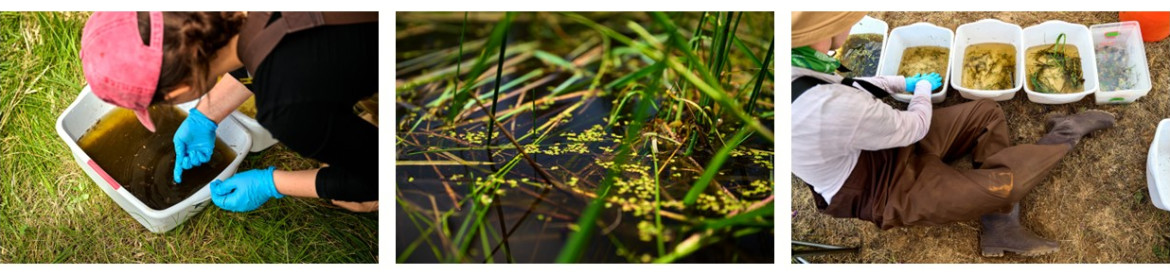
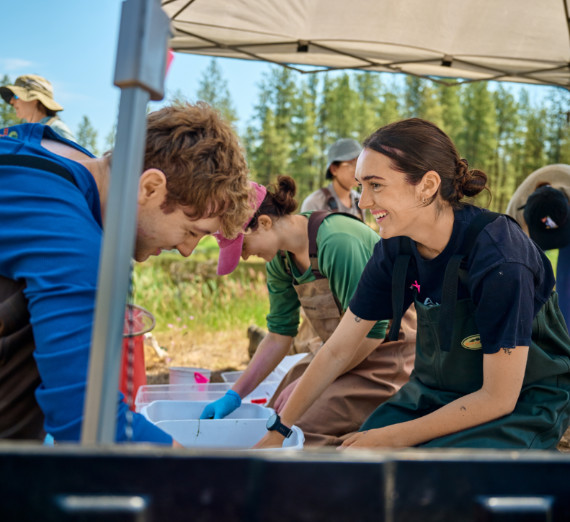
Left: Here we are looking through our dipnet samples for animals like snails, insects, and tadpoles to help us understand what types of animals are found in each wetland. We see lots of snails, dragonflies, and damselflies at this site!
Center: The small green floating leaves are duckweed, one of the world's smallest flowering plants.
Right: Charlie Wyman ('26) uses a series of tubs to sort animals from a dipnet sample. Vegetation gets moved along through each bin and carefully rinsed to remove tiny animals that may be living on the plants.
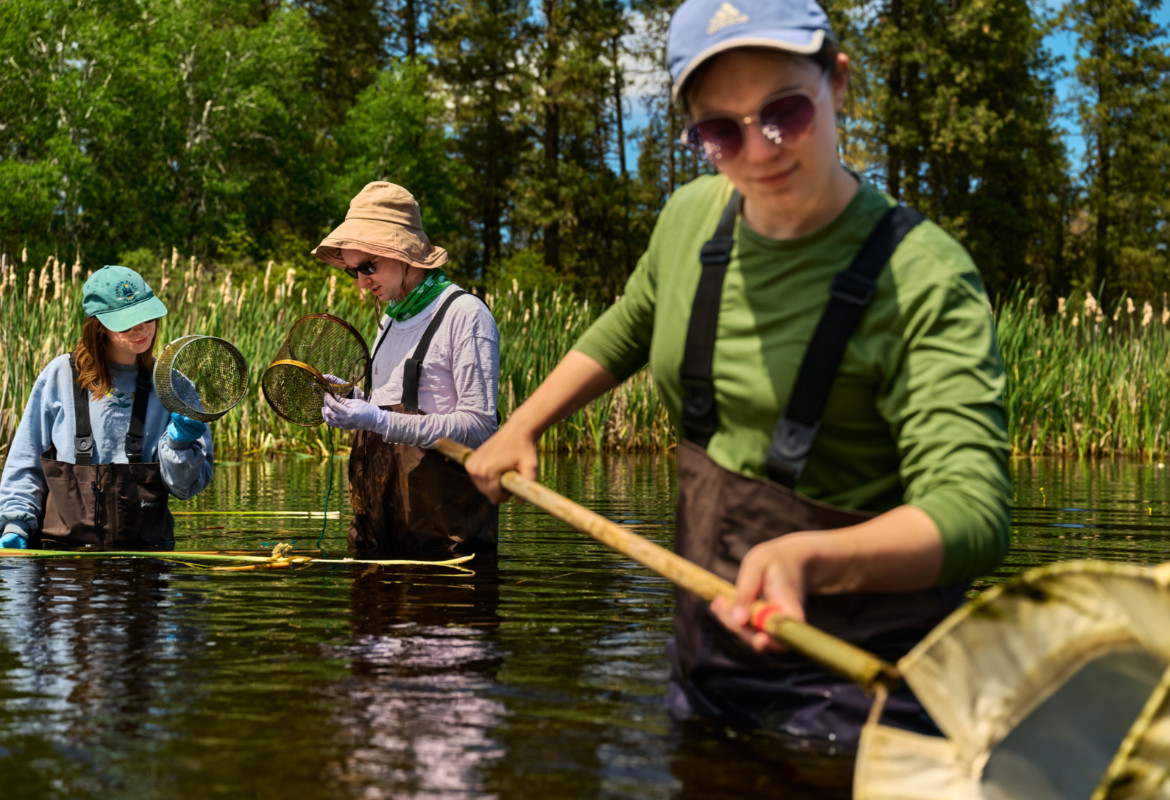
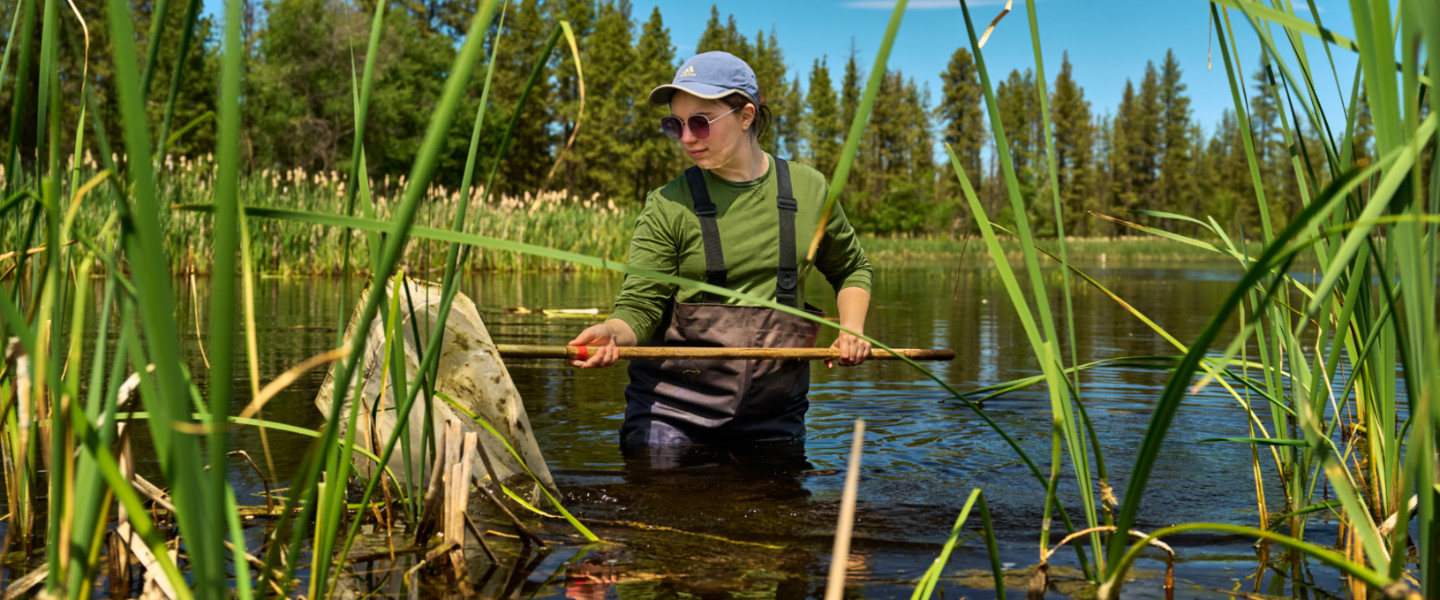
Sofie Lorenzo ('27) uses a dipnet to skim animals from the water surface while Charlie Wyman ('26) and Lauren Lee ('26) inspect a trap for small animals like snails that may be attached to the trap.
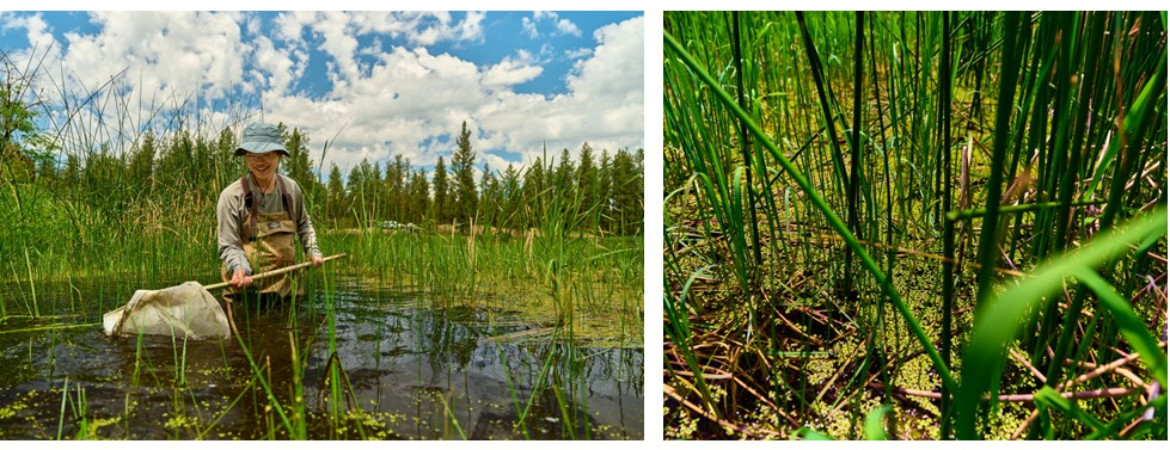
Left: David Nguyen ('27) skims a dipnet through the water to capture small animals at the surface.
Right: Areas with dense vegetation often harbor high densities of aquatic animals.
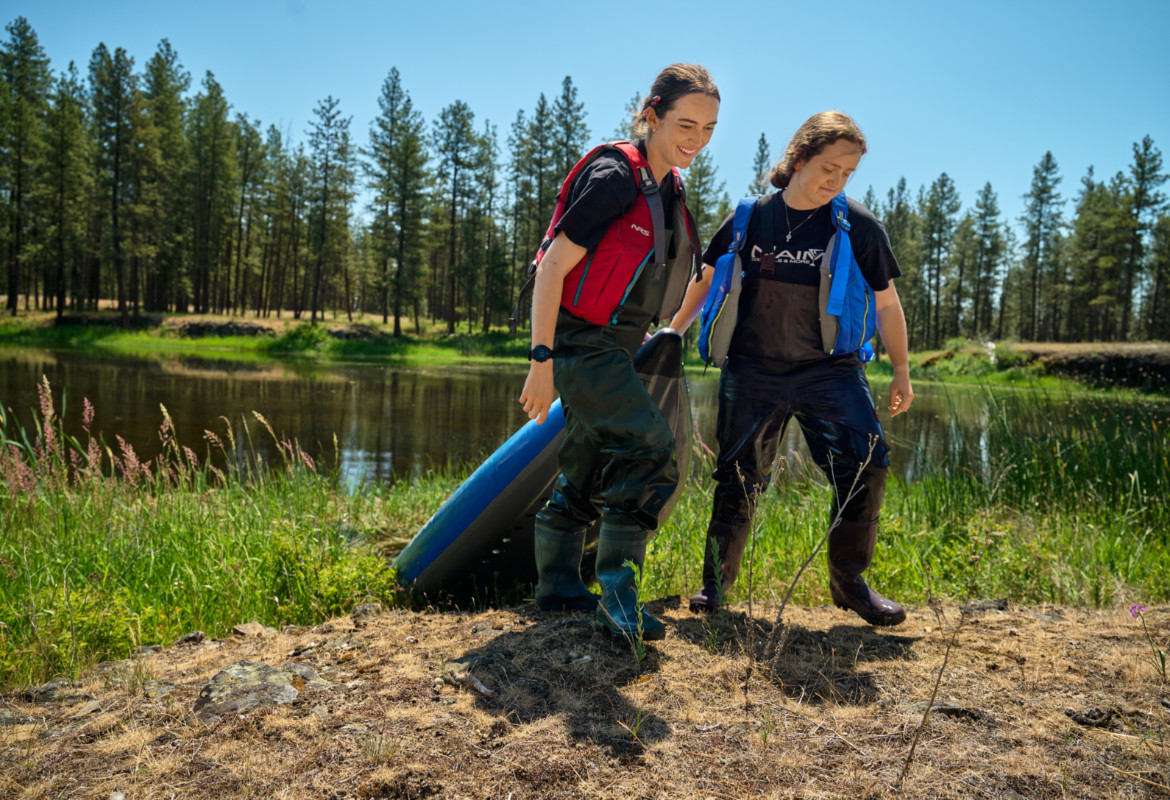
Clare McGowan ('26) and Katie Ellis ('26) pull the kayak up out of the water at the end of the day. The students work long days in the field, but gain valuable experience which helps them obtain jobs and positions in top graduate programs.
To learn more about the Turnbull National Wildlife Refuge, please visit fws.gov/refuge/turnbull.