
A Shared Mission for Supporting Catholic School Students in Washington
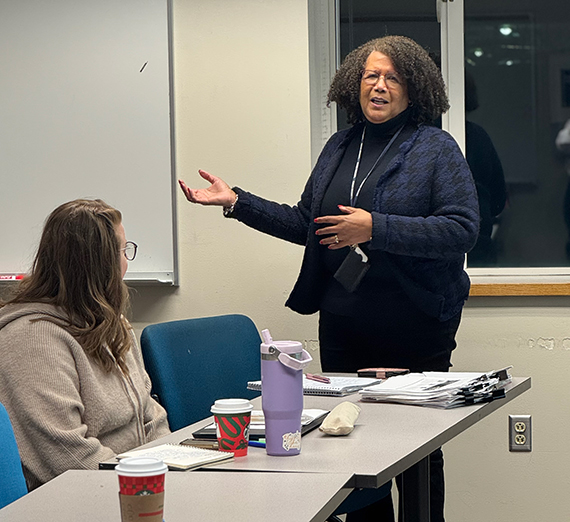
This fall marked the launch of a pilot program designed to equip teachers with practical tools and strategies to support students with special learning needs. The Certificate in Inclusive Education program recently completed its inaugural 14-week week session, providing invaluable practical knowledge and community to those working directly with K-12 students.
“Over the past few years, our principals and teachers have been clear that their greatest unmet need is support for students with unique learning and behavioral needs,” says TJ Romano (’22, Ed. D.), superintendent of Catholic education for the Spokane Diocese. “Unfortunately, our schools don’t have the same access to specialists as public systems do, so classroom teachers are carrying out much of this work themselves.”
Romano adds that there’s been a broader call within Catholic education for schools to better embrace their calling to serve all learners, including those who struggle with physical, learning or behavioral challenges. The new certificate developed in partnership with Gonzaga’s Center for Lifelong Learning and School of Education is a “concrete response to the request of the Catholic schools of Eastern Washington,” Romano says.
It is also an example of Gonzaga’s commitment to meeting the needs of our Catholic communities.
A Far-Reaching Partnership
The path to establishing the Inclusive Education certificate started with a conversation between Nicole Clute, senior leadership annual gift officer in Gonzaga’s University Advancement (UA) office, and a donor (who would like to remain anonymous) who “expressed a desire to support Catholic educators,” Clute says. That sparked further discussions with the donor’s family, the Diocese of Spokane, and various members of the Gonzaga community about classroom needs in the region’s Catholic schools as well as funding needs. UA played a critical role in connecting partners both inside and outside Gonzaga as the pilot program started to take shape.
Early on, the Spokane Diocese expressed interest in creating a program that was more accessible and time-efficient than a full degree, says Rachelle Strawther, director of Gonzaga’s Center for Lifelong Learning (CLL). Together with the School of Education and the Diocese, the group explored what regional Catholic educators need most and what format would be most meaningful and sustainable.
While CLL managed the course development and logistics, the School of Education and Diocese worked to make sure the program was both Mission-aligned and responsive to the needs of educators. Romano notes that teachers throughout the Diocese were surveyed for their perspectives during the early stages, and Strawther adds that the program’s designer has intimate knowledge of the issues teachers face in modern classrooms.
“One of the things that makes this program especially strong is that it’s designed by Susan Poindexter, a Gonzaga graduate and adjunct professor with years of experience working directly with students who have unique needs,” Strawther says. “She’s not just presenting concepts; she’s walking alongside teachers, sharing real examples, tools and approaches that she’s used in her own classrooms. That means educators aren’t learning this in theory, they’re learning from someone who’s practiced it daily.”
Kimberly Weber, director of the School of Education’s Special Education and Applied Behavior Analysis department, says the 14-week course offers Catholic educators knowledge and skills rooted in a “collaborative, problem-solving approach” to special-needs students. Among the many areas teachers explore are the ability to identify specific student needs, identifying and applying tools to support students, and identifying and addressing categories and characteristics of disabilities, as well as special services available to students and legislation related to pertinent issues.
School of Education Dean Yolanda Gallardo says the School is sponsoring several teachers. The Nazareth Guild is funding the majority of costs of establishing the program and assured that each participating educator would only be charged a $50 registration fee – and that fee is refunded upon completion of the certificate.
“Nazareth Guild has been deeply committed to supporting our Catholic schools in Eastern Washington, especially in areas that strengthen both academic and faith formation,” says Nazareth Guild Executive Director Debbie Battaglia. “When we learned about the opportunity to help create a pathway for teachers to better serve diverse learners, we knew it aligned perfectly with our mission.
“We see this certificate as an investment in long-term sustainability for our schools, giving teachers tools that directly benefit students and families.”
The Mission Comes Alive
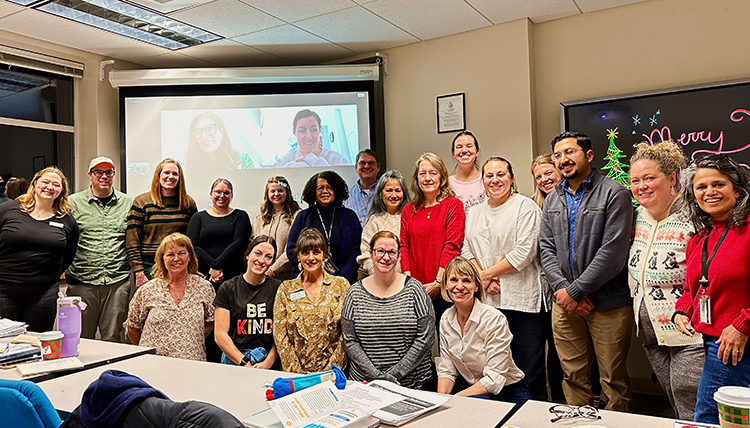
One of the unique aspects of the certificate program is that its hybrid nature – with sessions both in person on Gonzaga’s campus and online – allows the participating teachers to try strategies in their classrooms as they learn them, Romano says, “then bringing back what they’re seeing to refine their practice with peers.”
That resonated with Janna Michaud, a fourth-grade teacher at All Saints Catholic School.
“Dialoguing with teachers from other Catholic schools has been especially valuable, as it has allowed us to share ideas, pool resources, and collaborate on ways to better meet the needs of the students we teach,” Michaud says. “This course has given me a great deal of hope for the future of our Catholic schools. I feel more confident in serving students with diverse learning needs and creating learning environments where every student feels valued, included, and capable of success.”
Sofia Roach, vice principal at St. Patrick Catholic School, says she’s gained “invaluable knowledge and effective strategies” that will not only help her in her own work, but pass on what she learned to her peers.
Ashley Collin, a fourth-grade teacher at Assumption Catholic School, says participating in the first Inclusive Education cohort was invaluable.
“It was refreshing and meaningful to be a student again — if only for a short while — instead of the teacher,” Collin says. “This program helped me see that inclusion begins with how we view students. When we truly believe every child is capable, our instruction naturally changes. I’ve gained skills in identifying early triggers and intervening before escalation occurs.
“This class will benefit my classroom in myriad ways,” she adds. “I will be able to provide more purposeful differentiation, resulting in fewer students ‘falling through the cracks.’ Ultimately, I believe these practices can strengthen not only my classroom but our school community as a whole.”
For the Nazareth Guild’s Battaglia, that’s exactly what the hope was as the collaboration between Gonzaga, the Catholic Diocese of Spokane and the Guild first came together.
“This partnership grew out of a shared recognition that our schools needed more structured and accessible training in inclusive education,” she says. “The Diocese had expressed a desire to better support students with diverse learning needs as this was a topic many teachers expressed as a major classroom need, and the Nazareth Guild consistently heard the same concern from parents whose students needed additional support. Gonzaga brought both expertise and a strong willingness to collaborate, and early conversations quickly revealed a shared mission: serving the whole child and strengthening Catholic education. We also found that when we approached donors with this vision, they were eager to commit their treasures to making it a reality for our teachers. Their generosity has been essential, and we are deeply grateful for their belief in this work.
“It has truly been a collaborative effort, each partner bringing their strengths to the table to create a program that is already making a measurable impact in classrooms.”