
Delft '26 Day 4: Classroom Day
This story is one of a series written by students in the Gonzaga in Delft program, a course from the Civil Engineering department exploring sustainable practices of the Netherlands.
The topics of the day included ethics of transportation engineering during the morning session and introduction to water management in the afternoon.
Ethics of Transportation Engineering
The session began with a lecture presentation that focused on Sustainably Safety, a Dutch approach first adopted in 1997. The principles include functionality, homogeneity, predictability, forgiveness, and state of awareness.
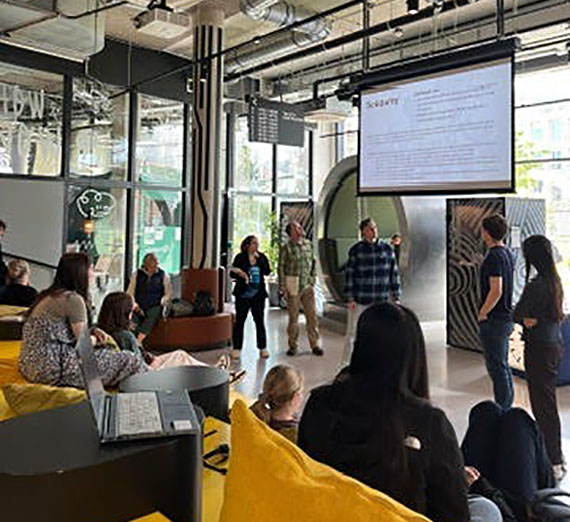
The class was then divided in groups of three to evaluate ethics case studies and present arguments from both sides of the ethical tension. The six cases studies included an autonomous shuttle pilot program in a neighborhood with limited transit and highway widening in a region failing to meet climate targets. Students presented well developed, and often entertaining, arguments.
Introduction to Water Management
Prior to class, students were required to view four videos that outlined the progression of dike construction and water management infrastructure from the late 1800s to present day. The afternoon session also began with a lecture that generally covered water management history and basics including construction of immense dikes, the development of polders, and the more recent construction of massive surge barriers that can be opened to maintain the marine ecosystem and closed during storms. Polders are reclaimed low-lying areas of land, previously underwater, used for agriculture and urban development.
The class was again placed in groups, this time for two separate activities. The first was to report on one of several elements of the Delta Works infrastructure, a complete system of dikes, dams, sluices, locks, and storm surge barriers to protect against flood events in the southwest delta region. The second activity involved groups preparing a slide and making a presentation regarding one of the three core values of the Delta Programme: flexibility, sustainability, and solidarity.
The day was filled with group discussion and presentation, which is a great way to learn and connect with other students. Debate is a good practice that challenges ideas, and the exercise of presentation develops critical thought and communication beyond traditional study. Students stayed engaged and made thoughtful contributions. Good day!