Delft '26 Day 6: Loving the Hague
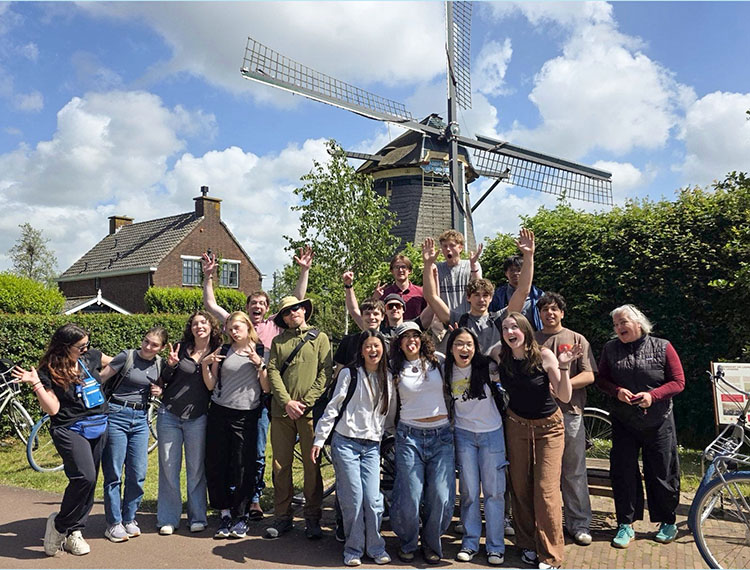
This story is one of a series written by students in the Gonzaga in Delft program, a course from the Civil Engineering department exploring sustainable practices of the Netherlands.
After a morning of class group work and preparing for tomorrow's trip to Rotterdam, the students learned about green infrastructure in The Hague up close.
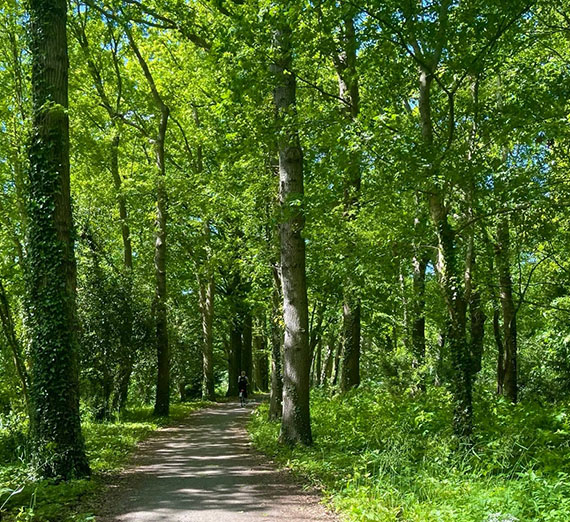
The First stop was Van Musschenbroekstraat, where chestnut trees and smaller vegetation were planted to improve biodiversity and greenness. The underground was designed with a layer of air that feeds microorganisms with oxygen to convert nutrients into food for the trees to thrive.
The Second stop was the Cromvlietplein neighborhood park that acts as an urban water buffer. It even has cows, pigs, and goats to pet. The park’s surfaces are permeable so that rainwater can seep down into the underground basin, which helps collect, store, and filter rainwater.