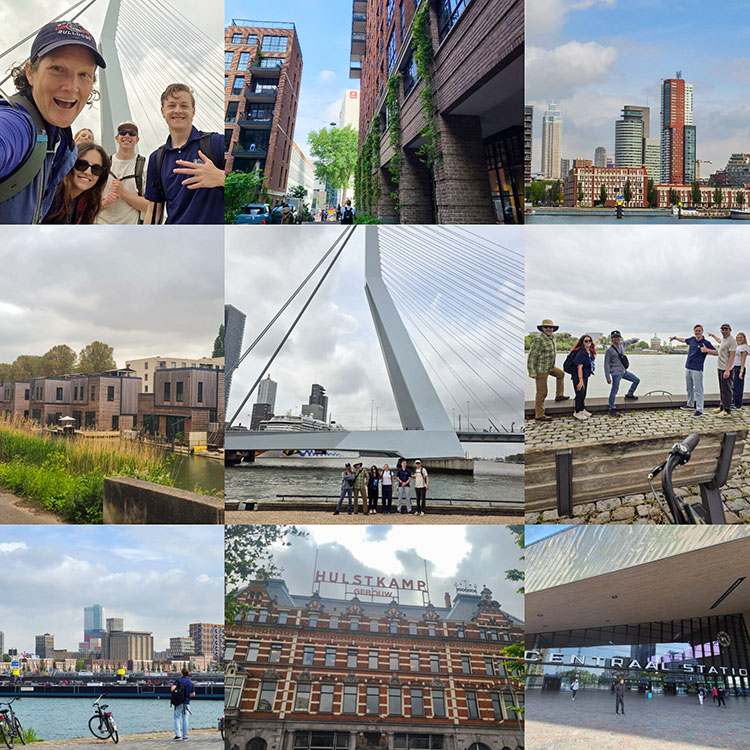
Delft '26 Day 7: Bike Routes in Rotterdam
This story is one of a series written by students in the Gonzaga in Delft program, a course from the Civil Engineering department exploring sustainable practices of the Netherlands.
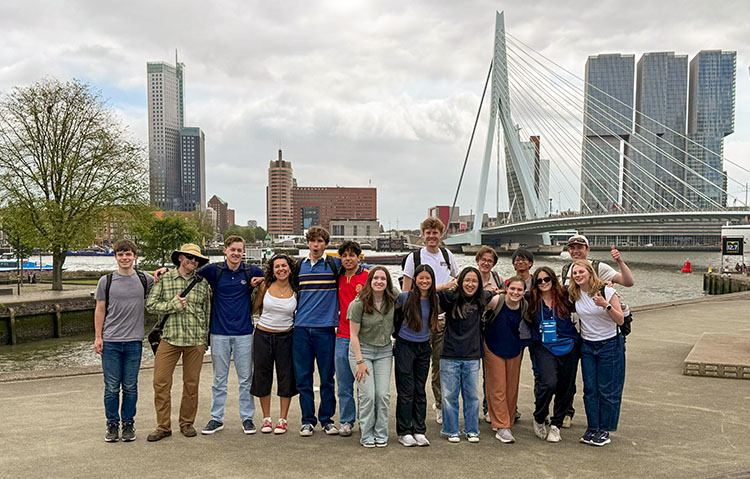
Students were up early to catch the train to Rotterdam for the Sustainable Features Tour!
The class had been split into three groups the day before. Within these groups, they partnered up and created bike routes for assigned areas in the city. Their time in Rotterdam was centered around the city’s social cohesion.
They were tasked with ranking three main components of the areas they biked through: how the area felt (physical), perception of safety, and community interaction.
Some of the mapped-out routes sent students around different areas of Rotterdam. Some groups even had to bring their bikes on escalators!
After each route, the students discussed their thoughts and ratings for that area. They collected data for the presentations they would be giving the next day.
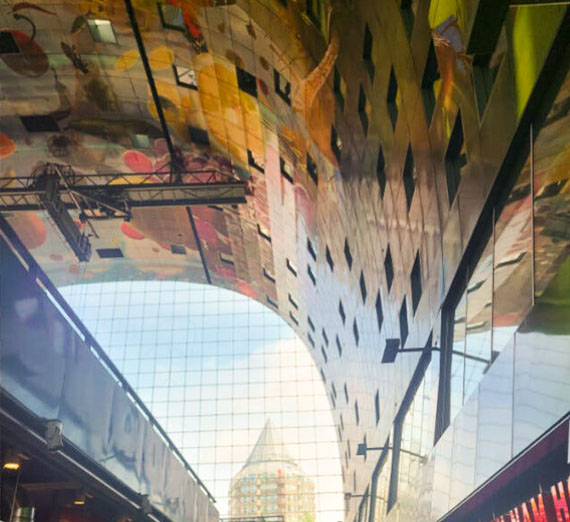
After this, everyone biked over to the market square for lunch. There were lots of options to choose from, including fresh Stroop waffles!
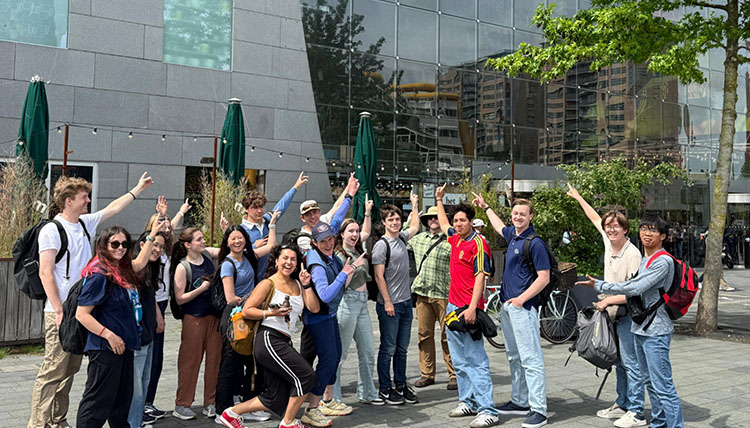
In the afternoon, the first stop was the water square which functions as both a public space and a water storage facility. This project is part of Rotterdam’s strategy to increase climate resilience through different adaptive projects.
The next stop was the Keilehaven Tidal Park which combines a city park and a natural estuary system. This park is built for differing water levels and allows the spontaneous natural development of vegetation.
Up next was the Sponge Garden which tests different soils for seepage. The garden promotes biodiversity as it serves as a habitat for bees, bugs, and Earth worms.
Dak Park was the next stop. This rooftop park measures 0.75 miles long and serves as both a social green space and a place for water storage.