
More Than a Program: GUSR Shapes Who Seniors Become
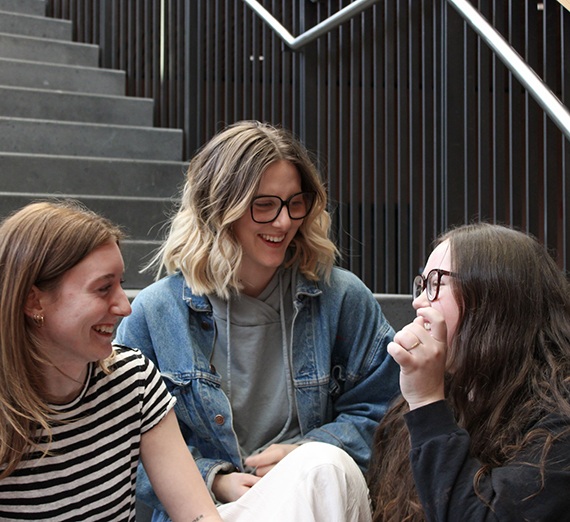
For seniors Nya Schara, Taylor Licon and Kate Gage, Gonzaga Unified Sports and Recreation, better known as GUSR, has become more than just a program. It is a space that has shaped their college experience and who they are becoming.
GUSR pairs Gonzaga students with adults in the Spokane community who have developmental and intellectual disabilities, creating relationships rooted in friendship, respect and mutual support. Through weekly programming, often centered on play practice, the program culminates in a final performance each semester. It also hosts major events throughout the year, including Celebrate Abilities, Harvest Ball, Monster Bash and a two-day retreat called Way of the Heart, all aimed at breaking stigma, celebrating all abilities and fostering inclusion.
Each of these seniors came to GUSR in a different way. For Gage, the inspiration started long before college through a teacher who had participated in the program and spoke highly of it. The stories stayed with her, making GUSR something she knew she wanted to be part of when she arrived at Gonzaga.
Licon first encountered GUSR while walking through Bulldog Alley at the club fair, drawn in by the program’s energy. Schara’s path looked different. After struggling to adjust to Gonzaga, a resident assistant encouraged her to try GUSR. That decision quickly changed everything.
At its core, GUSR is built on relationships, and for these seniors, those relationships have been deeply transformative. Schara recalls her first day as a coordinator, when a participant ran off the bus, recognized her and excitedly ran up to greet her. That moment quickly turned into a meaningful friendship.
Licon reflected on watching participants grow over time, gaining confidence, finding their voice and stepping out of their comfort zones. For her, the most powerful part of GUSR has been witnessing those transformations and the relationships that support them. Gage emphasized that connection in GUSR goes beyond assigned partners — any interaction, even the smallest one, can become meaningful.
“No matter who you are paired with, you can build a relationship,” Gage said. “It’s those little moments with everyone in the room that mean the most.”
Through these relationships, their understanding of advocacy has also evolved. As a coordinator, Schara described how participants often trust you with both joyful and deeply difficult parts of their lives, revealing the real challenges faced by the disability community.
“It’s not abstract anymore,” she said. “You see it, you hear it. You understand exactly where the issues are.”
Gage echoed this, describing GUSR as a constant reminder that every person is unique and deserving of care and attention. Licon has carried these lessons into her work at a law office, where she now sees advocacy from both a personal and systemic perspective, applying what she has learned in GUSR to support others in real-world situations.
Beyond weekly meetings, some of the most meaningful experiences have come from GUSR’s larger events, such as Way of the Heart and the annual talent show. For Licon, helping coordinate Way of the Heart made it especially impactful, knowing she played a role in creating such a meaningful experience for participants. For Gage and Schara, the talent show stands out as a powerful moment of expression and joy.
“In those moments, everything else fades away,” one senior said. “It’s a space where people who are often told ‘no’ are finally told ‘yes.’”
These events create an environment where participants can fully be themselves and be free from outside pressures, expectations or stigma.
As graduation approaches, all three seniors are still processing the impact GUSR has had on their lives. Gage said she has not fully allowed herself to reflect on it yet because doing so makes it feel more real that it is coming to an end.
Schara described GUSR as something that “fills your bucket” every time you attend, offering perspective and positivity even during difficult times. Licon added that while she may not yet recognize all the ways GUSR has shaped her, she knows it has had a lasting influence and she is not ready to let it go just yet.
When asked what they wish the Gonzaga community understood about GUSR, their answer was simple: It is something you must experience.
“You don’t know what GUSR is until you walk into the room,” they said. “You can try to describe it, but you have to feel it.”
While the program is centered on supporting individuals with disabilities, they emphasized that this is only one part of the story. GUSR is about connection, laughter, karaoke, games and genuine relationships. It is about seeing people for who they are, not just labels.
“It’s the highlight of my week,” Gage said. “It’s a space that meets you exactly where you are.”
For Schara, GUSR has become inseparable from her identity. “People don’t fully know me unless they know GUSR,” she said. For Licon, the impact extends far beyond campus, creating connections throughout the broader Spokane community.
Their dedication and impact have not gone unnoticed. Reflecting on their time in the program, Zag Volunteer Program Manager Andrea Davis said, “I feel so deeply grateful to have spent the last four years working alongside Nya, Kate and Taylor. Each of them truly exemplifies what it means to be a dedicated servant leader. Their impact on GUSR is undeniable. They are truly what makes our community so inclusive and welcoming.”
For these three seniors, GUSR is not just something they participated in. It is something that will stay with them long after they leave Gonzaga — a place where they felt seen, valued and connected, and that has helped shape who they are today.