
The Land Misses Us
An Indigenous skier’s call to return the mountains to the people who first called them home
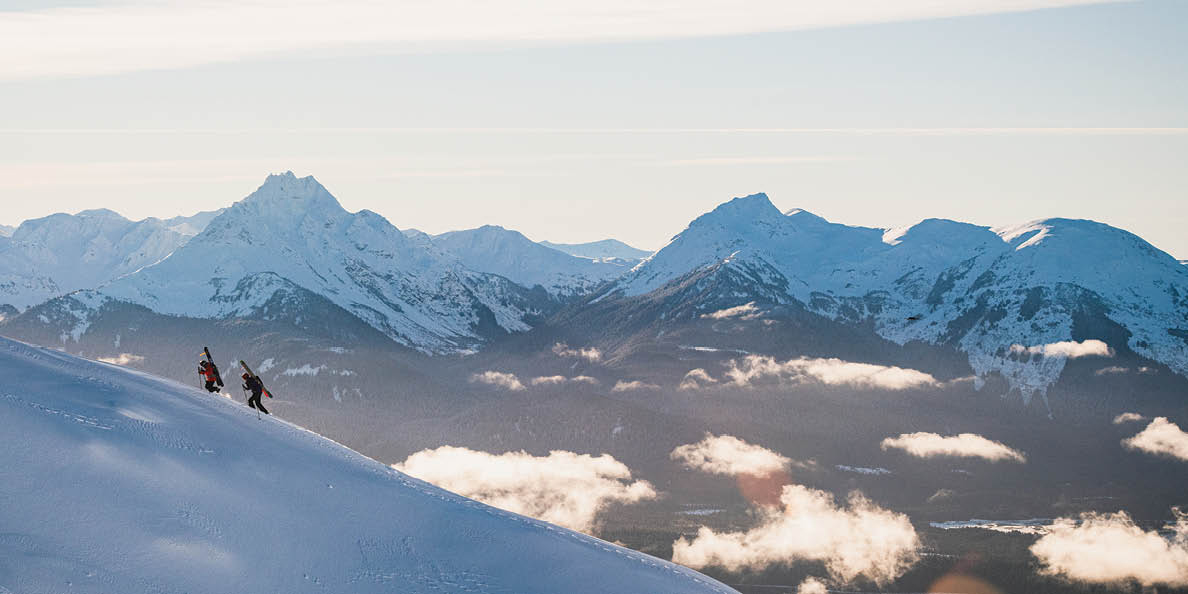
There’s just no snow.
This was a steady chant through the winter months on the West Coast this year. Temperatures that typically drop to well-below freezing plateaued in the 40s and 50s, and what little snow did fall was quickly washed away in rain showers. Through it all, the threat of intense summer wildfires loomed like hazy smoke on the horizon.
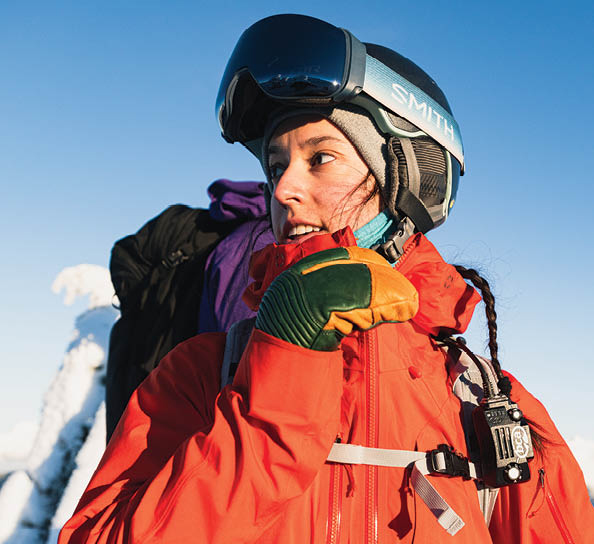
And when there’s no snow, people stop skiing. It’s not out of the ordinary for winter conditions to fluctuate, but as the global temperature is increasing, dramatically unpredictable winters could have all sorts of long-term ramifications in the ski industry.
For Ellen Bradley (’20, biology and environmental studies), it’s much more than that.
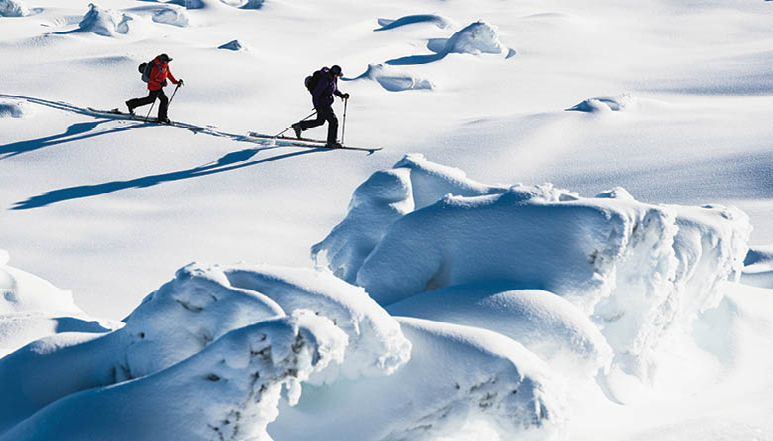
Bradley, a professional skier from Everett, Washington, and an enrolled member of the Tlingit tribe, started skiing at age 4. What was at first a way to connect with her immediate family on the slopes of Stevens Pass soon became something more profound.
It braided a delicate thread between Bradley, the Earth around her and her Indigenous identity. So much so that she's turned it into a career.
Inherently Indigenous
Between the late 1700s and early 1870s, the United States entered more than 350 treaties with Native nations mainly as a means to legitimize the taking and use of Native land. Violations began almost immediately after treaties were established, with the U.S. government seizing land or changing boundaries without consent or failing to deliver promised goods.
To this day, the multi-billion-dollar outdoor industry across America relies on the land that once belonged to Indigenous people. Skiing enthusiasts alone can spend hundreds, if not thousands, each season on the equipment, passes and transportation to and from the mountain. “Every step along the way, spending time in the mountains in the winter is really expensive,” says Bradley. “And it shouldn’t be.”
Then account for the looming effects of a changing climate. Resorts are continually finding ways to up the ante, to draw people to the mountain with new luxury hotels and events, even when conditions like this past winter had people opting to stay home.
Bradley is trying to get people on the mountain, too. But rather than keep a challenged industry afloat, she’s trying to make it accessible for Indigenous people to ski the lands that rightfully belong to them.
“Skiing needs to be recognized as an inherently Indigenous movement through the land,” Bradley says in an interview with Patagonia. “The ski industry lens is extractive – the narrow filter through which we perceive the activity – not the act of skiing itself. The removal of Indigenous peoples from these lands, from access to this sport, from decision-making about where and when skiing can happen, erases us from our home.”
She partners with corporations that have the resources to make a difference, like the Alterra Mountain Co., the company that owns Ikon, the largest ski pass available nationwide.
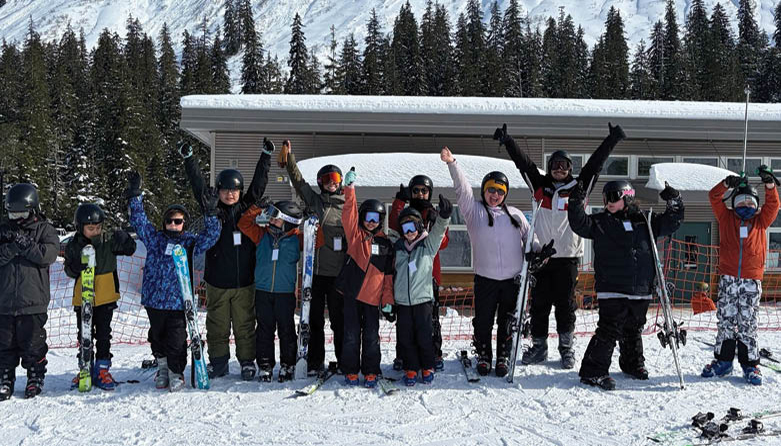
Bradley worked with the company to create the Mountain Access Program, a partnership with Native Youth Outdoors that gives away 40 Ikon passes, equipment rental and a ski or snowboard lesson to Indigenous people across the country each season. Those are valued at about $900 each.
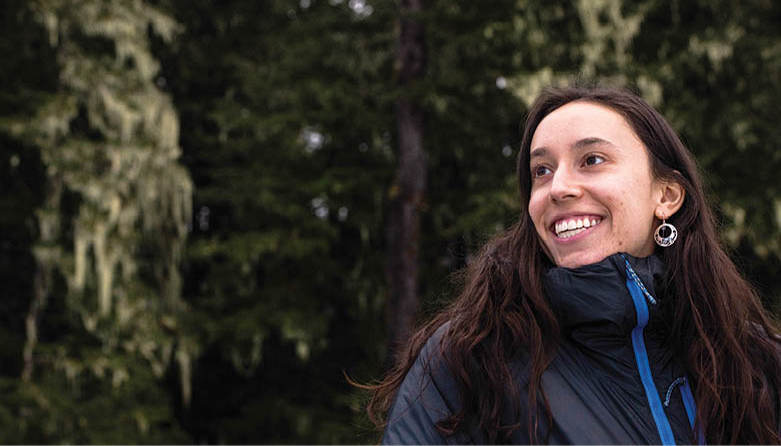
“It’s a complex relationship for me,” Bradley admits. “This entire industry exists on stolen land and stolen labor, and any contribution to that, to some extent, is a contradiction of my values.”
But she also readily acknowledges what can be accomplished with the resources of a corporation like Alterra.
A Return to Áak’w Ḵwáan
In the U.S., there are nearly 600 federally recognized American Indian and Alaska Native tribal nations, and many more exist without government recognition. Bradley is a proud member of the Central Council of Tlingit and Haida Indian Tribes of Southeast Alaska.
“I feel very lucky that I’ve always known who I am and where I came from,” she says. “But at the same time, I’ve always felt a sever in my identity knowing I did not grow up on my traditional homelands.”
In 2022, she had the chance two stitch together, at least partially, this severance. She journeyed to Áak’w Ḵwáan, commonly known as the Juneau area, to experience her homelands in a way she never had – on skis.
There still existed the same contradiction she felt in her other work – Alaska is a frequent destination for outdoor activities, the commercialization of which tends to exploit the land rather than encouraging connection to it. That tension initially made her hesitate, but she also knew this was something she had to do.
Bradley turned her experience into a film called “Let My People Go Skiing.” The project, spanning more than three years, enveloped her life in myriad ways. After losing sponsorship from the brand that originally backed her film team, Bradley funded the project herself, quitting her job and focusing all her efforts on telling the story the right way.
It wasn’t just another ski film, she says. It was a ski film made by Alaska Natives, for Alaska Natives, and deeply personal for her as well. It put her through a lot, mentally and emotionally, but now, as the film plays at festivals across the country, she knows it was worth it.
“I knew if we didn’t finish it or get it right, we’d be doing a disservice,” she says. “Now that we’re done, I’m really liking this part where I get to show it to audiences and speak alongside the film.”
Learning & Unlearning
Bradley returned to Gonzaga’s campus this spring for a screening of “Let My People Go Skiing,” organized by the Office of Sustainability. It was a return that held a lot of weight.
Gonzaga sits on the ancestral lands of the Spokane Tribe. The University’s founder, Father Joseph Cataldo, originally intended to educate Native American children from across the region; however, when the school opened in 1887, Native students were denied admission.
That’s a history Bradley didn’t hear until her senior year.
Telling its history more fully and in context of the work of Jesuit missionaries alongside what was happening to tribes by the government is something the University continues to improve. While there have been intentional strides made, there is still work to be done to ensure that all who come to GU understand the implications of this history.
To this, Bradley offers two pieces of advice.
First, unlearn what you think you know.
“When you’ve gone through the United States education system, there’s a lot you’ve been taught, especially about history, that is simply false,” she explains. “We need to give better context, more accurate depictions of history, in order to have a better understanding of the world we currently live in.”
This type of discernment is something from her time at Gonzaga Bradley looks back on fondly. “I was taught by some really incredible professors,” she says, specifically naming biology Professor Betsy Bancroft. “She’s so good at teaching students how to think for themselves, to think critically and to analyze what they’ve been told in order to get to truth.”
Bradley's second piece of advice is to become familiar with the Indigenous-led movement “LandBack."
Often printed on T-shirts, plastered across billboards, and spray-painted on the sides of buildings, it’s a rallying cry for the restoration of Indigenous stewardship over ancestral lands.
“It also means culture back, art back, language back, water back, sky back,” Bradley says passionately, listing the many stolen, erased or forgotten things this phrase calls to be returned.
It is not, however, a sweeping call for all who live in North America to suddenly vacate the land. In fact, organizers of the movement are emphatic this is not about repeating the mistakes of colonization. Instead, it could mean a real seat at tables where decisions are being made, a recognized assertion of tribal sovereignty, or the return of control over government-owned forestry.
“To me, it’s the most important step we can take to combat climate change,” Bradley says. “It’s been shown historically and through research that Indigenous peoples are the best stewards of the lands we know and have lived on.”
Missing the Land
There's just no snow.
It’s a scary thought to anyone who feels at home on the mountain, strapped to a pair of skis, and carving sweeping turns through soft, white powder – or to anyone living in areas at high risk of wildfires late in dry summers.
But to those with an ancestral connection to the mountain, who feel the lineage of their people run from the tips of their ice-encrusted eyelashes to the depths of their toes like roots on a tree, it’s personal.
For that reason, Bradley knows there’s a need for Indigenous people to be in these spaces, before these spaces cease to exist. Maybe some effects of climate change can no longer be reversed, but there is still time to care for the land rather than extract from it. And the land is begging for it.
“We can feel and see the tangible effects of Indigenous people returning,” she says with hope.
- Alumni
- Careers & Outcomes
- Diversity & Inclusion
- Global Impact
- College of Arts & Sciences
- Alumni
- Biology
- Environmental Studies
- Gonzaga Magazine