Shared Mission, Shared Momentum
Gonzaga and Microsoft Formalize Alumni‑Driven Partnership to Expand Opportunities for Students
A long-running connection between Gonzaga University and Microsoft has taken its next step forward, evolving into a formal partnership designed to strengthen career pathways, deepen mentorship and highlight the University’s growing presence in the technology sector.
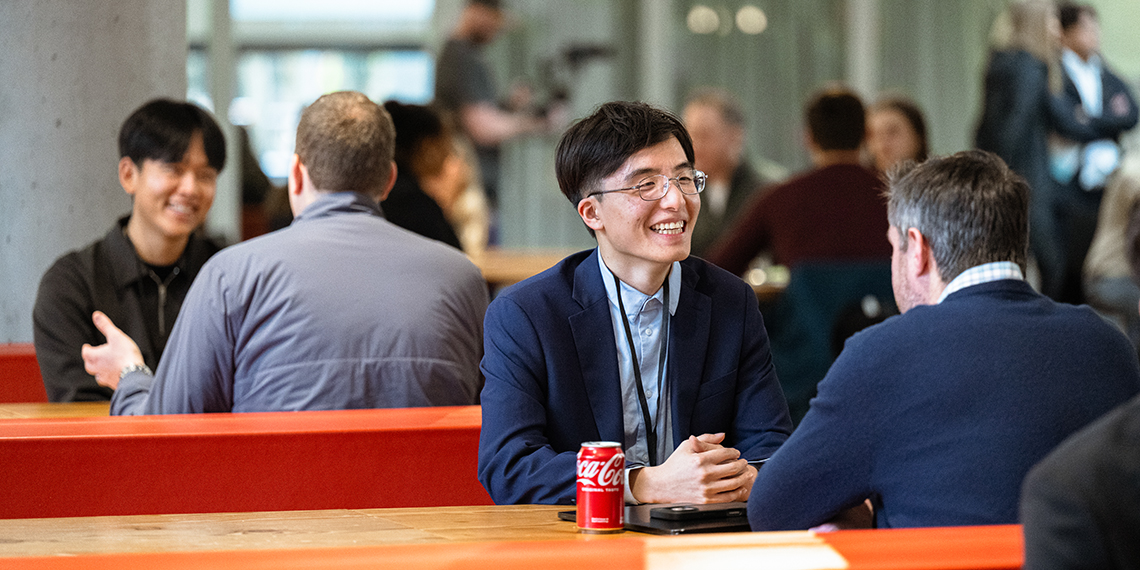
For 20 years, largely led by now retired Microsoft alum and Gonzaga Regent Arnie Mondloch (’84), Gonzaga alumni working at Microsoft have built a tradition of showing up for students – hosting students during the annual Seattle Career Trek, offering mock interviews, sharing career advice and opening doors. Kara Hertz, GU’s vice president for alumni and external relations, says this consistent support is what sparked the idea for something broader and more structured, supporting all areas of the university. (Watch this video to hear from the alumni making this partnership possible).
In 2023, under the leadership of President Emeritus Thayne McCulloh, the University began evaluating how to strengthen corporate engagement broadly. The Microsoft connection stood out – a pipeline that had been built not through formal recruiting, but through alumni commitment.
Robbie Ptazynski (’12), director of strategic partner investments at Microsoft and chair of the Gonzaga–Microsoft partnership committee, says the effort represents a shift from informal goodwill to intentional, coordinated impact.
Gonzaga President Katia Passerini visited Microsoft in her first months in the role, learned the vision from alumni working there, and fully endorsed the partnership. She saw alignment in the University’s Mission and Microsoft’s mission to empower every person and every organization on the planet to achieve more.
To guide that work, the committee has organized the partnership around four pillars:
- Career and talent development
- Alumni engagement and networking
- Strategic collaboration and growth
- Increasing visibility for the Microsoft–Gonzaga connection
Together, these pillars provide a framework for strengthening the student pipeline and deepening alumni involvement.
For Connor Flanagan (’13), director of go-to-market program development at Microsoft and a partnership committee member, these efforts reflect something deeper than professional alignment – it reflects the experience he had at GU.
“I know it’s very cliché, but I stepped on campus and within 10 minutes, I knew I was home,” he says. Drawn to Gonzaga’s Mission from the start, Flanagan majored in marketing with a minor in religious studies and was part of the organizational leadership program.
He moved from Seattle to Spokane three years ago and quickly reconnected with the Gonzaga community, speaking in classes and mentoring students. But he knew there was more to be done to support students.
“We wanted to know how we could bring a name, a space and a narrative to all the good work alumni at Microsoft were already doing,” Flanagan explains. He was then nominated by peers to help lead the effort, recognized for his passion for technology, his commitment to mentoring and his deep Zag pride.
“When we think of Gonzaga, we want it to be synonymous with being leaders in the professional community,” he says. This partnership aims to do exactly that while showing prospective and current students the breadth of possibilities available after graduation and highlighting how deep the Zag network runs.
While the partnership strengthens opportunities for Gonzaga students, it also benefits Microsoft.
"Gonzaga students bring grit, consistency, work ethic and talent to the table,” Flanagan says. “There’s an assumed level of trust, familiarity and brand that is automatically associated with a Zag."
As the technological landscape continues to evolve rapidly with developments in software, AI and the industry as a whole, both institutions see value in preparing students to lead innovatively and with a human-centered approach to problem solving.
Ptazynski says the committee is already thinking beyond annual events toward a more sustained model of engagement. “Our goal is to move from a once-a-year touchpoint to an always-on relationship,” he says. “If we get this right, more students launch meaningful careers, more alumni stay connected, and the Zag network grows stronger with every class.”
Flanagan hopes to sharpen its focus and determine the primary audience, who will benefit most, and how Gonzaga can articulate the value of these connections in a time when skepticism around higher education is reaching unprecedented levels.
For Hertz, the answer lies in continuing to build on what alumni have already created.
“This partnership is alumni-driven at its core,” she says. “It’s a testament to what happens when Zags support Zags – and how far that commitment can go. And it’s a framework we hope to expand into other corporate partnerships.”
- Academics
- Alumni
- Alumni
- University Advancement