
Advancing the Discipline of Disagreement
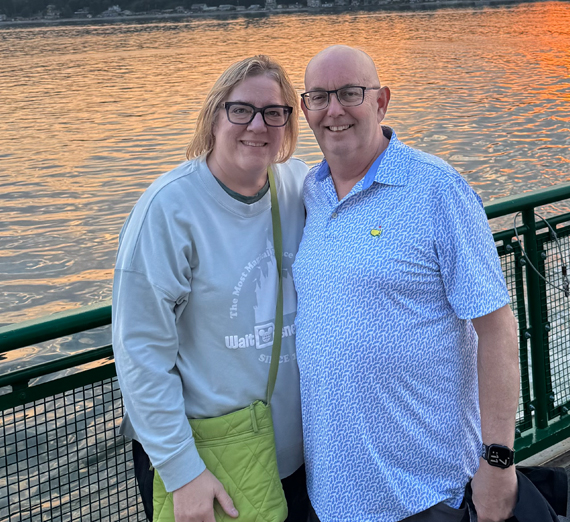
When Chuck Lloyd (’83) reflects on the path his life has taken—from Yakima to Gonzaga, from law school to landmark legal cases, from a career of advocacy to a legacy of generosity—he returns to one moment that redirected everything: a phone call from a new debate coach at Gonzaga University.
“I can say without question,” Lloyd shared, “that Gonzaga Debate is why I am where I am and what I became.”
Today, Lloyd and his wife, Deb Nelson, are ensuring future generations of students will have access to that same transformative experience. Their remarkable, recent gift to the Gonzaga Debate Endowment is both a tribute to what debate gave him and an invitation for others to follow his lead.
Lloyd grew up in Yakima, where a casual junior-high suggestion from a friend—“we should try debate when we get to Eisenhower”—launched him into an activity that became truly formative. His high school coach, a Gonzaga alumnus and former Jesuit scholastic, recognized Lloyd’s talent and introduced him to the legendary Gonzaga debate coach Sister Conway. She urged him to apply for a debate scholarship, and Gonzaga began appearing on his horizon.
A snowstorm ultimately prevented his team from attending the tournament that qualified applicants for the scholarship—missing out led to Chuck’s decision that he likely wouldn’t debate in college.
Then the phone rang.
The new Gonzaga debate coach, Darrell Scott, introduced himself, explained that he had spoken with the dean, and secured additional scholarship support and a work-study position for Lloyd.
“I got off the phone and told my parents, ‘I guess I am going to debate. And Gonzaga just became a whole lot cheaper than my other options,’” he recalled. That call, he said, “changed my life.”
With Scott’s mentorship, Lloyd honed skills in research, argumentation, and critical thinking that opened doors far beyond debate rounds. Those tools helped him earn admission to the prestigious University of Minnesota Law School, clerk for a Minnesota Supreme Court justice, and join Lindquist & Vennum, a highly respected law firm known for its civil rights and labor work.
At Lindquist & Vennum, Lloyd worked on significant cases—from representing professional athletes in antitrust lawsuits to helping diversify hiring practices within the legal field. But one case shaped him most profoundly—the successful effort to free Albert Burrell, an innocent man who spent 14 years on death row in Louisiana.
“Instead of corporate A versus corporate B, this was about someone’s future. And I only had the skills to do it because of Gonzaga Debate,” said Lloyd.
That commitment to justice remained part of Lloyd’s life long after the case concluded. Albert became a close friend until his passing in 2025, and Chuck continues to reflect on the profound responsibility of advocacy.
Earlier this year, Chuck and Deb returned to Spokane for the National Debate Tournament hosted at Gonzaga. They watched the current team compete—“very different now with computers everywhere,” Lloyd noted with a smile—and attended the debate alumni reunion. There, an endowment was announced to ensure long-term stability for the program. Alumni from multiple decades stepped forward with gifts. A former Harvard debate coach even contributed on the spot, urging others to “get behind this.” The momentum was unmistakable.
“I started to think we should contribute,” Lloyd said.
"Insults, name calling and the inability to see any value in the opposition’s point of view is what passes for ‘debate’ in the public forum. In contrast, college debaters must argue both sides of the proposition being considered while being respectful of opponents, judges and the process itself. Gonzaga has been a model program in the college debate community in that regard. That is why it is so important to not only sustain the program but grow it.”
Just weeks after returning home, Lloyd received a life-altering diagnosis of an aggressive brain cancer. As he and Deb navigated medical decisions, clinical trials and treatment planning, they also confronted deeper questions about time, legacy and impact.
“It changed lots of things for us,” Lloyd said. “And we realized that if we were going to make a contribution, maybe now was the time.”
Chuck and Deb decided to make a significant gift to the Gonzaga Debate Endowment—support that will generate lasting resources for student travel, coaching stability, and competitive excellence.
“Deb had no exposure to debate beyond hearing my stories of my experience in the Gonzaga program before we attended the reunion in April,” said Lloyd. “She is so enthusiastic about our donation because as an educated and concerned citizen, she sees the value of the program far beyond wins and losses at a particular tournament. That we can have an impact on the debate program at Gonzaga now and in the future is really thrilling for both of us.”
Chuck’s generosity reflects so much more than nostalgia. It reflects gratitude for the mentors who believed in him, the teammates who shaped him, and the thousands of hours spent preparing arguments that would end up preparing him for life in a legal career. It also reflects a desire to ensure future students—especially those who may wonder whether Gonzaga is out of reach—have access to the same opportunities he did.
The new endowment is growing. Alumni, friends, and former debaters across generations are contributing, and Lloyd hopes others will join in, especially those who remember the confidence, community, curiosity and courage that Gonzaga Debate gave them.
“Gonzaga Debate changed my life,” he said. “This is our chance to make sure it changes others’ lives too.”
Debate at Gonzaga has always been a place where students learn to think boldly, speak clearly, listen generously and advocate for the common good. Thanks to Chuck and Deb’s extraordinary gift—and the momentum they have inspired—those opportunities will flourish for years to come.
For every future Zag who steps behind a lectern, boards a tournament bus at dawn, or discovers their voice in the company of teammates who feel like family, Chuck Lloyd’s generosity will be part of the story. And for a man whose life changed when he chose to answer the phone, it feels like the perfect legacy.