
Event Details
Date & Time
Friday, Apr 24, 2026 7:00 PM - 8:00 PM
Event Link
Department
Location
Hemmingson Ballroom
Contact/Registration
For more information, contact Dr. Ray Rast, History Department Chair at rast@gonzaga.edu or (509) 313-6697.
Event Type & Tags
About This Event
The 2026 William L. Davis, S.J. Lecture presents:
We Share Our Futures with You: Native Nations and Neighbors, the First 250 Years
In 1776, American colonists declared their aspirations for a new nation, one built on rights and governed by citizens. Native people had resided in homelands across North America for millennia by that time. As nations, they had governed by consensus and lived in reciprocity. As neighbors, they witnessed American growth and growing pains, American success and loss. They watched a new nation expand, clarify, crystallize. What did Americans see when they looked at Native neighbors? What did they recognize? Did they see their own reflections? Delivered by Dr. Laurie Arnold, this year’s William L. Davis, S.J. lecture explores the meaning of shared histories and shared futures, and invites us to recognize our bonds as neighbors in these shared homelands.
Dr. Arnold’s lecture launches the Gonzaga History Department’s recognition of the U.S. Semiquincentennial (America 250), which will continue with additional lectures and discussions in Fall 2026. The Department also is excited to present Dr. Arnold’s lecture as the keynote address for the Pacific Northwest Phi Alpha Theta History Conference, which Gonzaga University hosts April 24-25, 2026.
Dr. Laurie Arnold
Laurie Arnold is an enrolled citizen of the Sinixt Band of the Colville Confederated Tribes. She is the inaugural Director of Native American Studies and Professor of History at Gonzaga University. She has previously held positions at the D'Arcy McNickle Center for American Indian and Indigenous Studies at the Newberry Library in Chicago and she was the founding director of Native American Initiatives at the University of Notre Dame.
Her book, Bartering with the Bones of Their Dead: The Colville Confederated Tribes and Termination, was published by the University of Washington Press. Her current research considers how Native American playwrights employ drama to create narratives of Native lives and histories. Her publications have appeared in The American Historical Review, The Public Historian, the Western Historical Quarterly, Montana: The Magazine of Western History, in blogs including Harvard’s Social Impact Review and History@Work, published by the National Council on Public History, in Indian Country Today News, and TIME Magazine. She also contributed to the Metropolitan Museum of Art’s “Art of Native America: The Charles and Valerie Diker Collection” exhibit.
For more information, contact Dr. Ray Rast, History Department Chair at rast@gonzaga.edu or (509) 313-6697.
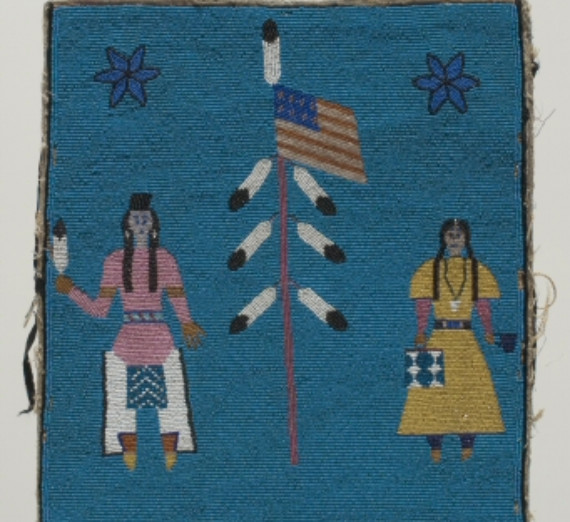
Image Courtesy of the Northwest Museum of Arts and Culture