Summer Brings Hands-On Learning in Biomedical Engineering
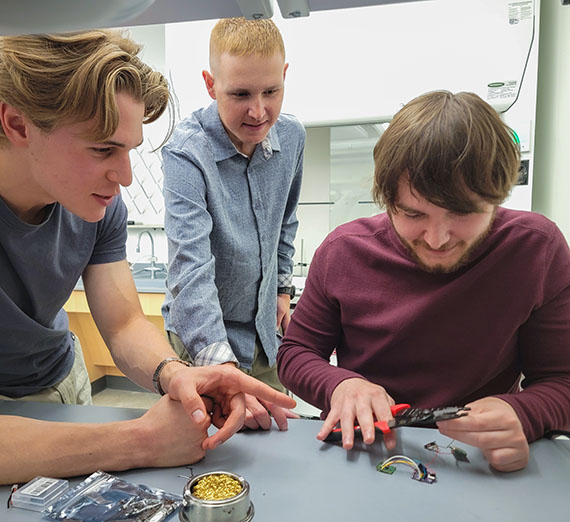
Gonzaga’s biomedical engineering program is expanding in the research laboratory. This summer, two faculty members are leading students in projects in completely different areas of this diverse and fast-growing field.
Kerry Lane, Ph.D. explores how cancer cells grow in different physical surroundings, a strong example of cell and tissue engineering. Nathan Zavanelli, Ph.D. is designing soft and skin-like wearable health monitors. Both are assistant professors of biomedical engineering.
Their projects are only two of the summer projects funded through Gonzaga Research Opportunities in Math, Engineering and Computer Science (GRO-MECS). Student teams began working in late May and will continue into August. These young researchers will also mentor high school students in the annual SEAS Summer Immersion Program July 5-10.
Modeling Cancer Cell Growth
While traditional cancer research often focuses on genetic mutations and chemical pathways, Lane is looking at the disease through a different lens: mechanobiology. This emerging field explores how the physical environment and its mechanical inputs influence how a cancer cell grows.
While healthy tissue is soft, a tumor stiffens the tissue. Lane will recreate those different surfaces in the lab, add epithelial ovarian cancer cells, and compare how they behave. Understanding how the cells adapt and change their surroundings could pave the way for new therapies to slow or prevent metastasis.
Joining her this summer are Maura West, on track to be one of Gonzaga’s first biomedical engineering graduates, and mechanical engineering junior David Walz. This faculty-led research gives both of the students practical experience in lab techniques, microscopy and digital image analysis.
Skin-like Wearable Electronics
Also in the biomedical engineering lab, Nathan Zavanelli’s students are continuing research projects initiated during the academic year.
James Grout (’27, biomedical engineering) was on the team that designed an early prototype of a stretchable patch to monitor a heartbeat. Zavanelli believes this technology could eventually track when a patient is feeling stressed, anxious, or overwhelmed. With support from the GRO-MECS program, Grout’s goal this summer is to make the device more comfortable for a patient to wear for a long time, while retaining measurement accuracy.
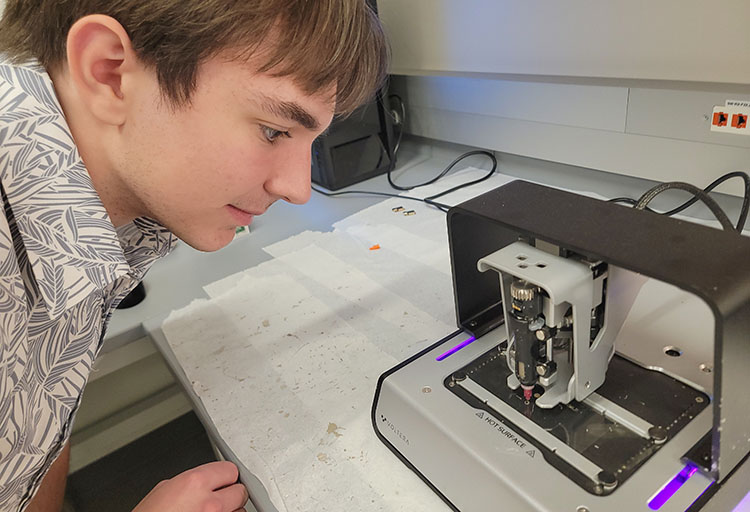
One way to make these medical devices comfortable is to print the electronic circuit directly onto a soft, flexible material. This has been one of Zavanelli’s long-term research goals and Jordan Baumgartner (’28, mechanical engineering) joined the lab to advance that project. Using a specialized 3D printer, he is mastering the meticulous, delicate process of making a clean circuit print.