
Faculty Deepen Teaching Through Experiential Learning Micro-Credential
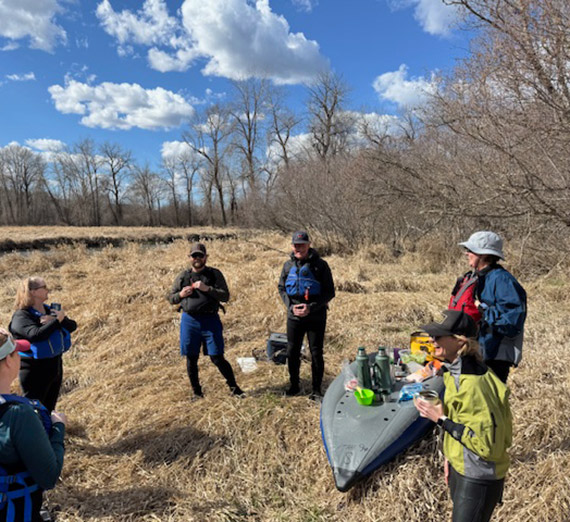
This spring, Gonzaga University’s Center for Teaching and Advising (CTA), in partnership with the Center for Community Engagement (CCE) and Gonzaga Outdoors’ Immersive Outdoor Learning Program, launched the Experiential Learning Micro-Credential. This new professional development opportunity invites faculty to deepen their teaching through experiential pedagogy, with a focus on community engagement and outdoor learning.
The program builds on Gonzaga’s long-standing commitment to Community Engaged Learning (CEL), a teaching strategy that integrates meaningful community service with academic instruction and reflection. Rooted in Gonzaga’s Jesuit, Catholic, and humanistic mission, CEL emphasizes the development of the whole person through service, collaboration, and engagement with the common good. At its core are four key components: integrating service with coursework, fostering co-teaching relationships between faculty and community partners, encouraging active student participation, and using reflection to guide learning.
Designed and led in part by Sarah Marr, Assistant Director of Community Engaged Learning, the micro-credential supports faculty in developing or refining course syllabi that incorporate these high-impact practices. As Marr explains, “The main goal is to provide opportunity for faculty to explore community engaged learning, consider how they might bring that practice into their classroom, and demonstrate they’re continuing to grow and evolve in their teaching.”
Five faculty members from disciplines including Environmental Studies, Religion, Biology, Integrated Media, and Classical Civilizations participated in the inaugural cohort. Over eight weeks, they explored both the theoretical foundations and practical applications of CEL and Immersive Outdoor Learning (IOL), examining how these approaches function within a Jesuit educational context and how partnerships, student affairs, and critical reflection contribute to meaningful learning experiences.
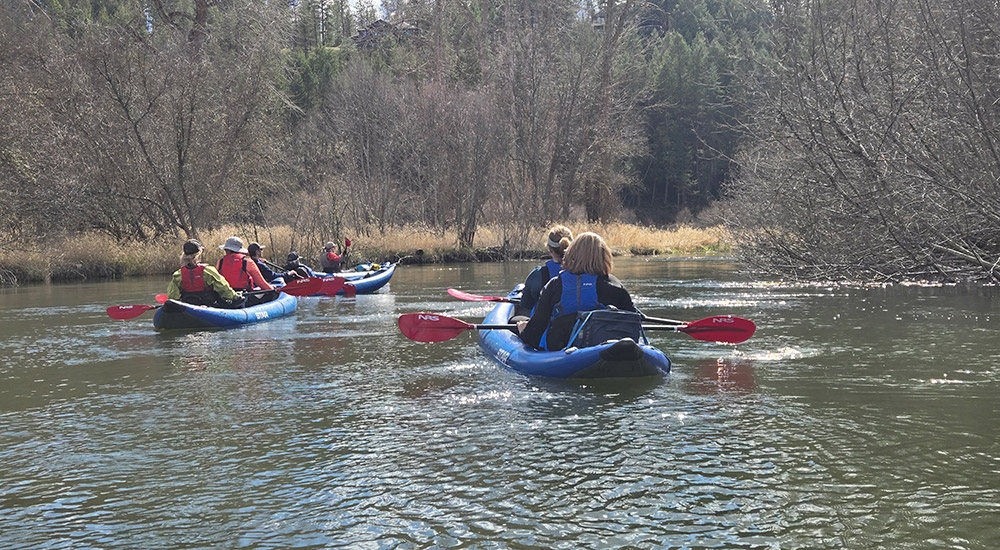
Recognizing that experiential learning must go beyond theory, the program included two hands- on components. Faculty participated in a half-day community immersion in Northeast Spokane, where they engaged directly with local organizations and community leaders, and a full-day immersive outdoor experience floating the Little Spokane River. These place-based experiences grounded their learning in real-world contexts and emphasized the importance of relationship- building and collaboration.
During the Northeast Spokane immersion, faculty connected with organizations such as Gonzaga Family Haven, Habitat for Humanity, Solar Washington, Campus Kitchen, and Family Promise. These interactions helped participants better understand community needs while exploring how to build reciprocal, sustainable partnerships. As Marr noted, “Teaching and learning is better when it’s collaborative,” highlighting the value of connecting classroom learning to the lived experiences of the Spokane community.
The impact of these approaches extends beyond faculty development to student learning. By integrating community engagement and immersive experiences into coursework, students gain opportunities to connect academic concepts with real-world applications, while also developing empathy, communication skills, and a stronger sense of civic responsibility.
The launch of the Experiential Learning Micro-Credential marks an important step in expanding these practices at Gonzaga. Looking ahead, future cohorts will continue to build on this foundation, further integrating Immersive Outdoor Learning and bringing faculty from across disciplines together to explore innovative, place-based approaches to teaching and learning.