
The Gonzaga Climate Institute is partnering with local organizations including public libraries, community centers, and faith organizations to establish the Spokane Community Resilience Hub Network. Modeled after programs by the Urban Sustainability Directors Network and Communities Responding to Extreme Weather, the Resilience Hub Network seeks to provide all community members places of refuge from extreme events such as extreme heat and cold or intense periods of wildfire smoke.
Why Resilience Hubs?
The Climate Institute's research has consistently revealed that community members are not likely to make use of temporary, pop-up facilities during extreme weather events. In moments of crisis, people turn to the organizations and facilities that they already know and trust. The goal of the Spokane Community Resilience Hub Network is to strengthen those facilities so they can continue to serve their community in moments of crisis. As an example, the Carl Maxey Center produced detailed designs outlining how to help strengthen their facility to eventually serve as a Level 2 Relief Hub (see Figure 1). Funding for this work was supported by a grant from the WA Department of Health's Climate and Health Adaptation Initiative.
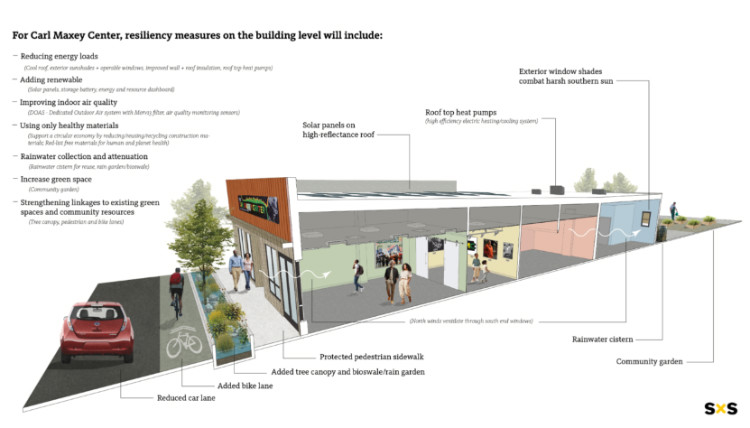
Figure 1. A visual depiction of how the Carl Maxey Center could be strengthened to become a Level 2 Resilience Hub.
Three-Level Model
With the support of the Climate Institute, the regional organizations participating in the Spokane Community Resilience Hub Network are co-developing a three-level model where each level of resilience hub builds on the one before it, providing additional layers of support. This method aims to result in a program that is adaptable to the unique needs and resources of each community organization interested in joining the network. Figure 2 depicts a draft of how this model might be conceived. The final form will be the result of ongoing conversations within the network.
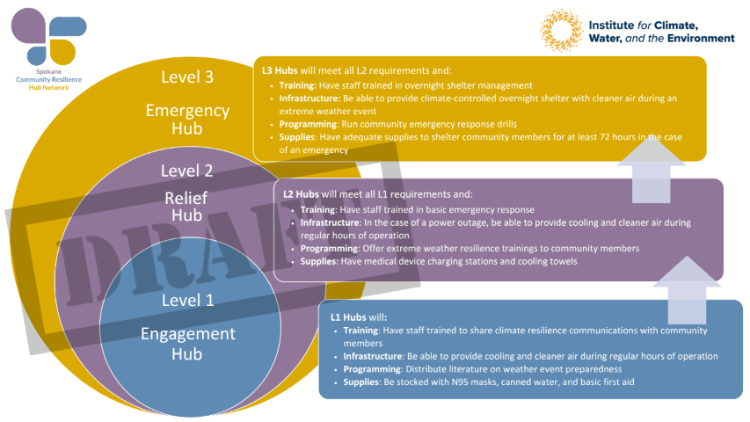
Figure 2. Diagram depicting the relationship of the three levels of the resilience hub model.
With generous support from the Avista Named Communities Investment Fund, the Climate Institute has worked to certify the eleven community organizations comprising the inaugural cohort of Level 1 Engagement Hubs. As the training and certification processes are defined and the key elements of Level 2 Relief Hubs are co-produced, the Climate Institute will begin recruiting and supporting the certification of L2 Hubs in the network.
List of current Level 1 Engagement Hubs (Fall 2026):
- Carl Maxey Center
- Dr. Martin Luther King, Jr., Family Outreach Center
- Northeast Community Center
- Spokane Public Library- Central
- Spokane Public Library - Hillyard
- Spokane Public Library - Indian Trail
- Spokane Public Library- Liberty Park
- Spokane Public Library - Shadle Park
- Spokane Public Library - South Hill
- St. Andrews Episcopal Church
- West Central Community Center
Resilience Hubs Map
(View map full screen.)Partnerships and Oversight
The creation of the Spokane Community Resilience Hub Network is informed by the Spokane Community Resilience Collaborative (SCRC). The SCRC has developed and is in the process of revising city-level extreme heat and wildfire smoke resilience plans to be utilized by partners throughout the community which, among other things, will provide guidelines and a system of review for the resilience hub program. The SCRC is also overseeing the development of building-level resilience planning tools and staff training resources that can be utilized by each hub to develop resilience plans specific to their building's and community's needs.
Staff members at each of the hubs and the community members who utilize the hubs will be instrumental in providing feedback to inform the development of the hub network so it can adapt to community needs and existing resources. Stay tuned for neighborhood events where you can learn more about the resilience hubs, ask questions, and provide feedback!
Timeline
Recruitment for the Spokane Community Resilience Hub Network began in late summer of 2025, during which time eleven sites were identified to take part in the pilot program funded by Avista's Named Communities Investment Fund. Over the summer of 2026, these eleven hubs provided resources, information, and refuge from extreme heat and wildfire smoke to their community members. As feedback from heat and smoke season is processed and reviewed, additional outreach events and materials will become available at participating hub locations. Additionally, educational events will take place to share information about the resilience hub network and collect community feedback to inform the program.
Mailing List
Interested in receiving updates about the Spokane Community Resilience Hub Network? Join our mailing list by following the sign up link below!If you have additional questions about the community resilience hubs, please contact Climate Resilience Program Coordinator, Mary Condon, condonm@gonzaga.edu.