
Someone Held the Door for Her, Now She’s Holding it for Others.
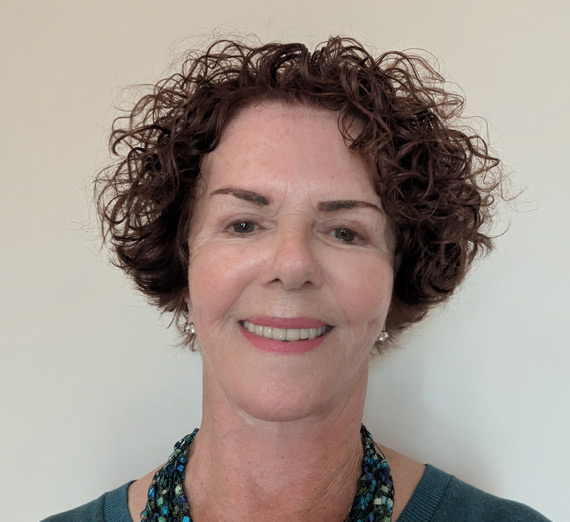
Heather Anderson ('80) remembers what it felt like to sit in the financial aid office wondering whether her dream will survive another semester. Years ago, she sat there in tears, trying to figure out how she could stay at Gonzaga. The education she was working so hard to earn felt within reach and impossibly fragile at the same time.
Today, Heather has made sure future students will not face that moment alone. Through a legacy gift in her will, Heather has committed to supporting unrestricted scholarships at Gonzaga University. Her hope is simple: that students who need opportunity the way she once did will be able to continue their education without wondering whether the door will close before they’re done.
“I got educated from Gonzaga and that’s how I made all my money,” she says. “Now I’m giving it back so that Gonzaga can educate even more people.”
Heather’s story does not begin with the typical teenage launch from the nest that some students experience. It began with rebuilding. She describes herself at 18 as “about the biggest failure that ever was.” She left high school, married young, had two children and then divorced. She had little ones who were one and three years old, complete with constant needs and sleepless nights for Heather.
Then the question “what do I do with my life?” struck. A counselor at Catholic Family Services helped her see a path forward — earn the GED, begin at community college, transfer to Gonzaga. Heather says that plan — from day one to Gonzaga graduation — was there from the beginning. She also says people thought it was outrageously ambitious.
So, she studied. Constantly. The kind of studying that is not romantic or Instagrammable. The kind that looks like saying no to everything else because the stakes feel life-sized. At community college, she took business classes, art classes and anything she could fit in because learning felt, to her, like oxygen. She remembers the art students bristling because she “fell into” it and was making them look bad. Her telling is funny and sharp, but underneath it is something deeply tender: Heather discovered she could do hard things, and she wanted more.
When she arrived at Gonzaga, she carried a fear many students carry quietly, even when nobody can see it — what if I’m not smart enough to be here? Her advisor, Colonel Harmon, did not coddle that fear. He demolished it.
“You got accepted,” he told her. “You’re smart enough. Get over it.”
Later, after a final exam Heather finished in half an hour, Harmon stopped her in the hallway and said simply, “You’re really smart.” Only three out of forty students had passed. Heather earned a 97.
She tells the story not as a triumph but as proof that sometimes we need someone to speak certainty into the places where we are still negotiating with doubt. She also talks with real affection about something people might not expect from a finance major.
“What I really felt like with Gonzaga,” she says, “is I learned how to think.”
Not job training. Not memorizing and regurgitating. Thinking. The ability to break problems down, to process complexity without shutting down, to move through life’s challenges with confidence and clarity.
Only later did she realize that the philosophy and religion classes she once thought were “so useless” were quietly rewiring the way she approached the world. That, she says, is what made the difference. But the path to graduation was not smooth. Heather remembers sitting in the financial aid office, trying to figure out how to stay enrolled. She was supposed to take a loan that Gonzaga would match, filling the remaining gap in her tuition. She didn’t want to take the loan. She didn’t want the debt. So, she turned it down — and the matching support disappeared with it. Suddenly the path she had worked so hard to build felt uncertain again.
“They did come up with the money,” she says. “But yeah, I don’t want somebody else to have to go through that.”
Years later, when Heather began thinking about what to do with the resources she had built through her career, that moment returned with clarity.
Her legacy gift is a response to that memory. Heather has confirmed a planned gift in her will to support unrestricted scholarships at Gonzaga. Unrestricted scholarship support matters because student lives are not tidy. Financial situations change. Families change. Plans change. While the need is often urgent and sometimes invisible, is rarely convenient. Flexible scholarship funding makes it possible to meet students at the exact moment help is needed.
Heather does not describe this gift as a monument to herself. She describes it as stewardship. She uses the word trust. At one point, she had considered leaving her estate to another charitable Foundation because she believed the organization would steward the resources well. When that option changed, she began asking herself a simple question during her daily walks: What do I want to do with my money?
Again and again, her thoughts returned to Gonzaga. When she spoke with the advancement team about how scholarship funds are stewarded and distributed, her reaction surprised even her.
“Before I even got off the phone, I was just downright giddy,” she says. “I mean, I’ve been talking about it every day since I cold called GU and said, ‘Would you take my money?’”
It is a funny line, but it carries something deeper: the relief of finding a place where the work of a lifetime can continue to do good.
“I hope that this gets out and inspires other people to give,” she says, “and keep the legacy going on of providing a great education for people … people that can’t afford it, they can still get the education too because look at what they did for me. I had nothing, below nothing — and look at what I’ve done.”
Heather is reaching backward to the person she once was and forward to the students she will never meet, saying: Someone helped me. Let me be that someone for you.
Legacy giving can feel abstract until you hear it this way. A gift in a will or trust is not only about the future. It is also a way of honoring the experiences that shaped a life and ensuring those opportunities continue for others. Heather’s story invites a quiet question: If Gonzaga helped shape the way you think, the way you work, or the way you live, what might it mean to leave a door open behind you?
For many alumni and friends, including Gonzaga in their will or trust is a way to do exactly that — transforming gratitude into opportunity for the next generation of students. Heather made her decision because she remembers what it felt like to need help and to be met with it. Also, because she wanted to make sure the door stays open for someone else.
If you’d like to join Heather in holding the door for future Zags with a gift in your will, visit gonzaga.edu/plannedgiving to learn how to get started.