
TESOL Alumni Highlight: Analee Scott
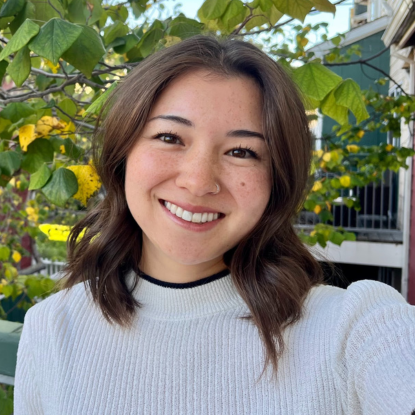
M.A. in Teaching English to Speakers of Other Languages alum Analee Scott shared an inside look at what it’s really like to be part of the program. From academic rigor to real‑world practice, she reflected on the experiences that defined her graduate studies.
Why Gonzaga and why the TESOL program?
What first drew me to Gonzaga and ultimately kept me there was the university’s mission and the balance of academic rigor with strong community and support. Of all of my experiences at Gonzaga, I found the TESOL program to most exceptionally engage the university’s values of “commitment to dignity of the human person, social justice, diversity, intercultural competence, global engagement, solidarity with the poor and vulnerable, and care for the planet,” especially in ways that aligned with my background and interests. The program embodied this commitment through its thoughtful integration of ESL, TESOL, local immigrant and refugee engagement, cultural learning and humility, campus and community advocacy, social justice, and global partnerships.
What skills did you develop in the program?
One of the not-so-secret ingredients I found in the TESOL program’s recipe was the “50% theory / 50% practice” framework. The skills the program honed in research, academic writing, sociolinguistic and sociocultural perspectives, second language acquisition, course design, pedagogy, grammar – these were so effectively presented and developed thanks to the balance of theoretical exploration and practical application. For example, in Pedagogical Grammar, as we learned, read about, and practiced English grammar concepts in the classroom, we created our own grammar games and took them to Spokane Community College for ESL game night. After piloting our games and receiving feedback, we revamped them and went back to SCC for a second (and much improved) game night. This interplay between coursework/theory and practice/feedback/revision was consistent through each course in the program, and I graduated with much more practical confidence than I expected, though not at the expense of theoretical depth.Where has your degree taken you, abroad or domestic, and how did it set you up for success?
Right after graduate school, I used my degree to get published, which had always been a dream of mine on the way to one day applying to PhD programs. Before a PhD, though, I wanted to gain work experience, and I initially planned to go abroad. Being a pandemic graduate, however, changed my plans.
My now husband Tim (GU class of 2019) had a job in San Francisco at that time, and I followed him down to the Bay Area to work at UC Berkeley. Luckily, Berkeley brought me as international of an experience as I could likely find without leaving the US.
I found my way to UC Berkeley’s family housing, a richly international, multigenerational housing community called University Village. My experiences in TESOL and on the GU Center for Global Engagement’s (CGE) Activities Team laid the foundation for an initiative I co-founded with one of the international residents called the Village International Program (VIP). VIP focuses on providing social and educational opportunities to international families at University Village, though wider audiences are often invited and involved. My work with the program led me to build relationships with UC Berkeley departments like the School of Education, Berkeley Language Center, and others, and I found amazing mentors that helped guide me toward finally applying to PhD programs this year. And good news – I was accepted to one of my top choices, UC Davis’ Language, Literacy & Culture program in their School of Education! I’m so excited for this next chapter.
What has your return on investment been? Financial, career, personal, etc.
The career ROI of my degree has been huge. Each of the residential life jobs I have held since graduating has required a master’s degree, preferably in a field related to education. While I did not have a higher education / student affairs degree, I was able to market my TESOL degree as a rich foundation for engaging with diverse populations, campus and community advocacy, cultural humility and learning, and globally-minded collaboration and problem solving. I find the same skills immensely helpful in my life outside of work as well – personal relationships, self-education, intercultural dialogue, language learning, and the list goes on.
How was it building community with your peers in the program?
My peers in the TESOL program were wonderfully multigenerational and multilingual, each individual bringing such different life experiences and perspectives to our class and community spaces. My classmates regularly opened my eyes to new ways of thinking about and approaching reading, writing, research, language, culture, classrooms, family, history, etc. At the same time, they were extremely welcoming and relational, finding ways to build connection not just amidst but through our differences. They helped create the high-challenge high-support environment that made my program experience so transformative.
How was your experience with the faculty?
The wonderful TESOL faculty were the other key part of creating the high-challenge high-support environment that so transformed me. They fostered a culture of curiosity, humility, fun, accountability, relationship-building, and leveraging the expertise of everyone in the room. Despite being such a small team, they had an immense impact on Gonzaga’s international community on campus, locally in Spokane, and globally with partner organizations and institutions. I have kept in touch with them in my years since graduating, and they have especially helped me through the PhD application process. I strive to carry forward their tradition of empathy, humor, and community impact in all I do today.
How was the internship/practicum experience? How did it set you up for success in your career?
My practicum experience was with adult ESL at Spokane Community College’s Adult Education Center. The class was made up of immigrants and refugees from all over the world, and I quickly learned how important it was to build trust within a classroom, first and foremost. Without knowing anything about one another or showing we cared about one another, the lessons would fall quite flat and feel trivial to students who, for example, were overwhelmed by the daily news cycle, trauma, family circumstances, financial situations, etc. My practicum teacher and TESOL practicum advisor encouraged me to focus on relationship-building before anything else, and the pay-off was immense when it was my turn to lead lessons. I have used this philosophy in all of my work since the TESOL program, and I continue to find it the most important precursor to successful collaboration and communication no matter the team, room, or context.
What advice would you give to someone considering Gonzaga’s TESOL program?
When considering any graduate program, I would echo what many mentors told me and advise a prospective student to identify what they wanted to do in and after a graduate program, and then see if a given program, especially the faculty, would be the right fit to develop them academically and professionally. Do you want/need to do rigorous academic research for prestigious journals? Do you want/need experience building community projects/programs? Do you value high-touch advising and mentorship, or do you prefer independence? How important is social justice and social impact to you? In my Gonzaga TESOL experience, the program leaned toward community projects/programs, high-touch advising/mentorship, and strong social justice/impact focus. Within that context, I had an advisor with interests and values that aligned well with mine – multilingual education, sociolinguistics, community engagement, and linguistic invention. If I were applying to GU’s TESOL program today, I would a) familiarize myself with the current faculty’s work and interests and b) talk with current/recent grads to determine whether or not the program is a good fit.
What, if any, research opportunities were available to you and what did you gain from them?
When I began the TESOL program, I knew I wanted to do the “thesis” track for degree completion (as opposed to the “portfolio” track). The thesis was recommended for those who wanted to focus on research and publication, especially if interested in continuing in academia (i.e. pursuing a PhD and/or becoming a university professor/researcher, both of which I was interested in).
I worked toward my thesis research throughout my coursework, using each course’s final paper to essentially build out a part of my literature review. In my second year, I was ready to collect and analyze data and finish writing my thesis paper. Along the way, my peers and I were given various conference presentation opportunities, which ended up being critical for my CV when I applied for jobs in higher education and, more recently, PhD programs.
I also got to work with a couple faculty on their research as a graduate research assistant, which was excellent for my professional development and CV. After the program, I used my thesis to publish a chapter in a TESOL textbook and co-authored a journal publication with TESOL faculty and alum, which were key for applying to PhD programs.