
Educating Tomorrow’s Teachers
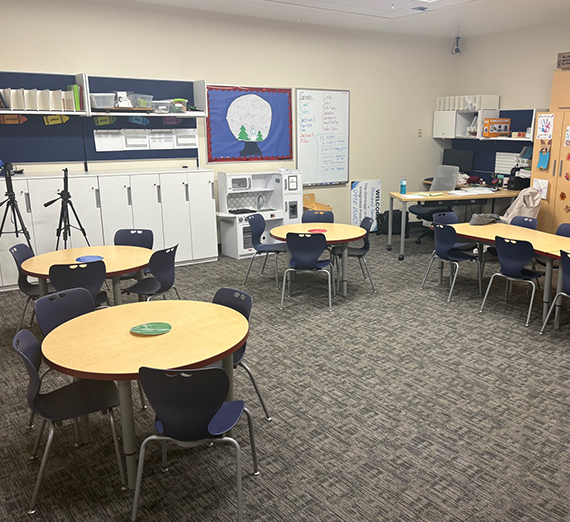
Tucked behind an unassuming door in the Rosauer Center is one of Gonzaga’s most immersive teacher‑training classrooms – a fully functioning preschool where students studying education can learn to teach by actually teaching.
The preschool operates as a lab within the School of Education’s Special Education and Applied Behavior Analysis department. It serves children ages 3-5 in an inclusive environment that mirrors the diverse classrooms graduates will one day lead.
“We try to make this experience as close to real life as possible,” Senior Lecturer Jennifer Neyman says. She oversees the program, helping to guide future educators.
For Gonzaga students pursuing special education certification, the preschool is more than a practicum, it’s a full teaching cycle compressed into a two‑hour session. Each semester, student-teachers rotate through roles as lead teacher, assistant and data collector. They write detailed lesson plans, implement them with small groups of preschoolers, and then evaluate their effectiveness using real‑time data.
A typical session moves quickly. After free play and opening circle, the room splits into three simultaneous learning centers: fine motor, academic, and language/communication. Student-teachers deliver each lesson three times to rotating groups, gaining repeated practice and immediate feedback.
“The goal is to synthesize a typical day in preschool but within about a two‑hour period,” Neyman says, noting it may be fast but every minute is intentional.
Beyond instruction, students take on the full spectrum of classroom responsibilities. They decorate bulletin boards with colorful displays and construction paper, prepare home‑connection packets for families, film and self‑evaluate their teaching, and even run parent‑teacher conferences. These experiences, Neyman says, build confidence and professional readiness.
“Everything we do, including self-evaluations, is for the benefit of the preschoolers,” she continues. “But it also benefits the student-teachers, it’s how they know how they’re doing in real time.”
The preschool serves families across campus and the greater Spokane community. Enrollment is first‑come, first‑served, and the program never turns a child away for inability to pay. Many families discover the preschool through word of mouth or partnerships with local organizations, but Neyman wants staff and faculty to know it’s open to them as well.
For Gonzaga’s future educators, the preschool often becomes one of the most memorable parts of their training. Alumni regularly return with stories about lessons taught, challenges navigated and the preschoolers who shaped their understanding of what it means to teach.
“It builds your character,” Neyman says. “It can be intimidating, but this is the kind of experience that can really solidify for someone that they are mean to be in education.”