"Laboratories of Hope"
Presidential Speaker Series event welcomed a panel of experts to discuss the role of universities in addressing climate change, sustainability, and social inequities.
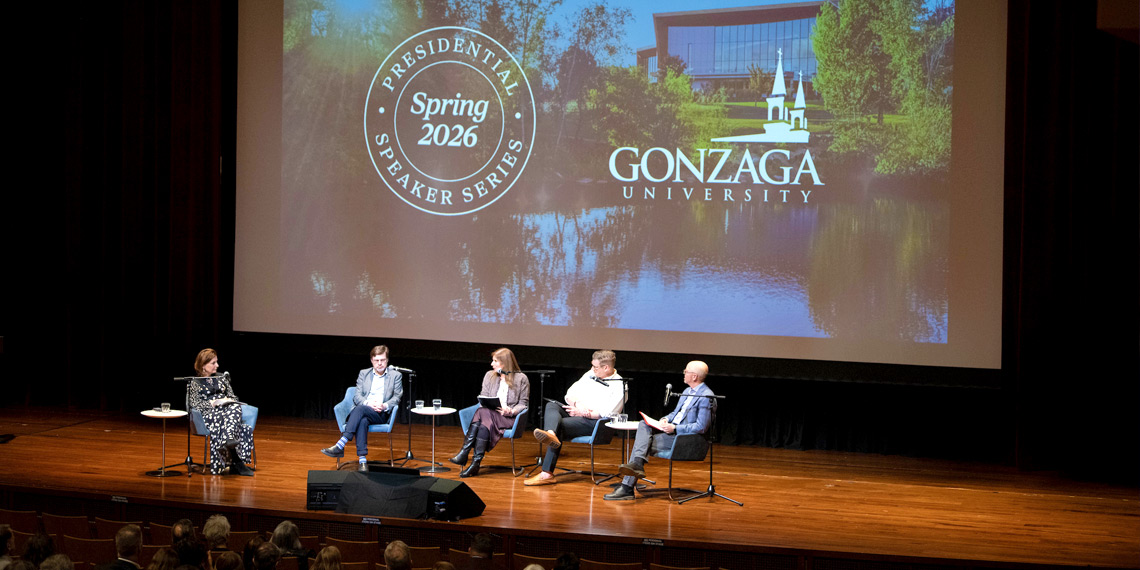
While the global climate crisis can feel daunting, Catholic universities are uniquely positioned to educate students capable of addressing it in ways that will help care for what Pope Francis has called “our common home” for generations to come.
That message came through clearly from the panelists who joined President Katia Passerini for the first Presidential Speaker Series event of her tenure, continuing the series launched in 2011 under President Emeritus Thayne McCulloh, and designed to bring voices to campus that challenge audiences to reflect and think differently.
Held April 8 at the Myrtle Woldson Performing Arts Center, the event brought together international sustainability experts and Gonzaga community members for an engaging discussion themed “Caring for Our Common Home: Turning Local Action Into Global Impact.”
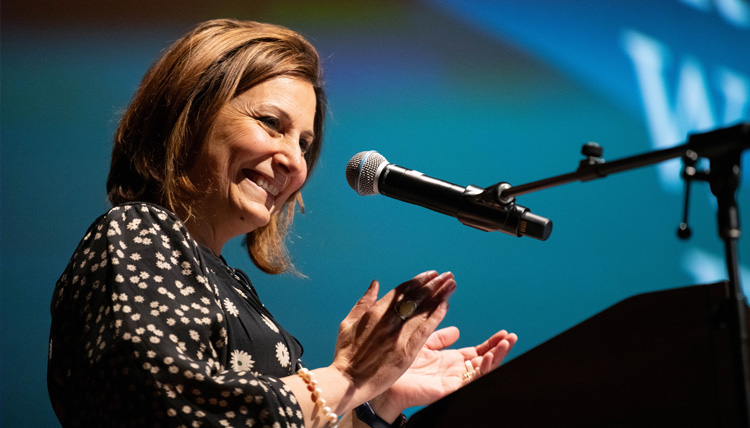
Welcoming students, faculty, staff and area residents, Passerini explained that both the venue and the event’s title were chosen intentionally. The LEED Gold–certified center reflects the trees, sky and Spokane River that define the region, while the theme drew inspiration from Pope Francis’ 2015 Laudato Si’ encyclical.
“For the past 11 years, it has been a blueprint calling us to listen—to science, to the cry of the Earth and the cry of the poor, and to the call of our faith,” Passerini said. “It encourages us to protect God’s handiwork and walk a path toward ecological renewal and sustainability.”
For more than 90 minutes, panelists shared data-driven research, personal stories and even poetry. While acknowledging the urgency of the climate crisis, they also conveyed a sense of hope.
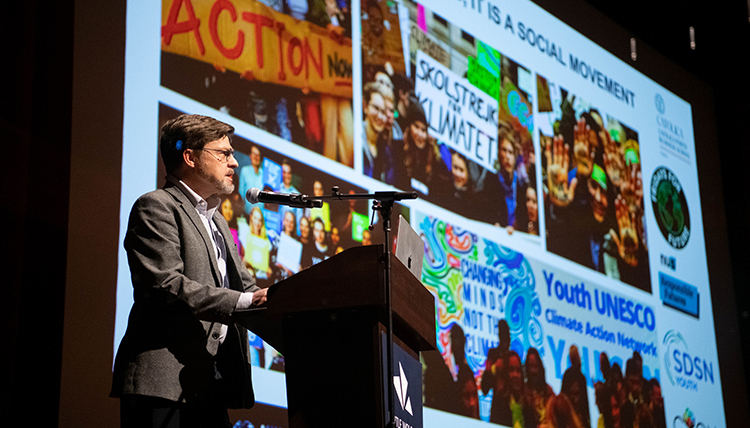
Dr. Wayne Visser, an expert in sustainable and regenerative business, opened with a global overview. Citing survey data and images of an Earth system “under severe strain,” Visser noted widespread mistrust in institutions and growing concerns among young people about the future.
“It’s not surprising that we see protests around the world,” Visser said. “The young people are leading, and it would be a mistake to think of them as just protests, because they are part of a social movement — a movement that’s demanding change.”
Universities, Visser added, are among the most trusted institutions and have a responsibility to lead. “Catholic universities have a special opportunity,” he said. “They can become what Pope Francis calls ‘laboratories of hope’ for future generations.”
Facts and data alone won’t drive change, Visser emphasized. “Somehow we have to access people’s hearts. We have to ignite their imaginations. We have to perhaps even touch their spirits.”
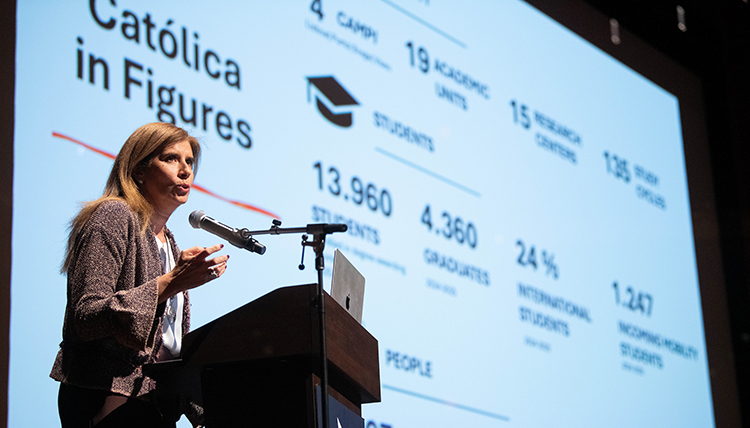
Isabel Braga da Cruz, president of the Catholic University of Portugal’s Regional Center of Porto, followed with a concrete example of that vision in action. She described her university’s recently completed five-year sustainability plan—which integrated measurable outcomes across curriculum, research and community engagement—and outlined plans for the next phase.
“Sustainability is integrated into everything we do,” Braga da Cruz said.
Gonzaga leaders Brian G. Henning, director of the Institute for Climate, Water, and the Environment, and Jim Simon, director of the Office of Sustainability, then highlighted local efforts with global impact.
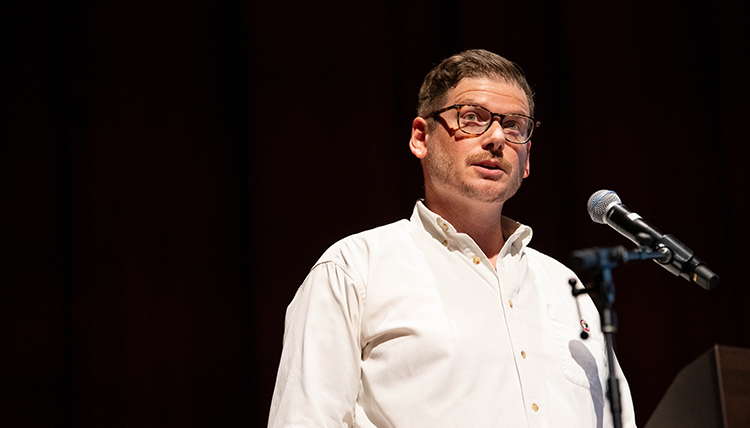
Simon shared stories of alumni JJ Doria (’21), Andie Rosenwald (’24) and Annie Cooper (’25), whose student engagement in sustainability shaped their careers. He also reflected on how Laudato Si’, released the year his son was born, deepened his sense of purpose.
“My connection to sustainability became intensely real, grounded, and authentic,” Simon said. “I realized I’ve found an opportunity to support, lead and build relationships with the very people who will share [my son] Porter’s future, Gonzaga’s students.”
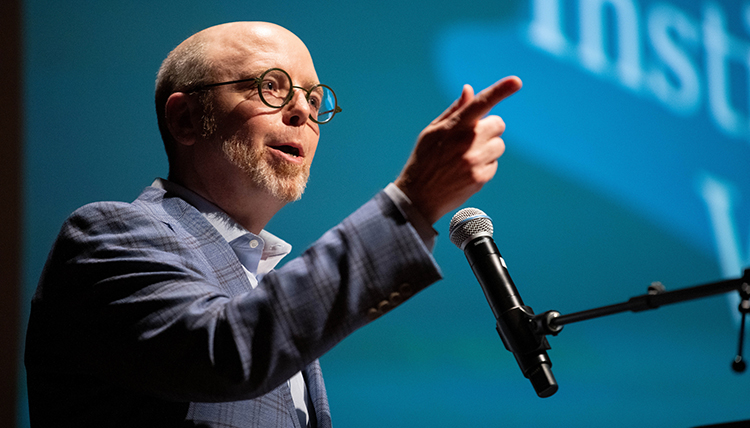
Henning, who is a philosophy professor and environmental ethicist in addition to his role at the Climate Institute, approached the issue with a critique of “anthropocentrism”—the belief that humans exist above nature. That concept of humans being the central, most important entities in the world over all other aspects of nature is part of the reason the Earth is in an ecological crisis, Henning argued. The path forward is one in which humans recognize they are part of a “wider community of life.”
“The University has the opportunity and the responsibility to serve as a moral and practical leader in helping us to understand and respond to the climate crisis,” Henning said. “Our community needs us.”
- Academics
- Faith & Mission
- Global Impact
- Student Life
- Sustainability
- President's Office
- News Center