
M.A. in Sport & Athletic Administration Alumni Spotlight: Houston Bradeson
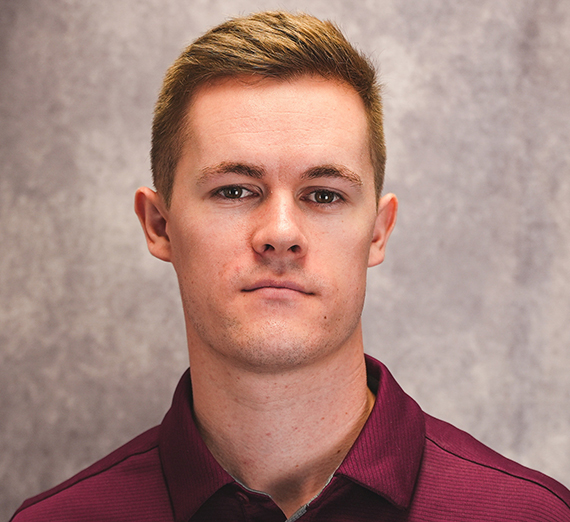
For Gonzaga alumnus, Houston Bradeson, the Master of Arts in Sport and Athletic Administration (MASAA) program provided the exact springboard needed to step into his current role as Video Analyst for New Mexico State Women’s Basketball. In this Q&A, Bradeson reflects on his journey through Gonzaga's MASAA program, the hands-on experience that set him up for success, and how building strong networks in collegiate athletics paved the way for his career today.
Why did you decide to return to school for a masters degree?
After completing my undergraduate degree in Sports Management, I had the opportunity to be a Graduate Assistant with Gonzaga Women’s Basketball. I wanted to start my collegiate coaching career and felt that furthering my academic journey in the MASAA program was the perfect decision.
What do you do for work and what does your role consist of?
I am currently the Video Analyst for New Mexico State Women’s Basketball. My duties include film breakdown and analysis for the players and coaching staff, scouting and recruiting potential student athletes, organizing male practice players and student managers, assisting the Head Coach with coordination of team offense, and assisting with team operations.
How has MASAA set you up for success in your career?
The MASAA program prepared me for success by giving me both the academic foundation and practical experience needed to work in collegiate athletics. I developed a better understanding of leadership, organizational management, compliance, communication, and the day-to-day operations of athletic departments. The program emphasized applying those concepts in real-world settings through jobs or internships.
My graduate assistantship allowed me to gain hands-on experience in collegiate athletics while completing the program which helped me build skills in video analysis, player development, scouting, operations, and administrative responsibilities. The combination of classroom learning, mentorship from faculty and coaches, and practical experience gave me the confidence to step into a full-time role in Division I. The relationships I have built and the professional network I have developed while being a part of the MASAA program continue to be valuable resources for my career growth.
What return on your investment have you seen so far?
Completing the MASAA program allowed me to be a candidate for full-time roles in Division I athletics. I was able to move up from a Graduate Assistant into a full-time role as a Video Analyst.
What was your experience with the faculty like?
The faculty were the best part of the MASAA program. Everyday was an opportunity to learn from professionals with extensive experience in the world of sports (including current/former team executives and athletic department officials, college coaches, and former student athletes). The faculty brought real-world experience into the classroom and challenged us to think critically about issues facing collegiate athletics. What stood out was how approachable and supportive they were. They offered career advice and served as mentors throughout my time in the program and consistently went above and beyond to help the students grow into sport professionals.
What internships did you do and how did that experience help you decide what you wanted to do for your career?
I had the unique opportunity to work as a Graduate Assistant for Gonzaga Women’s Basketball, a Graduate Assistant for the Physical Education Department working for Kristen Kavon, and briefly as a Graduate Research Assistant for Dr. Jimmy Smith. Working with Women’s Basketball allowed me to grow as a coach and improve my video analysis, scouting, player development, and operations skills which help me everyday in my current role.
Working as a Graduate Assistant in the Physical Education Department helped me develop strong leadership, communication, and organizational skills while learning how to balance student instruction with administrative responsibilities which prepared me to thrive in fast-paced professional environments. Working as a Graduate Research Assistant for Dr. Smith strengthened my analytical and research skills, which I now use to evaluate game film, identify trends, and provide data-driven insights that support our team's preparation and performance. All three of these opportunities allowed me to grow both personally and professionally as they helped me find my passion for working in athletics.
What is it like to work in the sport industry?
Working in collegiate athletics is both demanding and rewarding. The NCAA landscape is constantly evolving and has changed dramatically since I first started as an athletic department intern during my undergraduate years. While the long hours and challenges are part of the job, the relationships I have built and the experiences I share with friends and coworkers make it all worthwhile. My time as both a student and an employee at Gonzaga has been the most meaningful chapter of my life so far, and it solidified my passion for pursuing a career in collegiate athletics.
What advice would you give to someone considering Gonzaga's MASAA program?
Take advantage of every opportunity the program offers. Build relationships with your professors and classmates, ask questions, and look for hands-on experiences through graduate assistantships, internships, and networking. The coursework provides a strong foundation, but the value comes from applying what you learn in real-world settings. If you're willing to invest in your own growth and embrace every opportunity, the MASAA program will prepare you for a successful career in the sports world and open many doors for you.