
Innovation On Display at Senior Design Expo 2026
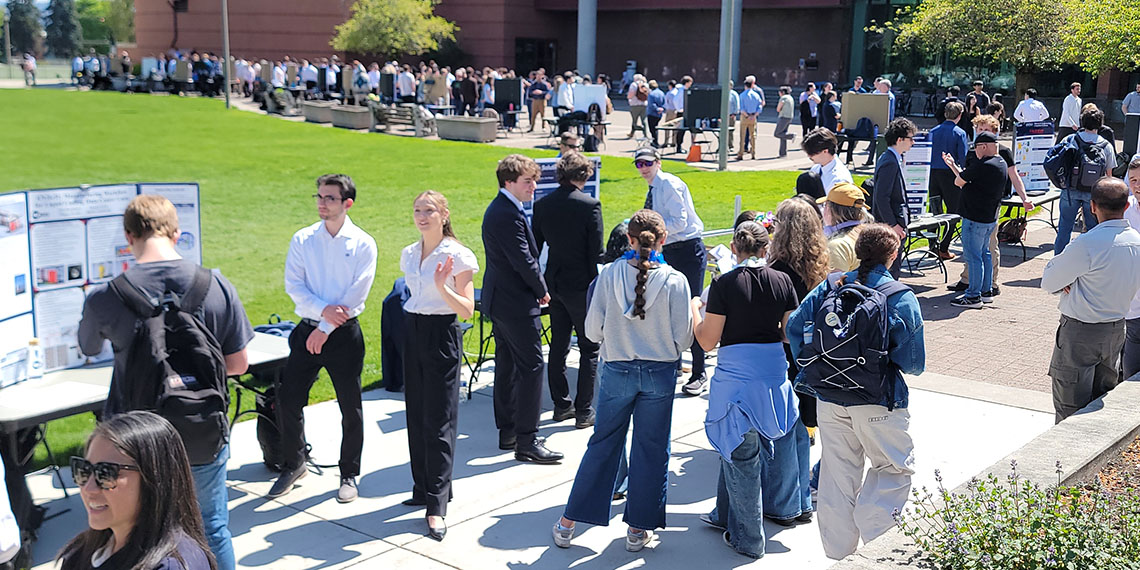
Student innovation took center stage at the annual Senior Design Expo, held April 29 on the Gonzaga campus. More than 50 teams displayed academic posters, prototypes or other representations of their work on tables surrounding the Foley Lawn.
Over the Fall and Spring semesters, each team of 3-4 students were responsible for planning, budgeting, managing, and executing their project from concept to completion, guided by goals and expectations set by sponsors. Industry professionals guided them with their projects as faculty advisors, sponsor liaisons, or through the Design Advisory Board.
Below are a few of the projects our students tackled during the program. See the full archive of projects at the Senior Design site.
Net Gains: A Better Pickleball Paddle
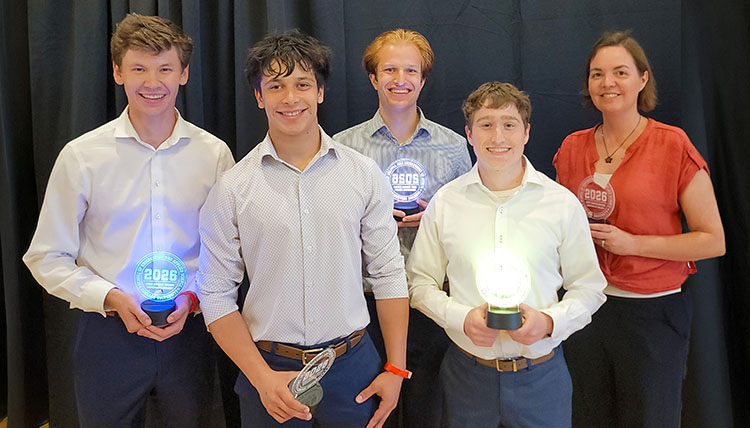
Most Expo visitors couldn’t resist picking up a prototype pickleball paddle at team 35’s table, and many took a turn popping a perforated plastic ball back and forth across a nearby net.
The prototype paddles integrated composites, expanded polypropylene foam, and other specialty materials.
Team sponsor Selkirk Sports will be able to use the schematics, materials research report, and prototypes to inform design choices for future paddle production.
Prepare for Landing… With Style
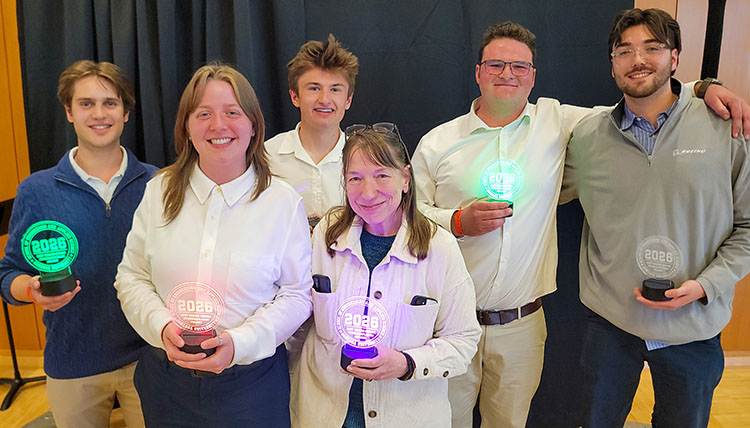
Near the end of any airline flight, the request to pass all “remaining service items” to the attendants means “Give us your trash.” All the cups, napkins, and other waste has to be collected and stored safely onboard.
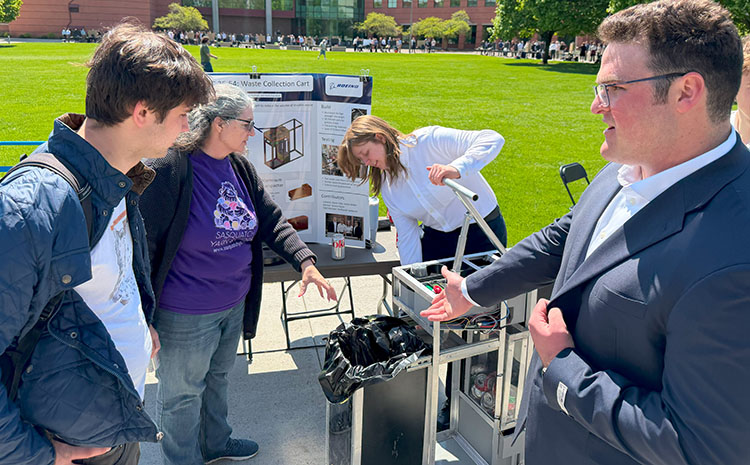
At the Expo, team 54 displayed the galley cart they retrofitted to reduce the volume of that waste at the Expo. They told visitors how they decided to compact trash with a lever arm and design dedicated compartments for recyclables and liquids.
The team sponsor, Boeing, can use this prototype and analysis of possible compaction methods to consider commercial applications.
Driving a Community’s Traffic Improvements
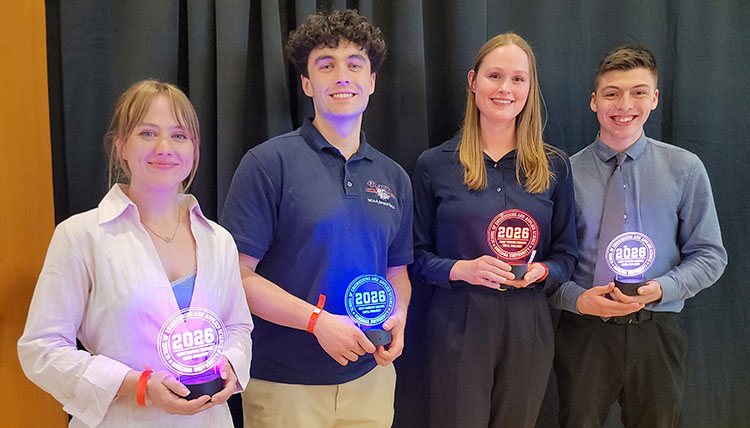
The sign at Market and Wellesley says Speed Limit 20, but most vehicles go much faster through Hillyard’s historic business district. Team 20 proved it, with radar data aligning with the City of Spokane’s speed study.
Gonzaga’s young traffic engineers collected and analyzed traffic and crash data to determine what would turn the Market/Haven St. one-way couplet into a safer two-way corridor. Mentored by the city’s professional traffic engineers, the team developed three designs alternatives that would slow speeds, improve foot traffic and bike safety, and keep traffic flowing.
They presented their designs to the Hillyard Neighborhood Council in April and recommended one to their sponsor, the Northeast Public Development Authority.
Linguistic Lessons
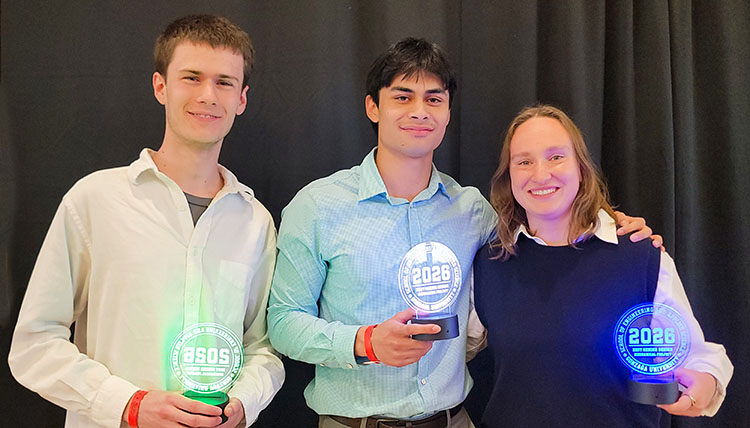
A Spokane-area Speech and Language Laboratory explores language development in children through audio recordings of young families interacting all day long. Team 6 built on existing technology used to analyze the growing audio library.
The team’s web-based app lets researchers upload and segment these recordings. Each segment is represented by a node which can be connected to other nodes and manipulated visually. The team integrated the Parselmouth Python library to automate phonetic analysis, including pitch determination and spectrogram visualization.
The finished prototype can now be considered for future linguistic studies by the lab’s lead researcher, Mark VanDam (Washington State University) and the team sponsor, Paul De Palma (Gonzaga University).
- Academics
- School of Engineering & Applied Sciences
- Mechanical Engineering
- Engineering Management
- Computer Engineering
- Computer Science
- Civil Engineering
- Biomedical Engineering