
More Than a Meal: How Campus Kitchen Creates Connection in the Spokane Community
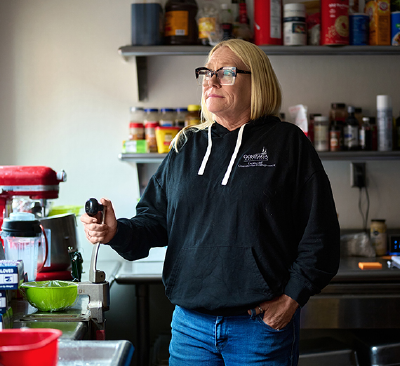
Through Campus Kitchen, leftover food supplies from campus dining locations are repurposed into meals for low-income senior housing communities, shelters and Catholic Charities properties throughout Spokane. But for Emily Banick, the program’s impact extends far beyond the food itself. It is about creating opportunities for Gonzaga students and community members to connect, learn from one another, and build lasting relationships.
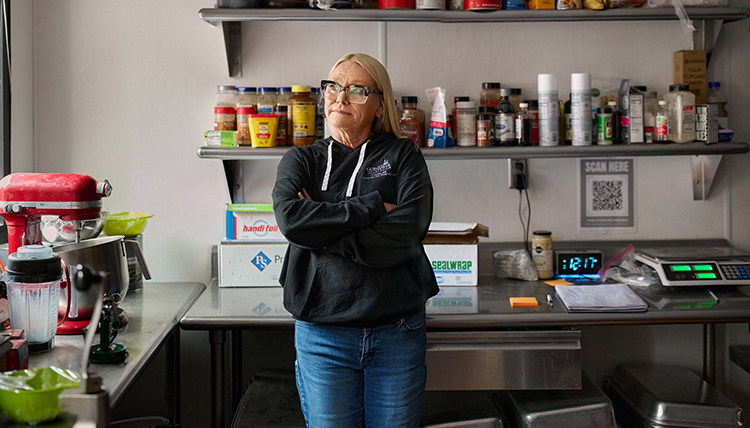
As director of Campus Kitchen, Banick has spent nearly two decades helping students turn food that might otherwise go to waste into a resource for the Spokane community. The program collects surplus food from locations across campus and relies on student volunteers to prepare and deliver meals to community partners.
Banick’s path to Campus Kitchen began with a desire to work with young people in a meaningful way. After graduating in 2004 from Gonzaga with a degree in education, she initially considered teaching elementary school but realized she wanted to explore a different way to support students and the broader community.
Community service had long been part of her life. Her parents were active in the Spokane community, and her mother served on the first board of the Women and Children’s Free Restaurant. When the opportunity to work with Campus Kitchen arose, the program felt like a natural fit.
“I love that the program allows me to work with students, but just in different ways,” Banick said. “I feel like I’m doing good work in the community.”
Over time, that work has evolved. Before the COVID-19 pandemic, Campus Kitchen provided between 3,000 and 4,000 meals each month in Spokane. When the program resumed operations, Banick said its approach became more intentional, prioritizing direct student involvement and personal connections alongside meal distribution.
Today, Gonzaga students do more than prepare and deliver food. They are encouraged to sit down with the people they serve, particularly at the O’Malley Senior Center, where sharing lunch creates opportunities for conversation across generations.
For Banick, those interactions demonstrate the program’s lasting impact.
She remembers one engineering student who began volunteering during his first semester at Gonzaga through a community-engaged learning course. Even after the course ended, he continued visiting the senior center throughout his college career, except while studying abroad.
Over time, he formed a close bond with a group of older women who welcomed him as one of their own.
“He was like a little grandson to them,” Banick said.
When the student graduated, saying goodbye was difficult for both him and the women who had come to know him. For Banick, the experience illustrated how a volunteer opportunity can grow into a relationship that enriches everyone involved.
“It’s definitely reciprocal,” she said. “The food piece is important. It’s deeper than that.”
Those relationships also shape the lessons students take away from volunteering. Banick said community members have taught her the importance of slowing down and being present with others, especially in a culture that often prioritizes productivity and constant activity.
For Meianna Neumeyer, a current senior concentrating in Operations and Supply Chain Management, and a student liaison with Campus Kitchen, that lesson became especially clear while hosting the Garden Club at the House of Charity in downtown Spokane.
“What stood out wasn’t necessarily the food we brought, but the conversations and connections that happened while we were there,” Neumeyer said. “It showed me that sometimes the most meaningful part of service is simply sitting with someone, talking, laughing, and making space for people to feel human.”
Neumeyer said the experience challenged her perspective on how people experiencing homelessness are perceived by others.
“Most of the time, facing homelessness was the least interesting thing about the people I got to meet, yet that is what often can define them from an outside perspective,” she said.
Through her role as a student liaison, Neumeyer said she has come to understand service as something rooted in relationships, listening and being fully present in the community.
That philosophy reflects Gonzaga’s Jesuit Mission, which calls the University community to stand in solidarity with those experiencing poverty and to be responsible stewards of the Earth. By redirecting surplus food to people who can use it, Campus Kitchen addresses food waste while supporting neighbors throughout Spokane.
Banick noted that food waste carries environmental consequences, particularly when discarded food ends up in landfills and contributes to greenhouse gas emissions. Campus Kitchen offers students a tangible way to respond to that challenge while recognizing the needs of their surrounding community.
At the same time, Banick emphasized that addressing food insecurity requires more than providing meals. Lasting solutions must also consider the systemic conditions that contribute to poverty and limit people's access to resources.
For students interested in getting involved, Campus Kitchen offers a flexible entry point into community service. Volunteers are not required to commit to a semester-long schedule, making it possible for students to participate around classes, jobs and other responsibilities.
After completing the necessary volunteer paperwork, students can sign up for available shifts and contribute in a variety of ways, from preparing food in the kitchen to spending time with community members over lunch.
Banick said that flexibility is intentional. Having worked while she was a Gonzaga student, she understands how difficult it can be to maintain a recurring volunteer commitment. She also wants Campus Kitchen to remain a welcoming space for students who may be looking for connection themselves.
Whether students come to help prepare meals, meet new people or take a break from the demands of campus life, Banick hopes they leave with a stronger understanding of the importance of community.
For Banick, the program is a reminder that service is not simply about what people give. It is also about what they learn, the connections they form and the community they create together.
Banick continues to expand her education and pursue her passion in Gonzaga’s graduate program, where she will earn her master's degree in organizational leadership.