
Meet the Faculty: Dr. Andrew Kim
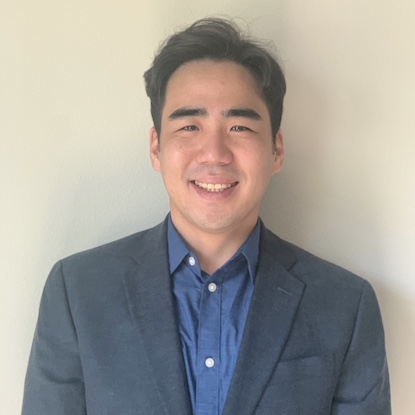
What courses do you teach in the M.A. in Sport and Athletic Administration?
I taught SPMT 500: Sport & Athletic Promotions and SPMT 630: Inroduction to Sport Analytics.
What is your career and research background?
My research agenda primarily addresses two areas of inquiry: (a) sport communication and sport consumer behavior, aprticularly the marketing and management of sport-related new media such as social media platforms, live streaming services, and mobile applications; and (b) international sport and event management, with a focus on understanding participant behavior in small-scale local sporting events around the world.
In my research, I draw on theories from behavioral science and consumer psychology and employ both qualitative and quantitative research methods. I utilize advanced stastical techniques, including exploratory factor analysis, confirmatory factor analysis, and structural equation modeling, to refine theoretical frameworks and dvelop practical applications for the sport industry.
What is the most exciting development in your field that isn't getting enough mainstream attention?
A particularly fascinating developmens is the structural integration of ESports into traditional sport ecosystems. Beyond competitive gaming, universities, professional teams, and governing bodies are rethinking media rights, fan engagement, and sponsorship strategies through a digital-first lens. E-Sports is not merely a new category of competition; it is reshaping how younger generations consume sport. This shift has long-term implications for broadcastng, ticketing, community engagement, and brand partnerships.
What do you look forward to every school year?
What I look forward to most each school year is the opportunity to engage with a new cohort of students. In our MASAA programs in particular, students come from a wide range of cultural, professional, and international backgrounds, which brings remarkable depth and diversity to the classroom.
I value the dynamic discussions that emerge from these varied perspectives and the opportunity to learn about their lived experiences. These interactions not only enrich the academic environment but also challenge me to reflect, adapt, and grow as an educator. In many ways, the insights and experiences shared by my students become a meaningful source of learning for me as well, highlighting the reciprocal and evolving nature of education.
What do you love most about Gonzaga?
What I love most about Gonzaga is our students. They are, without question, the most meaningful part of my experience here. Our students are consistently humble, respectful, and considerate - not only toward faculty but also toward one another. They demonstrate a genuine sense of community and mutual support that is truly distinctive. In addition, they bring remarkable passion and engagement to the classroom. Having taught at a different institution, I can confidently say that Gonzaga students stand out. Their enthusiasm for learning, thoughful participation, and commitment to excellence set them apart and make teaching here expecially rewarding.
What advice do you have for students?
My advice to students is to recognize that sport management is an applied social science, where the ability to translate knowledge into practice is essential. Rather than approaching coursework solely with the goal of achieving high grades, I encourage students to focus on how the concepts and theories they learn in the classroom can be meaningfully applied in real-world sport settings. By actively reflecting on how academic knowledge connects to practical situations, students can develop critical thinking skills, professional readiness, and a deeper understanding of the field. Ultimately, the most valuable learning occurs when students move beyond memorization and begin to see themselves as future professionals who can apply their knowledge to create meaningful impact in the sport industry.
What is a skill or hobby you have that would surprise students?
I have been playing ice hockey since middle school and continue to play occasionally to this day.
In addition to playing ice hockey, I also teach E-Sports for our undergraduate students. During both highschool and college, I participated in local ESports leagues, which gave me firsthand experience in competitive gaming environments. Even now, I occasionally play games as a way to unwind and relieve stress.
What are you happest doing when you are not working?
When I am not working, I am happiest spending time with my family. Being with my wife and our two sons is ruly the most meaningful and fulfilling part of my life. The time we share together allows me to recharge, refocus, and release the stress that naturally comes with professional responsibilities. Those moments at home provide balance and perspective, reminding me of what matters most beyond work.
What is your go-to coffee or go-to lunch order?
My go-to coffee order is a simple ice Americano, usually from Starbucks.
What is your favorite sport and your favorite team? Why?
As a sport management professor, it is difficult for me to identify just one favorite sport. I genuinely enjoy a wide range of sports- including hockey, baseball, football, and soccer- both as a participant and as a spectator. At the moment, however, my favorite team to follow is the Georgia Bulldogs football. Having earned both my master's and doctoral degrees at the University of Georgia, I naturally became a supporter of the program. Over time, that connection has grown into genuine enthusiasm, and I would consider myself a passionate fan.