
One Path to a More Inclusive Campus: Learning to Address Microaggressions
A comment might seem small in the moment. A student leaves a classroom or conversation knowing something felt wrong, but they’re not sure why.
Later, as they replay the exchange in their head or with someone else, it becomes clear. An assumption was made about them or they were singled out because of their identity, or their experience was dismissed.
Microaggressions are subtle messages that demean or exclude people because of their marginalized identities, said Dr. Nicholas Wright, Gonzaga University’s assistant vice president of diversity. They might be verbal or nonverbal, a behavior or something in the physical environment. They’re not always immediately recognizable.
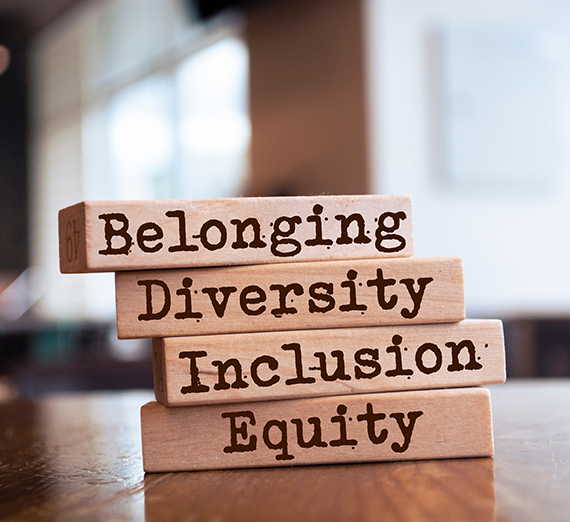
Microaggressions are common in higher education and can shape whether students, staff and faculty feel a sense of belonging. The University’s Equity and Belonging Summit in April helped participants recognize them, understand their impact, and develop practical strategies for responding to them.
As the University continues its work guided by the Presidential Task Force on Accompaniment, Safety and Belonging, the summit offered one way for faculty and students to play their own roles. Through case studies, discussion and reflection, participants explored how everyday interactions can either reinforce exclusion or strengthen belonging.
The topic was especially timely following racist incidents in February, which highlighted how both overt acts of bias and the more subtle interactions that follow can shape campus climate. At an off-campus gathering after a Harlem Renaissance celebration, there was a racist incident involving Black students. Those were overt acts of racism. But the microaggressions that followed added another layer of harm for some students and faculty.
“It wasn't just the one main event at the end of February,” Wright said. “It was everything after that exponentially made it all grow. So that’s what we were addressing.”
While the February incidents provided a clear example of why the topic mattered, organizers said the summit's focus extended beyond any single event. The goal was to examine how seemingly small comments, assumptions and behaviors can affect belonging in everyday campus interactions.
Those subtle slights have always been around, said Alex Giffin, an academic advisor at the Gonzaga School of Health Sciences and a member of the summit planning committee.
Sometimes a microaggression can take the form of an assumption about who belongs in a particular space or what someone is capable of. Wright, who is multiracial (Black/white), recalled people telling him he’d given great presentations, then adding that they “were never expecting that.”
“If you really think about it, why weren’t you expecting that?” he said. “And why did you have such low expectations for me just based off of my identity?”
Some microaggressions involve downplaying other people’s experiences. Wright said those interactions became especially relevant after the incidents in February. Students of color who talked about their experiences heard comments like, “‘Oh, it’s not that bad’ or ‘Oh, I felt pain too, so I understand,’” Wright said. He said others were singled out in class discussions or asked to represent their entire community with questions like, “How does your community feel about this?"
When those experiences add up, it can affect a student’s sense that they belong on campus, Giffin said. And a “wall” grows between them and the people around them. “You feel like you’re not included,” she said.
The summit sought to give participants tools to recognize those patterns and respond differently. They worked through real-world case studies that illustrated how microaggressions can surface in everyday interactions. Participants reflected on how they might respond individually, then discussed the scenarios with others at their tables, practicing strategies for intervention, accountability and support.
For planning committee member Kathie Chi, one of the most important lessons was developing awareness.
“Sometimes people don’t know what they don’t know,” said Chi, associate director of graduate enrollment management.
Ultimately, organizers said the goal was to help community members build the awareness and skills necessary to foster inclusion and belonging in their everyday interactions.
“We’re not asking everyone to become experts in DEIB,” or diversity, equity, inclusion and belonging, Wright said. “We’re asking each and every one of us to become a little bit better each and every day.”