
Alec Cutter ('14) Followed His Dreams All the Way to Rio and Filmmaking Success
Cutter's Netflix documentary, "The Root of the Game," delves deep into Brazilian soccer culture
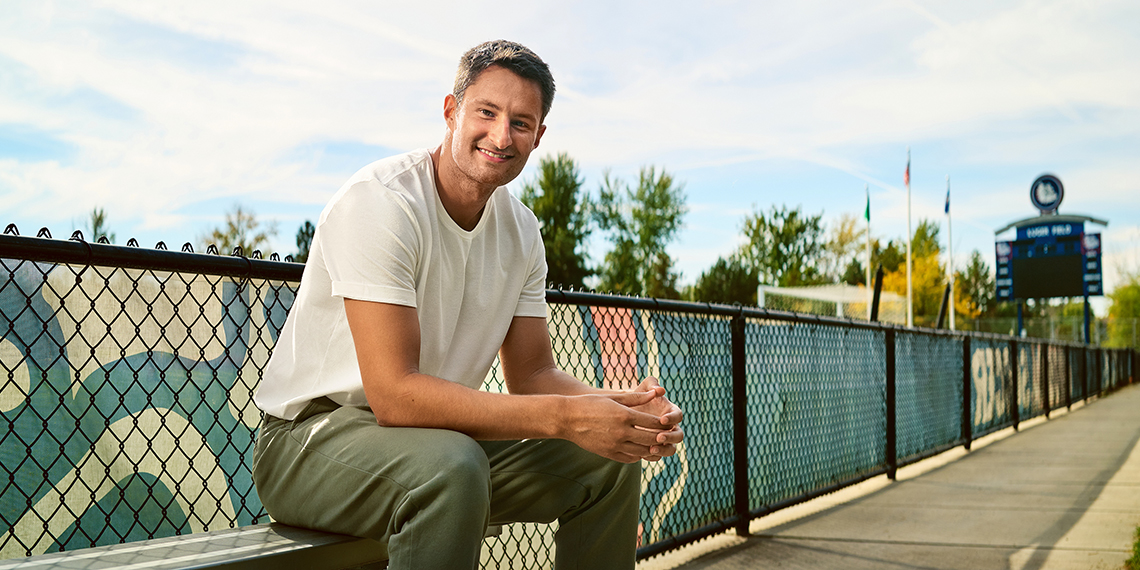
When Alec Cutter ('14) graduated from Gonzaga with an education degree and four years of varsity soccer experience, he already knew his passion wasn't for life in a classroom. It was for a life telling stories and exploring the beloved Brazilian football culture known as várzea.
Shortly after walking across the stage with his fellow Zags, Cutter was off to Rio de Janeiro, with only a few dollars in his pocket, a backpack, and some family friends living in South America who could help guide him to a friendly couch to crash on, or a cheap favela (think a cheap apartment in a densely populated neighborhood) where he could stay for just $40 a month.
That trip 12 years ago was the beginning of a journey that's culminated, at least for now, with "The Root of the Game," a Netflix miniseries about Brazil's passionate affair with football (soccer to Americans) that Cutter created, directed and produced. Cutter, now a full-time resident of Rio, gained remarkable access to the communities and characters involved in the underground Brazilian football scene that has forged some of the sport's biggest stars.
Cutter recently visited Gonzaga for a soccer reunion, and we talked to him about his career path, his filmmaking passion and more. The following interview has been edited for length and clarity.
How did you first decide to come to Gonzaga?
It primarily was soccer, but growing up here (Cutter graduated from Ferris High School), honestly, I always was a fan of Gonzaga athletics. I love Spokane as well, and I knew there's a great community here, and so was happy to come play here.
You studied education when you were a student. When did filmmaking come into play?
I knew freshman or sophomore year I really wanted to go into filmmaking, but I thought education was just a great conduit to there. There were great people and professors in education. I think a lot of my education here expanded beyond the classroom, the Jesuit mission, the more spiritual aspects of education. I was talking to some of my professors this weekend, and it's like I don't remember so much of the classroom work, but I remember office hours and deep conversations with professors. That kind of more holistic approach to education was really what has influenced what I have done since, in work, but also just simply in life.
How did your career take you from graduating Gonzaga in 2014 to living in New York and now Brazil? What was the evolution from graduation forward?
I moved down to Brazil with very little, just a backpack, like a week or two after graduation, down to Rio de Janeiro. From 2014 to I guess like 2022, I was splitting time between there and New York City, but I spent a lot of time in Rio. Then I went to New York and took a very basic film course, which was like a month long, just to learn the basics of filmmaking. That was really the first time I've ever had any sort of education in filmmaking, how to use a camera or anything like that.
Ever since then it was just a lot of grinding and unpaid work at the beginning, everything like that, just to try and get something off the ground. Brazil's been such a place dear to my heart since I was very, very young. We have very close family friends in the northeast of Brazil. We spent time there when I was young, and it's just been an incredible place to live.
It was just a fulfillment of a dream I'd always wanted to do. There was just a part of my heart that always loved Brazil and that culture of soccer that's down there, and I just wanted to be immersed in it. And that was right when the World Cup was also in 2014 in Brazil, so it lined up, telling me to come. The first couple months I was living in a favela in Brazil for like $40 a month. The roof was leaking, everything like that. But it was cool, too. You kind of realize, up until that point, your every year is kind of tracked out for you. You go to first grade, you go to middle school, you go to high school, you go to college, all that. It was the first time where it was kind of wide open for what you wanted to be.
(This trailer is in Portuguese--hit the settings button to translate subtitles)
Can you describe the "The Root of the Game" for someone unfamiliar with soccer or Brazil soccer culture?
I love watching sports documentaries. I love watching professional soccer documentaries, but I feel like the only things that were really getting made were about big celebrities or big famous stories. I really have been interested forever around what it means on a deeper level to people, kind of exploring what it's like beyond these the bright lights of the professional level, the celebrities and people with millions of dollars.
Brazil is essentially the most famous footballing nation on the world. They've won the most World Cups, and almost every professional player comes from these impoverished areas called favelas. There's a direct connection of your community field and the favelas surrounding it. This field, it's like a sacred space in the middle of this beautiful chaos. Varzea is the name of this type of football that's kind of community-driven within the favelas. And so, "The Root of the Game" follows the biggest varzea tournament in all of Brazil, where tons of famous players have come from, and there's a couple famous players in the series that talk about their time there, and it's kind of the root of it all. I just thought if there was one series that I would want to watch, it would be this, and it doesn't exist. So let's make it happen.
How did you go about sourcing your story?
I knew I wanted to do a tournament format for the project. We had almost no production money. It was me and my partner's self-funded production, and I had to absorb almost all the things on my shoulders in terms of cinematography, directing, producing, all that. I had such an incredible crew and a lot of people doing favors and everything like that, and it was impossible to do without them. But it was a big challenge. Usually, a Netflix production, they spend as much on one interview as we had for the whole entire thing of months of filming this huge tournament. Netflix came in after, and so they helped with all the post-production, they funded the rest of the project, which is invaluable. I'm so thankful for that. But it was definitely a guerilla-style, blood, sweat, and tears production. It was a very intense production.
How would you describe your filmmaking style?
What I've always tried to do is explore the more human side of whatever it is I'm looking at. I don't just want to sell it as a glitz and glamour, superficial thing, and that's kind of why I wanted to explore a side like this. I always try and look at the angle of something that maybe people know what it is, Brazilian football in the favelas, but at a deeper level, a more human level.
How did your Gonzaga experience affect what came after, your filmmaking career and the subjects you choose?
Maybe I don't necessarily remember exactly what happened during a class during those times, but I remember how I felt during the whole time, and so much of the inspiration and the drive to do what I want to do and pursue these more nuanced, deeper, heartfelt human stories comes from that being awakened in me here at Gonzaga. It was a huge catalyst for it all. That holistic education from Gonzaga has been kind of the genesis of what I've been interested in and what I've been trying to capture even in a sports story.
- Alumni
- Careers & Outcomes
- Global Impact
- School of Education
- Alumni