
March is a Moment. Good College Athletics is a Mindset.

Every March, college basketball captures the national consciousness. For a few weeks, living rooms, workplaces and campuses across the country turn toward the court, watching young people compete under pressure, test their limits and rise together in pursuit of something bigger than the game itself.
But, at a time when much of the coverage of college athletics veers toward skepticism, if not outright negativity, this March moment reminds us of why we love and support this sport, why we commit so much time to it, and why it drives what we do the rest of the year.
Especially at Jesuit institutions like Gonzaga, whose mission statements herald and privilege the formation of the whole person (the body, the mind and the spirit), college athletics is never only about winning games. Being part of a team involves shared effort and shared responsibility: learning how to trust others, persevere through setbacks, and grow alongside people who hold you accountable. It means celebrating victories together, facing disappointments together, and learning life-long lessons in between.
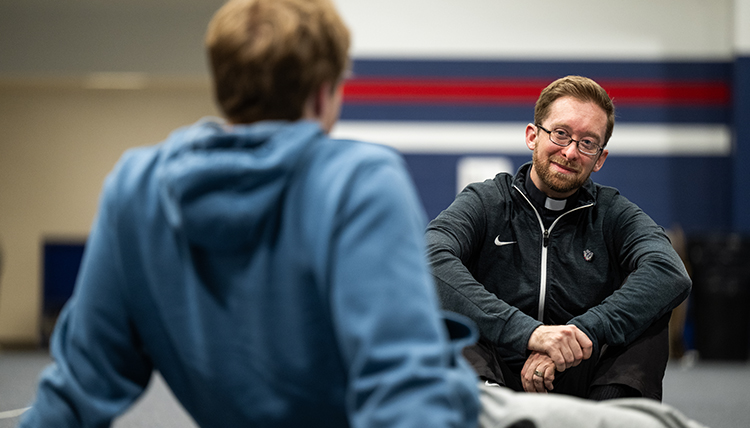
This mindset persists at Gonzaga University, where excellence is pursued not only on the court, but throughout the student-athlete experience. In Gonzaga Athletics, we always describe winning in the classroom and community, along with competition. This excellence is not just aspirational; it is measurable. Just this past fall, for the sixth time in the last seven semesters, Gonzaga student-athletes earned a department-wide GPA of 3.50. A record 201 earned President’s or Dean’s List honors while simultaneously competing at the Division-I level.
For nearly 140 years, Gonzaga’s success has been rooted in community. St. Ignatius of Loyola’s motto, Ad Majorem Dei Gloriam (for the greater glory of God), reminds us that education is ultimately about service to our local and global community. That spirit is reflected in the more than 3,100 hours of community engagement contributed by Gonzaga student-athletes last academic year, with an additional 1,738 hours completed just in Fall 2025. These outcomes reflect discipline, time management and a culture that expects students to bring the same focus to the rest of their lives that they bring to competition.
When people come together around a shared mission, extraordinary things happen. That belief is intentionally nurtured today through Zags360, Gonzaga’s whole-person approach to student-athlete formation, which brings together academic support, mental health, physical wellness, leadership development, community engagement and more, under one unified vision.
This whole-person support looks to empower our student-athletes not only to perform, but to persevere. Through the athletic and academic experience, they learn lifelong lessons as they prepare for exams after late practices, contribute to group projects between road trips, and hold themselves accountable to teammates and classmates alike.
Leaders like Women’s Basketball Head Coach Lisa Fortier set the example for students. Fortier’s public journey through breast cancer with determination and grace inspired her team and the community. She set the tone for a 2024-25 season defined by resilience, and her team responded by capturing its 11th West Coast Conference regular-season title. This season, the team continued to build on this success by winning the WCC tournament and earning its 10th trip to the NCAA Tournament under Coach Fortier and her staff.
The men’s basketball team, which made Gonzaga a household name nearly three decades ago, makes its 27th consecutive appearance in the NCAA Tournament, extending the third-longest active streak in the nation and fourth all-time. In a season marked by injuries and other challenges, Head Coach Mark Few’s typically high-scoring squad distinguished itself in a new way: as an elite defensive unit. The team ended the season ranked 9th in the nation in KenPom’s Adjusted Defensive Efficiency, showing a group that is in-sync, with a visible commitment to working together with a “we” over “me” mentality reflective of the Jesuit ideal of being people with and for others. These teams have triumphed against injuries, setbacks and limited resources and have shown the grit and determination that it takes to move forward.
My own experience in athletics has taught me significant life lessons about leadership, responsibility, and accountability. These are lessons upon which I rely every day of my life as a priest who is both a minister and an administrator. It gives me great joy and pride to see our student-athletes thrive not only on the court, but also in the rest of their lives. In all arenas, they continue to grow and learn. Instead of resting on their laurels, day in and day out, these students are putting in the work to represent their classmates and community on the courts with honor, steadiness, and grit.
These successes and growth come from learning how to adapt when circumstances change, how to lean on one another, and how to move forward when the path is not easy. They also show how important it is to lean on the community that supports our teams from the sidelines, because of the passion and resilience they see firsthand. These are the same lessons Gonzaga students practice every day: in laboratories, classrooms and leadership roles throughout Spokane and the region.
A Jesuit education calls us to reflect not only on what we achieve, but on who we become. When things do not go as planned, students learn resilience. They learn to pause, reflect and recommit. They learn growth often emerges through perseverance. These are precisely the habits Zags360 seeks to cultivate in our students – resilience, reflection and shared responsibility – in competition, the classroom, and life. But, this growth is not only for our students themselves. Our Mission turns us outward and reminds us education is ultimately about service and impacting the community around us.
This past week, the Gonzaga men’s and women’s basketball teams claimed tournament titles in what marked their final West Coast Conference appearances. Some may see this as the closing of a chapter. I see it as continuity. As Gonzaga prepares to enter the Pac-12 Conference as the only full member without football, we do so grounded in a tradition of excellence that has shaped college basketball nationally while remaining deeply rooted in the Pacific Northwest.
A 97% graduation success rate among student-athletes across all Gonzaga teams shows that when the cheering fades, Zags are ready to lead, serve and contribute meaningfully to the world.
As March Madness unfolds, Gonzaga’s student-athletes will once again be ready to show the nation what it means to compete with heart, humility and passion. They are not separate from the rest of our students. They are emblematic of them.
That is the real magic of March and of the positive impact of good college athletics. And it is a mindset worth celebrating, here in Spokane and far beyond.