
The Personal and Professional Payoff of an MBA-AIE Degree
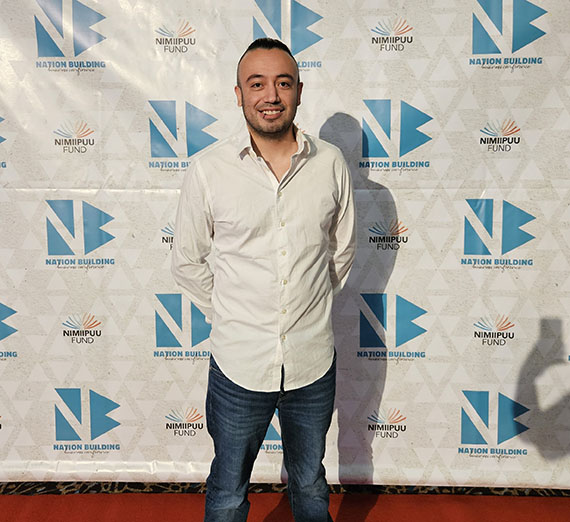
As Editor-in-Chief of the Tribal Tribune, the newspaper publication for the Confederated Tribes of the Colville Reservation in north central Washington,Shane Moses is no stranger to the power of a well-told story. However, his decision to bridge the gap between journalism and business leadership through Gonzaga's MBA in American Indian Entrepreneurship (MBA-AIE) program has unlocked a new chapter for his career and his community. In this Q&A, Shane shares how he transitioned from the newsroom to the classroom, proving that a business degree from Gonzaga is a strong tool for professional growth.
Why did you decide to return to school for a master’s degree?
To be honest, it started with a little encouragement—or maybe a bit of arm-twisting—from a few of my colleagues at the Tribe and some individuals connected with Gonzaga’s MBA-AIE program. At first, I brushed the idea off. I didn’t think I was the type of candidate they were looking for since my background wasn’t in business.
My undergraduate degrees from Eastern Washington University are in Journalism and Public Relations, so business wasn’t exactly my academic lane. Because of that, I was pretty convinced I probably wouldn’t get accepted.
Eventually I applied anyway—partly just so I could say I tried and get a few people off my back. I honestly thought it would confirm what I already believed, that I probably wouldn’t get in.
Then I got the acceptance notice.
That was one of those “well… I guess this is really happening” moments. I was excited and scared, I knew it meant I had just signed up for a serious challenge, balancing graduate school while working full-time. Looking back now, I’m really glad I took that leap, I would have absolutely regretted saying no or not going forward with this program.
Why did you pick Gonzaga and the MBA-AIE program?
To my knowledge, Gonzaga was the only university offering a program like the Master of Business Administration in American Indian Entrepreneurship (MBA-AIE). That alone made it an incredible opportunity, and one I honestly felt I couldn’t pass up.
Even though my background wasn’t in business, the chance to learn those skills in a program specifically designed to support Native communities and tribal organizations really stood out to me. When I found out I had been accepted, it felt a little surreal. I was extremely happy, but also a bit nervous. I knew right away it was going to be challenging balancing graduate school while working full-time.
The beginning was definitely tough, (just ask Prof. Bull Schaefer, hahaha) and getting back into the rhythm of being a student again took some adjustment. But over time I settled in, learned a lot, and kept pushing forward. In the end, it was all worth it. I finished the program and walked away with my MBA, which is something I’m very proud of.
What skills did you develop in the program?
Well, I had been out of school for quite some time before starting the program. I graduated from Eastern Washington University in June of 2014 and had been working at the Tribal Tribune for about eight years when I enrolled. At first, it was a little challenging getting back into “school mode.” But once I got going, the program really opened a whole new world for me.
The business side of things can be a lot to take in. Accounting, for example, is almost like its own language. It’s not something you just pick up overnight—at least it wasn’t for me. I had to spend hours studying, reading, and sometimes re-reading material just to fully understand certain concepts. That process forced me to become very disciplined with my time.
Beyond the technical skills, the program helped me grow as a leader. It gave me a better understanding of how to manage people and how to manage an organization like the Tribal Tribune. It also helped strengthen my decision-making skills, which is a huge part of my role as Editor-in-Chief. One of the biggest things the program instilled in me was learning to step back and ask, “Is this the right decision? Is this a good business decision?” That mindset has stayed with me and continues to guide how I approach my work today.
What was the return on investment?
To be honest, one of the first things I notice now is how meaningful it feels to see Gonzaga’s MBA-AIE program listed on my resume. Gonzaga is a very prestigious university, and earning a degree from there is something I’m extremely proud of. Few people can say they’ve graduated from Gonzaga, and even fewer people from my reservation can say that. To my knowledge, I’m also the first person in my family to graduate from Gonzaga, which makes the accomplishment even more special.
From a career standpoint, the degree helped position me for advancement within my organization and came with a meaningful increase in my salary. Beyond the financial aspect, it also brought a level of respect and recognition from colleagues and peers who understand the amount of work and dedication required to complete a program like this while working full-time.
More than anything, though, the program represents something personal. I’m grateful to Gonzaga University, the faculty, and staff of the MBA-AIE program, the alumni who came before us, and especially my own Cohort XIV. The support and encouragement throughout the program meant a lot.
I’m also thankful for the motivation that came from people who doubted whether I could finish, that only fueled my determination even more. At the end of the day, I’m just some Native kid from a reservation who grew up in a single-parent household, (so a special shoutout to all the single moms out there, because they are some of the strongest people I know.) I didn’t grow up with a lot of resources or advantages, but earning this degree showed me that with determination, hard work, and the support of the right people, even the biggest goals can become reality.
How are you using what you learned in the MBA-AIE program in your community?
I’m still in the process of fully applying everything I learned in the MBA-AIE program directly within my community, but I’ve already been able to apply a lot of it in my professional role. As I’ve taken on more responsibilities and moved up within the Tribal Tribune organization, many of the concepts from the program, especially leadership, management, and decision-making have helped guide me in my work. The assignments and coursework in the MBA-AIE program were challenging, but they prepared me very well to think more strategically and approach problems with a broader perspective. In many ways, the work I do through the Tribune connects directly to the community, so the skills I gained are already contributing in that way
What was your favorite part about visiting campus during the immersions?
That’s a tough question because every immersion experience was unique and memorable in its own way. Our cohort was incredibly fortunate and had some amazing opportunities throughout the program. We traveled to New Zealand for our study abroad experience, which was truly unforgettable. For our final spring immersion in 2024 we stayed at the historic Bozarth Mansion, and for our first spring immersion in 2023 we attended the Reservation Economic Summit (RES) in Las Vegas. That trip was especially memorable because I had the chance to meet one of my heroes, Moses Brings Plenty, who plays “Mo” in the TV series Yellowstone. Beyond those big moments, some of my favorite memories were the simple ones—spending time with classmates, going to Jack and Dan’s after long days of class, and even squeezing in a few rounds of golf together.
How was your experience building connections with the Gonzaga community?
I truly believe I was able to build meaningful connections within the Gonzaga community. The MBA-AIE program brings together people from different backgrounds, and that creates a strong sense of camaraderie and mutual support. I hope I made a positive impression and represented my community well. Through the program I was able to connect with fellow students, faculty, and staff, and those relationships are something I will value long after the program is finished.
How was your experience with the faculty?
My experience with the faculty was excellent. Every professor I worked with was knowledgeable, supportive, and genuinely invested in the success of the students in the program. I’ve always tried to approach school with respect and a willingness to learn, and I appreciated how approachable and understanding the professors were throughout the program. Their guidance played a huge role in helping me succeed and grow both academically and professionally.
How did the program allow you to balance work/life/school?
Balancing work, school, and personal life was definitely a challenge. Once the program started, a lot of my free time disappeared, and my focus became work and school. There was definitely a balancing act involved. At the same time, I was incredibly grateful just to have the opportunity to be part of the program. Being accepted into the MBA-AIE program felt surreal, and experiences like traveling to New Zealand made it even more meaningful. There were stressful moments, but I knew this was a once-in-a-lifetime opportunity and I was determined not to waste it.
What would you say to anyone considering Gonzaga’s MBA-AIE program
I would simply say do it. The MBA-AIE program is an incredible opportunity and a transformative experience. Even if you don’t come from a traditional business background like some of my classmates did, that shouldn’t stop you from applying. I came from a journalism and public relations background, so business wasn’t my original field either. But with discipline, humility, and a willingness to learn, it’s absolutely possible to succeed. If you’re considering it, take the leap, you won’t regret it. Nothing is impossible