
Fighting Fake Gonzaga News
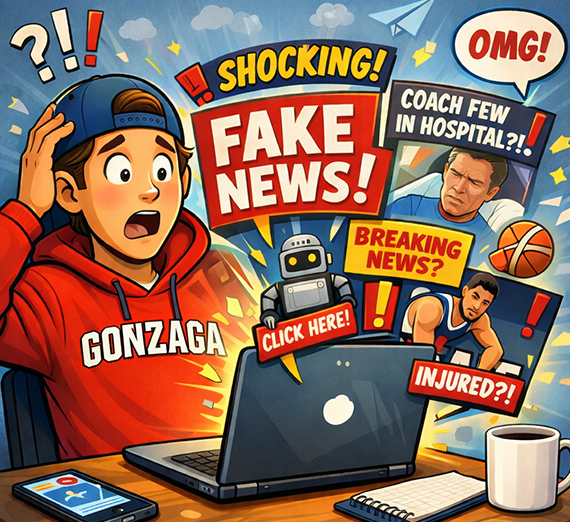
Did you know that false information travels six times faster than factual news?
This is due to a lot of factors, but this includes what people call an “internet frenzy.” This chaotic form of rapid engagement on social media platforms is driven by AI content, spam, and a decline in quality, making the internet feel more cluttered than ever. Content that is shocking, regardless of if it is true, travels fast across platforms as users engage and share with each other. More engagement means more reach, meaning false information spreads further across the internet.
Gonzaga is known for its school spirit, athletic and academic performance, and Jesuit values. It’s no wonder there is a huge online presence buzzing around these topics – and especially during basketball season.
With so much content circulating online, it's hard to tell what is real and what is clickbait.
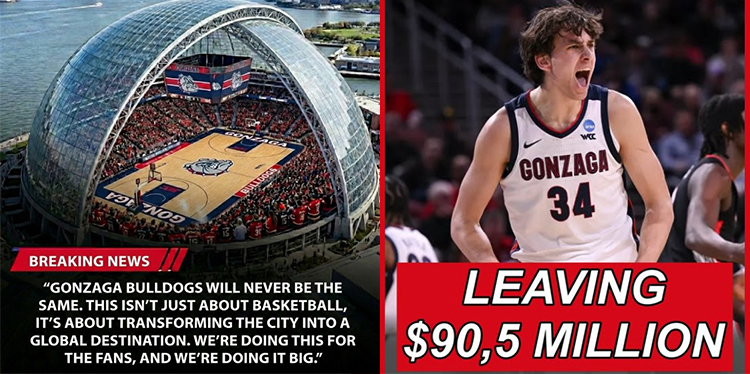
Did you hear about Gonzaga’s new $3.2-billion upgraded arena? An article online will tell you all about this new addition, even though the story is not true, but rather a result of AI clickbait.
There is a ton of false information being shared on social media involving Gonzaga, and the only way we can truly fight fake news is to know it when we see it. If you are a Gonzaga basketball fan, then you have probably seen a ton of “shocking” stories posted on Facebook. Unfortunately, a large portion of these are inaccurate. These posts usually contain unverified websites and use emotionally charged headlines (“Gonzaga Coach Mark Few in Hospital!” for example), mix real names with false claims, target passionate audiences (like sports fans) and prioritize engagement over accuracy.
How to look out for fake news:
Get information straight from the source- Is the account verified? Is it a reputable news organization?
- Fake sites often mimic real ones (e.g., slight misspellings like “gonzagaa.edu” instead of “gonzaga.edu”).
- ALL CAPS, excessive exclamation points, or emotionally charged wording are red flags.
- Check for photo/video manipulation.
- Photos and videos can be edited or taken out of context.
- Good reporting will include a recognizable writer, not anonymous or “insider” authors with no track record.
Official Gonzaga Websites and Social Media Accounts:
- Gonzaga University Website
- Gonzaga University Facebook
- Gonzaga Bulldogs Facebook
- Gonzaga Men’s Basketball Facebook
- Gonzaga Women's Basketball Facebook
- Gonzaga University Instagram
- Gonzaga Men’s Basketball Instagram
- Gonzaga Women’s Basketball Instagram