
Leaders in Unity Retreat Creates Space for Connection, Growth and Belonging
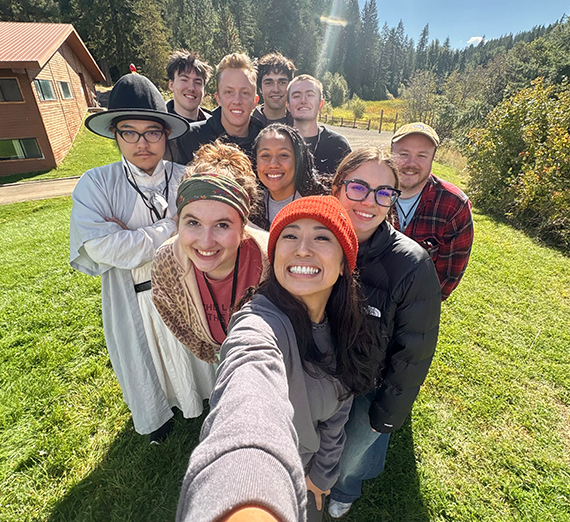
When nearly 50 student leaders and six Gonzaga staff members ventured away from campus for the annual Leaders in Unity Retreat this fall, they left behind more than homework, meetings and busy schedules. They also left behind many of the assumptions and barriers that can sometimes keep people apart.
Over the course of two days at nearby Camp Reed, students from a wide range of backgrounds, experiences and Gonzaga leadership programs came together with a common purpose: to build a stronger community, deepen understanding and strengthen their commitment to creating a Gonzaga community where everyone belongs.
What emerged was more than a leadership retreat. It was a living example of Gonzaga's Jesuit mission in action.
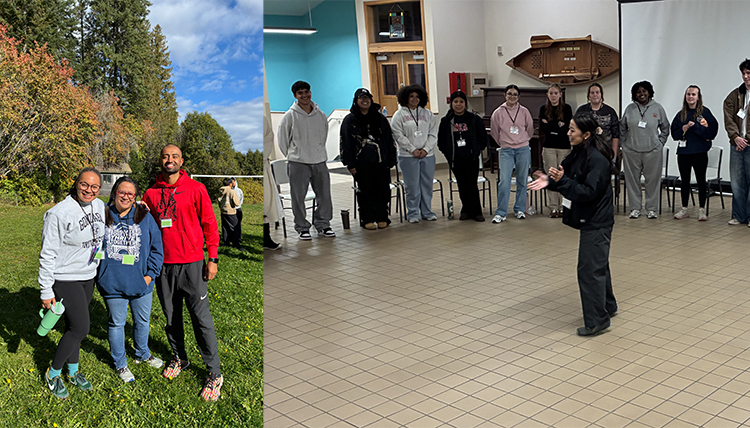
"The most successful part of the retreat was the impact the students were able to have on each other," said Jessie Mancilla, one of the retreat facilitators. "All participants and facilitators were teachers and learners. The opportunity to be vulnerable with care allows us all to grow in ways the classroom does not permit."
The retreat brought together students from the Unity Alliance of Cultural Clubs, the Unity Scholars program, the Experiential Leadership Institute, Payne Fellows, the Gonzaga Student Body Association and other campus leadership groups. Guided by facilitators from across the university, students participated in conversations and activities focused on identity development, leadership, solidarity, wellness and community building.
Yet some of the most meaningful learning happened in unscripted moments.
For Mancilla, one of those moments came during the 35-minute drive to the retreat.
Students spoke in French, Spanish and English, teaching each other phrases and sharing stories. What could have become a dividing line instead became a bridge.
"The very nature of excitement students have when they share a language and speak fluently with each other, that is what belonging is," Mancilla said. "Others wanted to learn. Other students embraced those connections. We taught each other how to give and take space in those thirty-five minutes."
Those moments set the tone for the weekend.
The retreat traces its roots to the Unity Alliance of Cultural Clubs, which launched in 2017 and held its first retreat the following year. Joan Iva Fawcett, dean of social justice leadership and community empowerment, said the original goal was simple: create intentional opportunities for cultural clubs to build relationships with one another.
The retreat lapsed during Covid but returned in 2023 after university leaders observed growing intercultural tensions among some student groups.
"It was important to create proactive and intentional spaces for the cultural clubs to get to know each other better and to work out their differences," Fawcett said.
In 2025, Gonzaga expanded the concept by bringing multiple student leadership programs together under a single umbrella and creating what is now known as the Leaders in Unity Retreat.
The result has been a richer and more diverse experience that brings together students from different backgrounds, class years, and leadership roles.
"We were excited to see what would come out of bringing diverse students together, from first-year students to seniors, for approximately 24 hours overnight away from the noise of campus," Fawcett said.
For many students, the experience became deeply personal.
First-year student Marisa Pigram arrived at the retreat expecting to learn from older students and staff. What she discovered was a community of people whose experiences mirrored her own.
During one discussion, participants were invited to talk about their experiences with identity. As a multiracial student, Pigram shared feelings she had carried for years.
"When I was asked to sit in a circle and talk about being a multiracial individual, I was grateful to hear from leaders that they had the same struggles as me," she said. "It's being a part of both worlds, like a coin being flipped. You can never be both,” I said. “I’ll never forget people’s faces in that circle. It was as if I ripped the old band aid off that showed an old but rememberable wound.”
For facilitators, the retreat offered opportunities for growth as well.
Mancilla noted that many staff members were able to move beyond their formal roles and engage alongside students as fellow learners.
"In my perspective, most of the facilitators were able to let go of the titles and roles," he said. "In a way, we were all participants with the students. We laughed and empathized with each other. We were as vulnerable and engaged as they were."
That spirit aligns closely with Gonzaga's Jesuit tradition and its commitment to cura personalis, or care for the whole person.
According to Nicholas Wright, assistant vice president for diversity, the retreat was intentionally designed as a formative educational experience grounded in Gonzaga's mission and values.
"The Leaders in Unity Retreat brought together 42 student leaders and a team of six colleagues for an immersive leadership experience grounded in our Gonzaga values," Wright said. "Students engaged in activities and dialogue that challenged them to grow in their identity as leaders, strengthen relationships across difference, and consider how their actions advance inclusive excellence throughout Gonzaga University."
By the end of the retreat, students had developed greater self-awareness, empathy and confidence in their abilities to lead authentically, Wright said.
The signs of growth were visible as participants prepared to return to campus.
"The growth in students is always when they depart the retreat," Mancilla said. "They are all talking to each other and no longer in their own small groups."
Students who arrived representing individual organizations left with a stronger understanding that they were part of something larger. New friendships were formed and different perspectives were shared with each other. Participants began to recognize the unique talents and gifts each person contributes to the Gonzaga community.
That sense of connection is exactly why organizers plan to continue and expand the retreat in the years ahead.
Plans are already underway for next year's event, which will move to Bear Paw Camp to provide additional amenities and gathering space. Organizers are also exploring schedule adjustments that would give students more time outdoors and more opportunities for meaningful connection.
For Fawcett, the retreat's future is secure because its purpose remains essential.
“Belonging is not something that happens automatically. It is built through listening, vulnerability, empathy, and shared experiences.”
For one weekend away from campus, Gonzaga students practiced all four. They returned not only as stronger leaders but as a stronger community, united by the conviction that every person has value, every voice matters and everyone belongs.