
Finding the Human Side of Engineering Management at Gonzaga
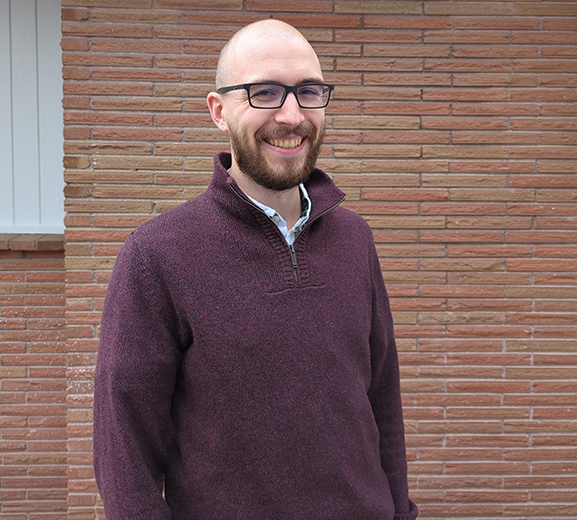
When Joseph Flinn applied to Gonzaga’s Master of Engineering Management (MEM) program, he brought seven years of industry experience as a Software Engineering Manager, and a curiosity for Systems Thinking. Now as he enters his third year, Flinn reflects on the his experience and the lessons he learned along the way.
Why did you return for a master’s degree?
I've been entertaining the thought of graduate school since my sophomore year in undergrad. Over the 7 years between graduating and starting the master's degree, there were more years that I thought about going back than not. With one of my core values being learning, I would say that graduate school was inevitable.
Why Gonzaga and why the Master of Engineering Management (MEM)?
The few years prior to starting at Gonzaga, I developed an interest in an area of study called System Dynamics or Systems Thinking. I was initially looking to pursue a PhD in this area; however, as a young Engineering Manager found myself not quite ready to give up the technical aspect of my career in exchange for deep management theory.
With this realization, I started looking for more practical programs that were adjacent to Systems Thinking, and I stumbled upon the brand new Masters of Engineering Management program in my own backyard at Gonzaga, with only a few weeks left before the admissions deadline. In addition to the program itself, Gonzaga's humanistic approach to education aligns really well to the overall ideas in Systems Thinking. It felt like a great match.
How has your experience been so far?
It's been a challenging but rewarding experience. I started as a full-time student in the first year and transitioned to a part-time student to finish the program. While I am an avid reader, a structured graduate program exposed me to impactful ideas that I would not have sought to learn on my own, or that the ego discounted.
Being in the very first group of students going through the program, the first year had some bumps. But headed into the program's third year, I can say that the faculty and staff have smoothed those bumps out and are extremely helpful at navigating the university system.
What class has been the most impactful so far?
Without a doubt, Foundations of Project Management was the most impactful class so far. Coming into the program as a Software Engineering Manager, I had a few years of experience running Agile and Scrum project management.
Even through the class, ego tempted me to discount a lot of the information as not relevant. However, I kept coming back to the idea that aircraft carriers cannot be built over 5 years with high-iteration Scrum. There had to be another way.
Since moving to being a part-time student and starting back up in industry, I have used what I have learned in Foundations of Project Management almost every day. I am finding that a lot of the current software and digital transformation industry is pushing back on some of the foundational ideas in project management and trying to fit everything into Scrum or Agile. It is now easy to see a world where all of these ideas coexist and strengthen each other.
What skills have you developed that will help you in your future career?
I have developed skills from each course that I've taken and have already to apply learnings from each course. The top three skills that I have developed are 1) how to think about projects in a project/program/portfolio management framework, 2) how to think strategically to frame project investments, and 3) how to effectively conduct statistical analysis in research and in process control. Each of these skills has had a significant impact on my career already.
What has your experience been like with the faculty?
The faculty have been very knowledgeable and eager to assist. They have all been very approachable.
How is the flexibility of the program allowing you to balance everything else you do?
The program overall has been relatively flexible with my very busy life. Throughout the program my personal life has changed quite dramatically--from single full-time student to married and having a full-time job, being a part-time student and teaching West Coast Swing on the side--and the program was flexible enough to keep up. There are courses that give a lot of flexibility on how/when to get work done and others that require more structure during the week to help keep you on pace.
What advice would you give to anyone considering the MEM program?
My biggest piece of advice is to have a few years of industry experience before considering this program. Having practical hands-on experience with some of these topics (and where past experiences went very wrong) helps integrate the topics for a better retention rate.
As an example, during my very first week in the program, all three of my classes addressed the underlying reason why I chose to take a break from industry and pursue graduate school full-time: a company's identity is its mission, vision, and values. The identity crisis that I was having at the company that I left was because the company's identity had shifted without me knowing.