
The Crossroads of Social Justice and Chemistry
Students research molecules for critical drug development
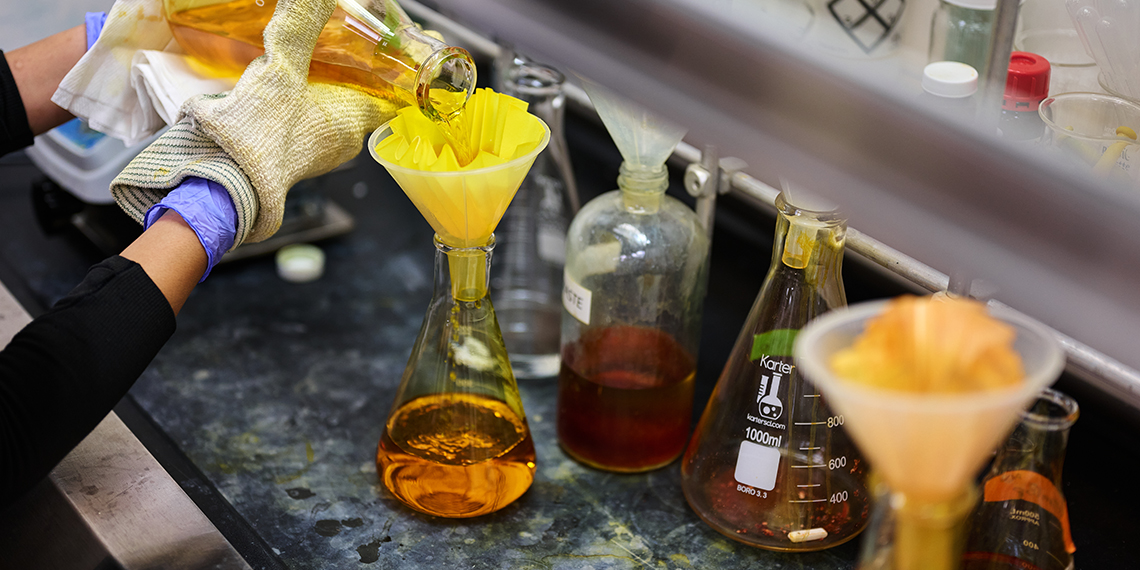
Summer at Gonzaga can be an extension of the school year, hard work included. CURE, the Curriculum-based Undergraduate Research Experience, is a long-standing program where students gain hands-on experience in organic chemistry, microbiology, cell biology and biochemistry.
Stephen Warren, a chemistry professor at Gonzaga, and the all-female student research team working alongside him, have been hard at work all summer. The team is made up of Angela Macabinguil ('26), Lilia Churape Arenas ('27), Trudy Hindman ('27), Krista Kostoff ('28), Lauren Plagenz ('28) and Julia Pittman ('28). Each student has a main project and a secondary project – both center on making molecules that could be critical in drug development. One molecule, for example, is showing intriguing anti-cancer activity, while another could potentially develop anti-seizure drugs. It's research directly in line with Gonzaga's Mission.
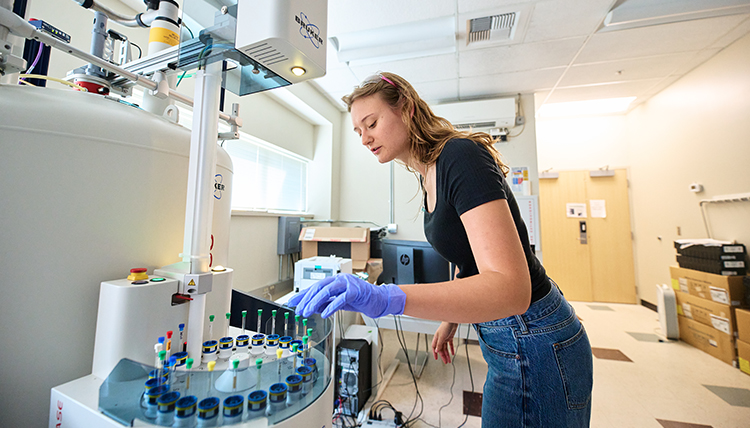
"Social justice and chemistry readily come together when discussing medicine,” Warren says. “They are inherently costly to discover, test, produce and distribute. Consequently, the economics of drug development naturally drive the production of drugs for which enough people can afford to purchase.”
It’s research with real human impact.
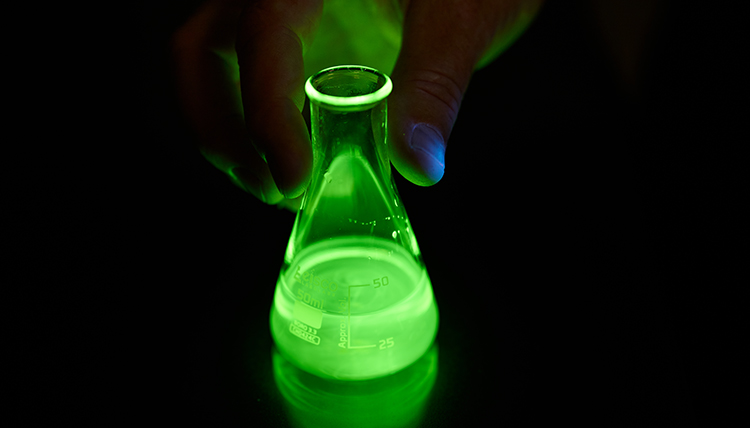
As for the process they use to design these molecules – Warren compares it to cooking.
“First, you have to choose what dish you want to make – this is when we choose what molecule we want to make," he explains. "Next, you need a recipe. We look in the literature to find, modify, or invent a recipe, which we call the synthesis. Then you do the actual cooking, which is when we set up the synthesis."
As a volunteer in the lab who also works part time for the chemistry department, Lauren Plagenz says no two days look quite the same.
"Normally, I run a few reactions. Each synthesis can take a couple of days between the reaction itself and the recrystallization process. In my free time, I work on various projects for the department, such as taking chemical inventory of the lab and creating a master sheet of chalcone structures," she says. Chalcones are the simple chemical scaffolds that can make up naturally occurring compounds.
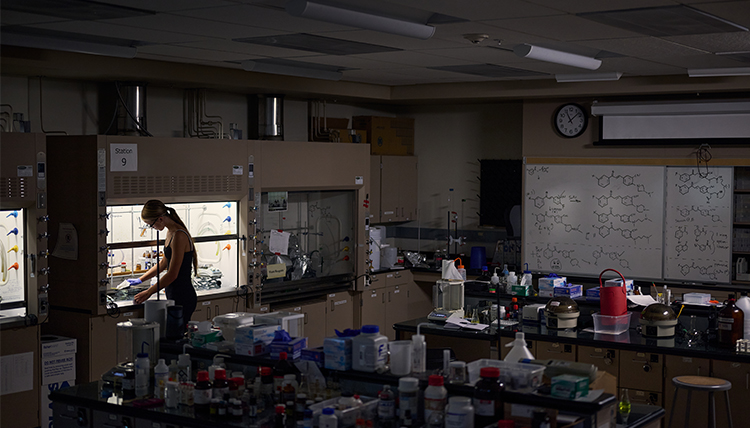
Working in the lab throughout the summer, the students are forging their own paths for careers after graduation.
"Doing research has been incredibly valuable to my education and future goals. Dr. Warren's lab is the first I have been a part of, and he has been incredibly patient with me throughout my learning journey," Plagenz says. "Throughout this month, I have gained new laboratory skills, learned how to speak about science to individuals with all levels of education, and heightened my critical thinking skills. This experience has not only allowed me to understand more about organic chemistry and chemical synthesis, but it has introduced me to a deeper level of logical reasoning and understanding."
Over the next several weeks, the group will conduct extensive research in collaboration with Washington State University on a potential antiseizure drug project. Warren says working on real-world issues gives students the ideal experience for those who want to practice science.
"This experiential learning is essential to becoming a scientist and doing science. It cannot be learned solely in the classroom. That's why we have labs," he says.
Plagenz agrees, saying her experience this summer will help her pursue a future in medicine.
"I am hoping to attend medical school and become a pediatric oncologist,” she says. “I will use this experience to advance my passion for medicine and continue my learning of medicinal chemistry. As a future physician, medicinal research is incredibly important to me, and what we are doing in our undergraduate lab is actively contributing to a broader purpose."
- Academics
- College of Arts & Sciences
- Chemistry
- Biology
- Biochemistry