
A Deepening Call to Cura Personalis
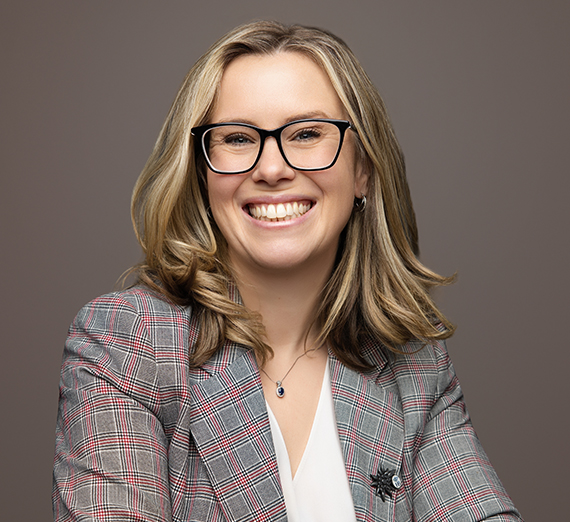
Michelle Percopo was a teenager in a grown-up job with a badge, a paycheck, and an early front-row seat to the human condition. Her mother, a lifelong nurse, advised that before committing to a career in health care, she should work as a nurse’s aide to make sure she actually “likes” caring for people. So she started working in hospitals at 17.
Starting at the bedside in medical oncology, she moved to general surgery, working her way through departments and discovering that no matter the floor or shift, the one thing that came easily was connecting with patients. People let you into the worst and most fragile moments of their lives, and she liked the intimacy of it.
What began as Michelle’s talent for connecting deepened into advocacy. She carried what she calls a “deep well of compassion” and a stubborn insistence on doing the right thing for her patients. Emergency nursing followed, and then she felt an internal nudge to become a nurse practitioner so she could combine that compassion, advocacy, and skill to another level, shaping treatment as well as delivering it.
When Michelle applied to graduate programs, her life was already full, working 12-hour ER shifts while raising a six-month-old daughter. Accepted to both the University of Washington, where she earned her undergraduate degree, and Gonzaga University, she chose Gonzaga’s hybrid Nurse Practitioner program because it allowed her to continue working while staying present for her family.
At Gonzaga, she encountered Jesuit education not as abstract philosophy but as a lived practice. Concepts like cura personalis (care for the whole person) and magis (the call to do more in service of others) resonated deeply. They gave language to values she already held and strengthened her sense that health care extends beyond treatment to understanding the full human experience.
That foundation would later shape her decision to travel to a war zone to serve in the fall of 2025.
When Russia launched its full-scale invasion of Ukraine in 2022, Michelle found herself watching the news with a mix of outrage and helplessness. At home in Monroe, Washington, recovering from a torn ACL and caring for young children, she felt a persistent pull to do more than observe and decided to act.
After researching organizations safely providing medical care in Ukraine, she connected with Global Care Force (GCF), a humanitarian group deploying volunteer clinicians to underserved communities in south-central Ukraine. The organization functions as a consistent primary care provider for communities whose infrastructure has been damaged or destroyed by war.
Michelle was deployed in the fall of 2025 as a member of a care team that travels to the same villages each month to build continuity and trust. Reaching these communities is difficult. Roads are scarred by tank tracks and explosions, and surrounding fields are still being cleared of landmines. Many patients, particularly older adults, cannot travel at all, making the mobile clinics essential.
A typical day begins early with a group breakfast, followed by a drive into rural villages where teams unload supplies by hand—tables, medications, food, and water—before care begins. Patients, often elderly, are already waiting, holding medical records or carefully rationed medications. The atmosphere is unhurried and communal, with neighbors catching up or gossiping as they wait.
The care model is simple and deeply relational, with GCC volunteers active in all aspects of care. Local Ukrainian staff handle intake and translation, recording vital signs and patient concerns. Providers like Michelle then meet with patients one by one, working through interpreters to diagnose, treat, and refill medications for chronic conditions such as hypertension, diabetes, and high cholesterol, while also addressing anxiety, PTSD, and other effects of prolonged conflict.
The emotional weight is constant. Every interaction carries layers of trauma, both visible and unseen. On her first deployment, Michelle found herself overwhelmed within hours. At one point, she paused and asked a teammate for a hug, a brief reset that allowed her to return to her patients fully present.
Even in these difficult circumstances, connection flows both ways. Despite language barriers, patients express gratitude through gestures like hugs, cheek kisses, and quiet conversation. For many, the clinics represent more than medical care; they are a reminder that they have not been forgotten.
Michelle’s approach is grounded in trauma-informed care, shaped by years in emergency nursing and deepened after her experiences in Ukraine, and she is pursuing formal certification in trauma care. For her, the integration of science, compassion, and justice is rooted in and inseparable from the Jesuit values she encountered at Gonzaga.
Her commitment to listening and respect also extends to culture and language. On her first trip, Michelle shared with her translator that she’d been studying Russian in preparation for the deployment. The response was immediate: “Why aren’t you learning Ukrainian? That’s our language."
It landed hard. Michelle realized that some well-intentioned advice she had received before deploying (that “everyone speaks Russian”) ignored a painful history of attempts to erase the Ukrainian language and culture.
So she adjusted, and in preparation for her second deployment, began studying Ukrainian daily, using Duolingo and a Pimsleur audio course she borrows through Libby. She’s not fluent, but she’s committed to being a better guest. And learning the language is a small, concrete way to honor the people she serves and the culture they’re fighting to protect.
At home, preparing for each deployment is both logistically and emotionally demanding. Michelle and her husband have two children, now teenagers, who better understand the risks of her work. Over time, the family has developed a shared understanding of her commitment, even as the risks remain real.
Preparation includes practical steps—insurance, legal documents, financial organization—as well as emotional readiness. Once she leaves, she relinquishes control over daily life at home, relying on preparation, trust, and a sense of purpose that extends beyond any single role in the family.
In Ukraine, Michelle works alongside a dedicated local team that manages logistics, coordinates with regional leaders, and ensures continuity of care. Many Ukrainian staff members contribute while holding other jobs, viewing this work as a way to serve their country without taking up arms. The partnership between local and international providers is built on shared commitment, mutual respect, and a shared desire to provide care to those who need it.
Recent operational changes have made deployments more efficient, and a newer route through Moldova reduces travel time and allows teams to add clinic days, increasing patient reach. At the same time, it places additional demands on local staff, an ongoing balance the organization continues to navigate.
Funding these trips is another challenge. Michelle partially self-funds her work and raises additional support through personal networks and professional platforms. While she finds asking for money uncomfortable, she sees it as part of the broader practice of care, acknowledging that meaningful service often depends on community support.
When speaking with others about volunteering, Michelle is candid. The work is difficult and sometimes frightening. It requires confronting trauma, uncertainty, and personal limits. But it also offers clarity and a chance to reconnect with purpose and to test one’s capacity for resilience and compassion.
Her advice is simple: try it. Not because it is easy or romantic, but because it reveals something essential about oneself, whether it becomes a lasting commitment or a meaningful one-time experience.
Michelle plans to return to Ukraine this fall, continuing a pattern that has defined her career since she was a teenager: showing up where the need is greatest. Whether in a U.S. emergency room or a rural village shaped by war, her approach remains the same: caring for the whole person, listening deeply, and standing alongside people in their hardest moments.