
Clinical Impact: Inside Gonzaga's Doctor of Nursing Practice Experience
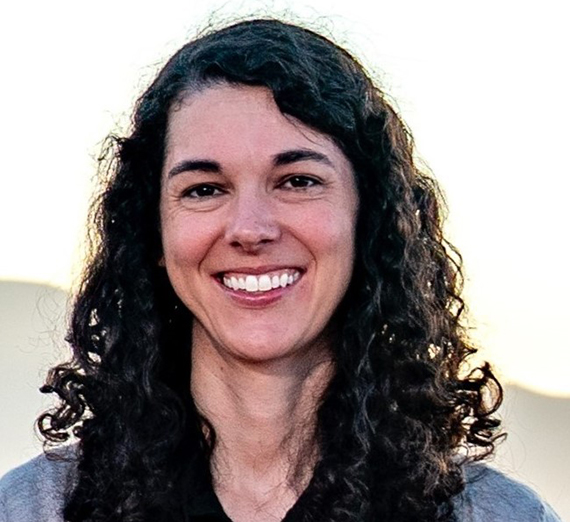
For many nurse practitioners, returning to school for a doctorate isn’t always part of the original plan. That was true for Meaghan Mugleston until a new leadership role revealed a critical gap between clinical care and organizational data. In this Q&A, Mugleston shares how Gonzaga’s Doctor of Nursing Practice (DNP) program helped her turn a real-world clinical challenge into published research and a new career chapter.
Why did you decide to return to school for your Post-Master's Doctor of Nursing Practice (DNP)?
I completed my Master’s nurse practitioner program in 2015 and honestly didn't anticipate returning for a doctorate. My initial focus was purely on clinical practice, and I didn't see how advanced coursework in statistics, quality improvement, and organizational leadership directly applied to that goal. However, that perspective shifted when I stepped into a leadership role as the Opioid Use Disorder (OUD) Clinical Champion at a community health clinic in Seattle, tasked with expanding the number of primary care clinicians actively treating OUD. I realized our organization lacked the data capture systems needed to measure whether the clinical champion program was truly achieving its intended goals. A colleague who had recently earned her DNP encouraged me to pursue the degree, pointing out that it would equip me with the exact skill set needed to evaluate the clinical champion role, and I likely could build my doctoral project around the topic.
Why did you choose Gonzaga?
I chose Gonzaga for its strong academic reputation, the flexibility of its hybrid formatting, and its Jesuit values, which have served as a guiding force throughout my life and nursing practice.
How was your experience with the faculty supporting you in your research?
My experience with the faculty was extraordinary. My advisor and primary instructor, Dr. Denise Ogorek, was an exceptional sounding board throughout my project, providing precise, meaningful direction that elevated my research skills, scholarly writing, and speaking presence. On a personal level, when I attended an on-campus immersion just three months postpartum, Dr. Ogorek went above and beyond to ensure I had dedicated access to a lactation room so I could store milk for my infant son while away from home. I felt incredibly supported—not just as a doctoral student, but as a whole person.
How did the program allow you to balance school, work, and life?
As a working nurse practitioner and mother of two young children, flexibility was essential to my success. The asynchronous design of most of the coursework, paired with the autonomy to shape a project directly tied to my practice, allowed me to balance these demanding roles and successfully accomplish my goal of earning a doctorate.
What did you decide to research, and can you give us a summary of your project?
My project evaluated the impact of the clinical champion role on OUD treatment rates within a Federally Qualified Health Center (FQHC) system, while also assessing provider perceptions of the role’s value. Through this work, I was able to provide evidence-based recommendations to help the health center optimize and sustain the position. Ultimately, I had the privilege of presenting my findings at a regional conference and publishing my work in the Journal for Nurse Practitioners.
What has your return on investment been so far? (e.g., financial, career, personal, etc.)
The return on investment has been profound across multiple facets of my life. Clinically, a deeper mastery of research methodology and implementation science empowers me to deliver more rigorous, evidence-based care. On a personal level, the doctoral process reignited my sense of professional curiosity and led me to establish a commitment to lifelong learning. Professionally, the relationships I built at Gonzaga afforded me with the opportunity to join the faculty as an adjunct. I have found the process of assisting fellow nurse scholars in their own educational journey to be particularly fulfilling.
What advice would you give to anyone considering Gonzaga’s DNP program?
First, come with a few ideas you are genuinely passionate about—topics robust enough to sustain your interest across several years. Second, leverage your organizational connections early on to ensure your project implementation is both feasible and well-supported. Finally, trust the process and trust your faculty. A doctoral program has many moving parts, but if you lean into the guidance of your instructors, everything comes together.