Gonzaga Helps Lead Global Jesuit Conversation on AI and Human Formation
As artificial intelligence reshapes society, a gathering of Jesuit leaders in Florence recently explored a question that may be even more important than technological advancement itself:
How do we form future Jesuits to remain deeply human in an increasingly digital world?
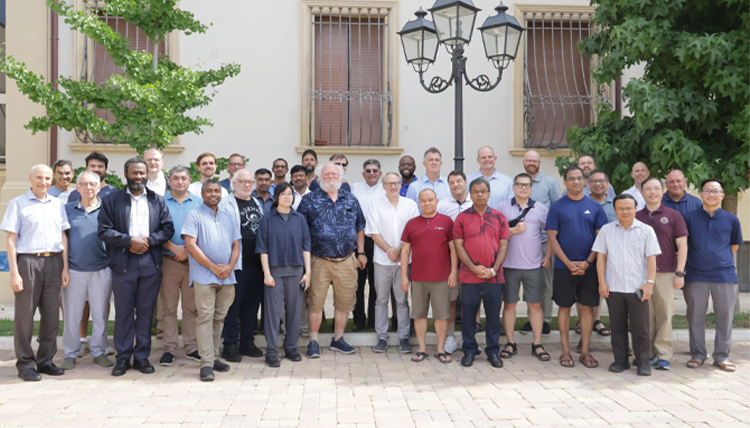
That question brought together 35 Jesuits responsible for philosophy and formation programs from Jesuit provinces across the globe at Gonzaga University's Florence campus this summer. Their task was both practical and profound: examining how virtual technologies, from the internet and social media to generative artificial intelligence, should be integrated into the spiritual, academic and pastoral formation of future Jesuit priests and brothers.
Conceived and organized through the leadership of Gonzaga University's Fr. Timothy Clancy, S.J., the conference reflected a growing conviction that artificial intelligence is not merely a technical challenge. It is a human, spiritual and cultural one.
A New Reality for the Church
The importance of the conference was confirmed with the release of Pope Leo XIV's encyclical “Magnifica Humanitas."
As the encyclical mentions at its beginning, the challenge facing the Church today bears striking similarities to one faced more than a century ago.
Clancy argues that Catholic social thought has evolved through several major stages. “Rerum Novarum” integrated faith and justice. Pope Francis expanded that vision in “Laudato Si'” by adding concern for ecology and care for our common home. Now, Clancy believes, the Church is being called to engage a fourth dimension: technology.
He describes that emerging framework as "Integral AI," the integration of faith, justice, ecology and technology into a unified approach to discernment and human development.
Rather than asking whether technology belongs in spiritual formation, Clancy believes the more pressing question is how.
"Discernment is never about whether to use technology, but which technology to use on a given occasion and how to use it most effectively," Clancy said. "The question is not only what a technology can do for us, but what it will do to us."
Taking AI Seriously
That perspective shaped the conference's central goal.
The most important goal of the conference was to help those responsible for Jesuit formation take these technologies seriously," Clancy said. "From the internet to social media to artificial intelligence, these realities are shaping the lives of the people we serve. They need to be addressed thoughtfully and responsibly within Jesuit spiritual, academic and pastoral formation."
Experts from Anthropic, several nonprofit organizations and AI Engineers from Gonzaga’s Institute for Informatics and Applied Technology (IIAT) joined the discussions, helping participants understand both the remarkable promise and the significant risks associated with emerging AI systems.
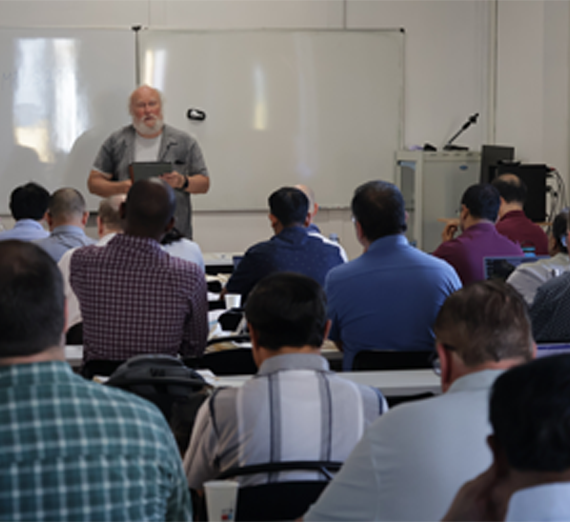
One of the conference's most memorable sessions featured Anthropic's religious outreach liaison, who offered an extended presentation on the current capabilities of Claude and the rapid pace of AI development. Participants left both inspired and challenged by the possibilities such technologies present.
Experts from across the fields of artificial intelligence, ethics, theology and higher education enriched conference discussions, helping participants explore both the extraordinary promise and the profound challenges of emerging AI systems. Contributors included representatives from Anthropic, ethical AI leaders from Europe and the United States, industry innovators and AI engineers from Gonzaga University's Institute for Informatics and Applied Technology (IIAT). Lay faculty from Jesuit universities across the country joined the dialogue alongside Jesuit educators and formation leaders representing virtually every Jesuit philosophy formation program around the globe. In all, 40 participants took part in the weeklong conference.
How Technology Shapes Human Identity
Throughout history, human identity has evolved alongside communication technologies. Oral cultures formed people through communal relationships and shared stories. Literacy fostered a more individual sense of self centered on reflection, reason and personal autonomy.
Today's digital technologies are creating something different: what Clancy describes as a "networked self."
Neither fully public nor fully private, digital identity is increasingly expressed across interconnected online and offline relationships, communities and platforms. Social media, smartphones and AI are reshaping how people experience friendship, authority, belonging, learning and even spirituality.
"The only alternative to integrating technology into our spiritual and apostolic discernment is compartmentalization and dissociation," Clancy said. "The internet, social media and GenAI are not introducing technology into spirituality. Rather, they are making the technology enabling spiritual and apostolic practices visible in a way that has become too important to ignore."
That reality has profound implications for Jesuit formation.
Questions surrounding prayer, discernment, community life, leadership, obedience, poverty and chastity all take on new dimensions in a world where digital connectivity is increasingly constant and where relationships can be mediated through screens, algorithms and AI systems.
Gonzaga’s Growing Leadership
The gathering also highlighted Gonzaga's growing leadership role within both the Society of Jesus and broader conversations about AI.
Gonzaga's Florence campus provided an ideal setting for collaboration among Jesuits representing diverse cultures, ministries and educational traditions while remaining close to the heart of the Church and the wider conversations unfolding throughout global Catholicism.
The conference also reflected conversations already taking place at Gonzaga.
Across campus, faculty and students are exploring how AI can support learning while preserving the essential goals of higher education. Gonzaga's nationally recognized "Why Are You Using AI?" initiative similarly encourages students to focus not simply on productivity, but on purpose, growth and personal responsibility similarly encourages students to focus not simply on productivity, but on purpose, growth and personal responsibility.
What Comes Next
Perhaps the most important outcome of the gathering is knowing the work has only begun
Participants are already discussing the creation of a global network dedicated to questions of Jesuit formation and artificial intelligence, connecting scholars, educators and pastoral leaders across continents.
Additional proposals include annual working conferences in Florence over the coming years, bringing together faculty members and Jesuit scholastics interested in advancing research and formation in this emerging field.
The conference is also expected to generate both a published anthology of presentations and a white paper for Jesuit leadership in Rome.
The University convened leaders from around the world, connected technological expertise with spiritual formation and contributed to the development of a distinctly Jesuit approach to what the new encyclical has identified as the defining questions of our age.
In the age of AI, what kind of people are we becoming?
"If AI mirrors us," Clancy noted, "then we need to ensure it mirrors the best of us."