
From Gonzaga to Senegal: Josh Braun (’25) Uses Engineering to Serve Others
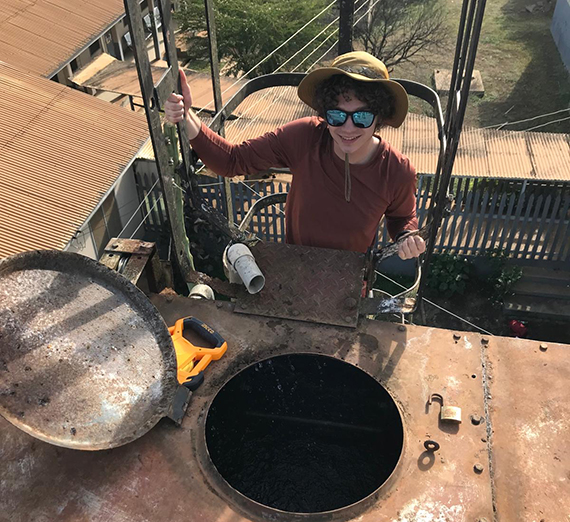
For Josh Braun (’25), civil engineering has always been about more than designing buildings, roads and water systems. It is about using those skills to make a meaningful difference in people’s lives.
After graduating with a degree in civil engineering, Braun took an unconventional path into his career. Instead of immediately entering the workforce, he spent seven months in Senegal as a civil engineering intern with Engineering Ministries International (EMI), a Christian engineering organization serving ministries around the world.
Braun discovered the opportunity through an unexpected conversation where he worked as a camp counselor. A parent who had previously worked with EMI learned that Braun was a civil engineer-in-training without concrete plans after graduation. The conversation eventually led Braun to an interview for an EMI internship. He was accepted, raised funds to support his time with the organization, and began his journey to Senegal.
Braun chose civil engineering because of its potential to create tangible improvements in people’s everyday lives.
“Buildings, roads, water systems, and other things civil engineers dedicate their lives to may be taken for granted in the day to day, but they dramatically improve the quality of life in all of our communities,” he said.
That impact became especially clear through Braun’s work on the revitalization of a hospital in Ghana. EMI’s multidisciplinary team addressed civil and structural engineering, electrical engineering, architecture, and leadership development. Braun focused on civil engineering challenges, including a severe leak in the hospital’s water tower, wastewater treatment, and the need for greater redundancy in the water supply system.
The experience gave Braun an opportunity to see the real-world impact of his education.
“For me, the transition from completing textbook problems to designing a water system that could directly improve patient care was incredibly fulfilling,” he said.
Braun credits his Gonzaga education for preparing him for the experience in more ways than simply teaching him engineering skills. His courses gave him technical knowledge and familiarity with software he could apply in a professional setting. More importantly, he learned how to approach unfamiliar problems.
“College cannot outline and train you for every problem you will ever face, but it can teach you how to go about starting to solve them, thinking about them critically, and doing it in a way which honors the people you are serving,” Braun said.
That lesson has been particularly important while working in West Africa, where engineering solutions must account for cultural, religious, environmental, and societal differences.
At the Ghana hospital, EMI worked with a local Ghanaian civil engineer to help ensure the project was culturally appropriate.
“Without that local perspective, even technically sound designs may fail to serve the people they’re intended to help,” Braun said.
Braun stresses the value of diversity in engineering. At EMI’s Senegal office, he works alongside people from Senegal, the United States, Chad, Benin and Costa Rica.
“Everyone brings their own experience and ideas to the project, which we might have never thought of otherwise,” he said.
This unique experience has also deepened his understanding of the global Christian community. Participating in a church community in Senegal has expanded that perspective and given him a deeper appreciation for the diversity of the global church.
Braun sees a strong connection between these experiences and Gonzaga’s Mission.
“I know I am stronger and more apt to face those kinds of challenges because of how Gonzaga develops the whole person,” he said.
During his first-year COM 100 course Braun wrote an essay reflecting on what he wanted from his life and career. He wrote about feeling blessed by his circumstances and wanting to use his career to bless others in return.
Years later, he has seen that idea take shape through engineering.
“The kind of engineer I want to become is someone who solves problems with technical excellence while genuinely caring for the people those solutions serve,” Braun said.
As his time with EMI comes to an end, Braun is searching for an engineering position in the Pacific Northwest. He hopes to continue his career close to home while carrying the lessons he learned in Senegal with him.
For recent graduates considering an unconventional path, Braun has one piece of advice: take the risk.