
Following the Footsteps of Paul: The Gonzaga Alumni Trek to Greece
“For what can be seen is temporary, but what cannot be seen is eternal.” − 2 Corinthians 4:18
The sapphire blue sea unfolded before us, highlighting the silhouettes of the Greek islands that hold ancient and modern secrets of history: Christian, pagan, mythological and magical.
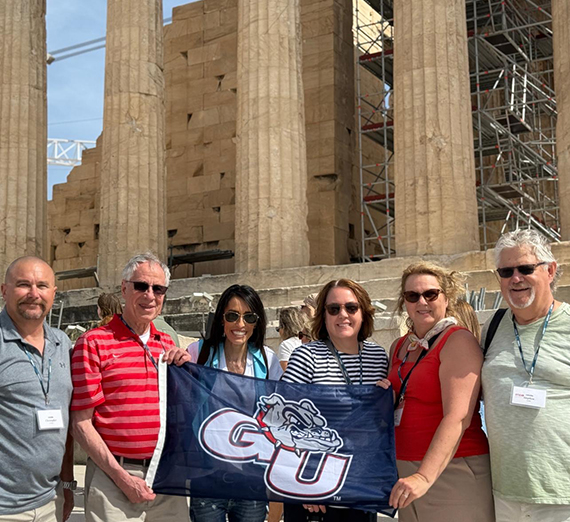
Four Gonzaga master’s graduates embarked on a journey in May through the University’s Center for Lifelong Learning and Alumni Relations Office. Their quest? To trace the footsteps of Paul in the Mediterranean by visiting places such as Corinth (Corinthians), Ephesus (Ephesians), Thessaloniki (Thessalonians), and dozens of other locations in early Christian and ancient Greek history.
On the journey were Andrea Kalochristianikas (’07, ’10 M.A.), Teresa Hutsell (’14 MSN), Candace Mumm (’11 MBA), and Professor Emeritus Eddy Birrer (’69 MBA). While the alums graduated from the same university, they came from different master’s programs and different generations. From the Silent Generation to Gen X, some were meeting each other for the first time. Kalochristianikas is a former air marshal and Golden Glove boxer. Birrer is a longtime accounting professor at Gonzaga’s School of Business Administration. Hutsell is a professional psychiatric mental health nurse practitioner. Mumm is an Emmy‑winning TV news broadcaster and former Spokane City councilwoman.
They went not just to see the Greek Isles, Türkiye and the Mediterranean. They went to see what Paul the Apostle had seen − to walk where he had walked − and, in some small way, to understand the journey that changed the course of Christianity.
Why did you decide to select this particular trip that had a religious history theme?
AK: Although I’ve visited Greece many times, this trip felt different from the moment it was offered. This was the inaugural trip for this program alongside Gonzaga’s Center for Lifelong Learning and in partnership with Colette Travel. The ease of the logistics, the comfort of our hotels, and the thoughtful pacing allowed me to be fully present, to simply take in Greece without the usual stress of planning. When Rachelle Strawther, executive director of the Center for Lifelong Learning, asked if I would lead a group of Zag alumni through the Aegean, I didn’t hesitate. I was all in. Because the truth is: Gonzaga is the reason Greece became part of my life in the first place.
Back in 2006, as an undergraduate political science major, I studied abroad at the American College of Thessaloniki in northern Greece. That experience didn’t just change my life − it rerouted it. Greece awakened something in me: a longing to understand where I came from, to seek out relatives I had only heard about, and to reconnect with a heritage that had always lived quietly in the background.
That journey eventually led me to pursue Greek citizenship. And in the spring of 2027, I will be moving there for half of each year. For sixteen years, Washington, D.C. has been my proud home and a place where Gonzaga opened doors for me to pursue a rare and meaningful career as a U.S. federal air marshal. But somewhere along the way, I began to feel a quiet shift − a longing for the rhythm of Greece, where time stretches, conversations linger, and life is lived slowly and fully. On this trip, that longing became unmistakable.
TH: I selected this trip because of its scope − how much history was involved and how much of the country we would see. The Acropolis, the largest temple in the busy city of Athens, and the monasteries in rural Meteora, with their towering spires of plateaued rock formations where monks continue to work and live, fascinated me. I’ve always loved Paul’s journey and all of the trials he had to go through. I was curious about his success through varied regions and wanted to see the places he spoke about to understand his messages better.
CM: Tracing the footsteps of Paul the Apostle intrigued me because he is considered the most prolific author of the New Testament. Recreating his journey around the Greek Isles, the Aegean seaports, and parts of Türkiye and Macedonia seemed like a once-in-a-lifetime experience. I knew it would take me back in time to better understand the cultures, beliefs, languages, customs and faiths Paul encountered on his intrepid mission as a Jewish man in foreign lands, who preached the words of Jesus and incubated the early Christian churches.
EB: The decision to join this pilgrimage began with a simple desire: to finally see Greece. After decades of teaching, mentoring and guiding students through the logic of numbers, I felt a pull toward the land whose history shaped so much of Western thought. I chose the trip primarily to see Greek sites and to learn more about Greek heritage and culture. But once I arrived, the journey became something deeper.
You climbed thousands of stair steps, walked miles through cobblestone streets and boated into small seaports. What location(s) did you find the most astonishing?
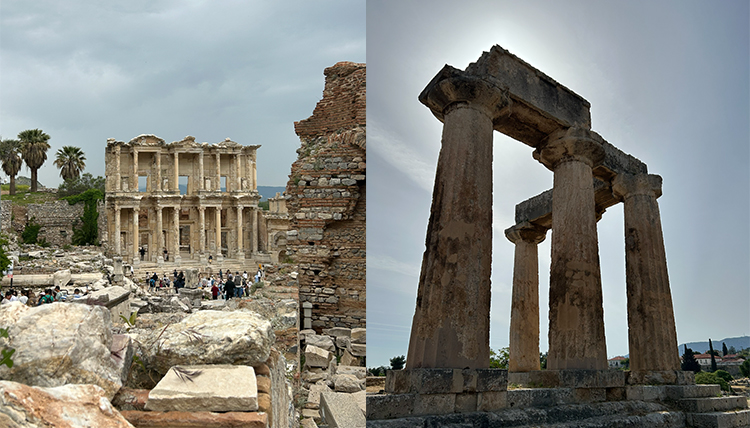
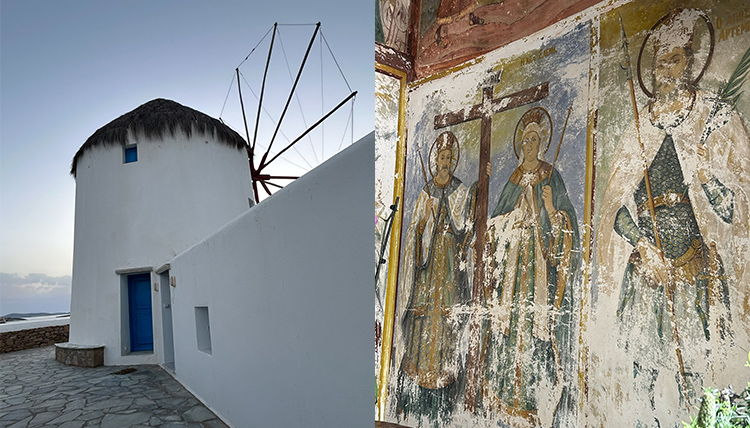
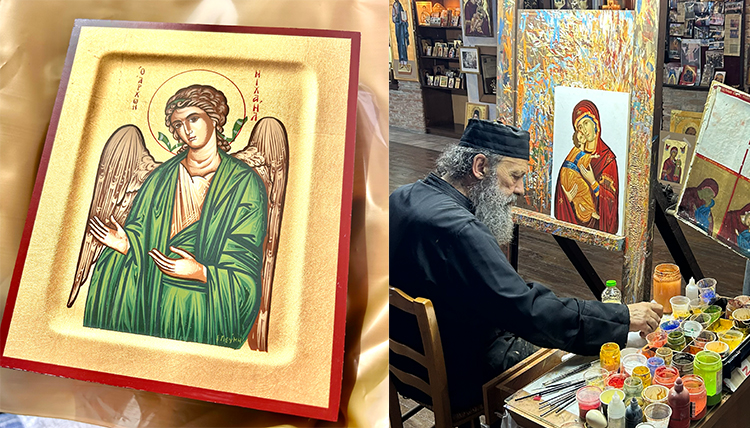
CM: While Mykonos (windmills), Santorini (blue domed hilltop houses) and Crete (the Knossos Palace) are astonishingly beautiful to see in person − and definitely were on my tourist list for pictures − three other locations felt the most powerful to experience in person. First, Mother Mary’s hideout following the crucifixion. Second, the incredibly modern marbled Ephesian city where ominous ruins still stand of a 2nd‑century library that once held thousands of the world’s most important scrolls. Third, the quiet paint shop where a Greek Orthodox priest and his wife painstakingly copy Byzantine icons of sacred religious figures using authentic egg tempera and gold‑leaf methods, dedicating their lives to spreading the message of God through art.
AK: Patmos was my favorite island we visited, and it moved me in ways I didn’t expect − the silence, the sea, the monasteries perched above the water like watchful guardians. And Thessaloniki, where Paul wrote First and Second Thessalonians, stirred something deep in me. Walking through the city where my own journey began, I felt the same spark I had felt as a student, but now with the added weight of belonging. These weren’t just historical sites. They were part of my story.
TH: I would have to say Ephesus. I felt so connected − I could truly visualize the city and get a sense of how they lived and ran businesses because so much is still there as an intact civilization. America is so young in comparison. These citizens lived thousands of years ago, and it was fascinating how they chose to live and where they lived − how they were able to do it by moving massive stones, engineering plumbing and utility systems. They had incredible ingenuity, and it’s still so well preserved at the UNESCO site. You can tell by the symbolism and the design that this was an epicenter of knowledge, art and commerce, so it makes a lot of sense why Paul felt a need to come here.
EB: Walking through Corinth, Ephesus and Thessaloniki − places I have always known to be significant to Christianity − I found myself standing in the very spaces where Paul once preached, wrote and wrestled with the earliest Christian communities. The stones, the ruins, the air itself seemed to carry echoes of those first gatherings of believers.
Did this trip change you or your faith perspective on Christianity in the historical and modern world?
TH: It didn’t change me − it reinforced the perseverance and resiliency that we all have to have in terms of a structured faith or our own faith. Those ancient communities had to have faith to survive. Today, in a world focused on instant gratification, this trip was a reminder that faith is not that way. It’s the long game. Those Christians, Paul and others, were persecuted for their faith, and we all need to be reminded to be more tolerant, not cast stones, and offer respect to others’ personal experiences and cultures.
AK: My Greek Orthodox faith has always been a steady anchor, but during my time at Gonzaga − especially under the mentorship of my beloved Father Al Morisette, S.J. − my eyes were opened to the roots behind that faith. He guided me, challenged me, and helped me understand the depth and history of Christianity in ways that shaped me for the rest of his life. Seeing the places where the center of Christianity took form − where Paul walked, preached, wrote and struggled − strengthened that faith in ways I didn’t anticipate. And sharing all of this with fellow Zags meant the world to me.
EB: I want to emphasize that the journey was rich even beyond its spiritual focus. There were numerous trip highlights, even without the emphasis on tracing the footsteps of Paul. I often reflected that I wish I had been able to share this journey with my beloved and late wife, TerryKay. I’m sorry I never toured there with her. She would have loved this trip, but even so, I am grateful I was able to go with new friends from Gonzaga.
A report on the trip to Greece must include the mention of the incredible food and the calming presence of cats in every port. What are your quick takeaways from the tour?
TH: Greek chicken, Greek potatoes and moussaka! My husband Chris and I have been making Greek food since we got back.
AK: I watched our group fall in love with the same things that captured me years ago − the food that tastes like sunshine, the cats that rule every port like tiny philosophers, and the warmth of people who treat strangers like family. I saw Greece through their eyes, and in doing so, I saw it anew.
EB: I am still in quiet awe of the beauty and varied scenery of Greece − a landscape that shifts from turquoise coastlines to rugged mountains to sun washed villages. It’s a true tapestry of wonder. I was also struck by the beauty of the Greek iconography that dominated the mountaintop monasteries we visited.
CM: We went back in time 2,000+ years in just a week and a half − climbed endless stony staircases, whispered inside hallowed monastic caves where stories of the Bible were said to have formed, and learned how history and mythical mystery live side by side in modern Greek culture. While I made sure to bring back a typical tourist cluster of souvenirs, the one I cherish most may have helped spare our home in the Spokane fires. It is the artwork by Greek priest Father Pefkis, who painted an icon on wood of the guardian Angel Michael in bold green and gold colors. Thankfully, it still sits there every day watching over us.