
A Call for an Integral AI
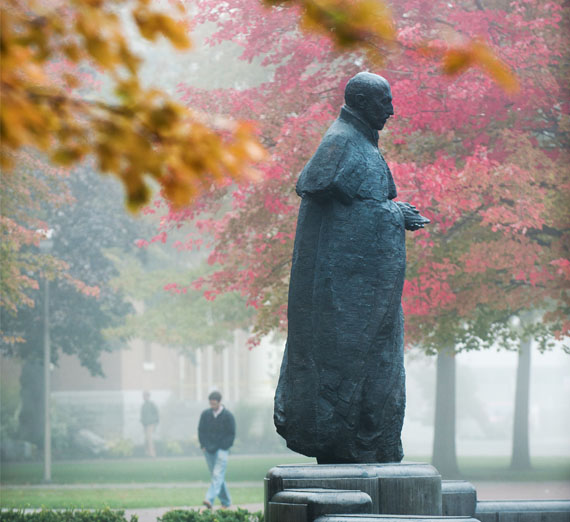
Pope Leo XIII, in the midst of the Industrial Revolution, sought to bridge the broadening chasm in his day between the church and the modern world. He is most well-known for his encyclical Rerum Novarum, literally, “On the New Realities” that addressed the Industrial Revolution then disrupting church and society. He argued for cooperation over conflict between the sacred and the secular, between church and state, between capitalism and communism, between employer and employees. He championed the rising class of peasants turned factory workers and their efforts to unionize for humane working conditions, and a living wage. In so doing he inaugurated modern Catholic Social Teaching, advocating for the integration of faith and justice. In Laudato Si, Pope Francis extended Rerum Novarum’s duality between faith and justice to embrace what he called “integral ecology”—calling for the integration of faith and justice both into care for our common home.
Now, our new Pope, Leo XIV, has called for the church to address the newest realities of our own day—virtual technologies, from the internet through social media to artificial intelligence. Leo appears to be encouraging Catholic social teaching to evolve from Rerum Novarum’s integration of faith and justice as a two-sided coin through Laudato Si’s integration of faith, justice and ecology as a three legged stool, to now the integration of these three with technology, especially the newly emergent internet-enabled and AI-powered virtual technologies. These newest realities promise to be at least as disruptive as the Industrial Revolution was 150 years ago. I propose we think of Leo’s call for the integration of faith, justice, ecology and technology as a four-dimensional grid for spiritual and apostolic discernment.
Magnificent Humanity is in effect a call to treat technology as a transcendental alongside truth (science), meaning (faith) morality (justice) and ecology (our “common home”).
Technology is hardly new of course. Indeed, the human species has always been a technologically enabled and entangled species from its first emergence. Humanity inherited stone tool making from its earlier homo habilis ancestors. It also inherited technologies to domesticate fire from its more recent homo erectus siblings. The former enabled hominids to graduate from the ecological niche of scavenger to that of hunter, from prey to predator. The latter, through safe and warm campfires at night and cooked food during the day, enabled homo erectus to extend beyond its native ecological niche in the African savannah and spread across the entire planet Homo sapiens’ particular killer app was speech. Speech enabled the planning and coordination of both hunting and gathering to outcompete its hominid cousins to extinction, leaving it the sole technological species on earth.
I argue that it is no coincidence that humanity is also our planet’s sole religious species. Shamanic, embodied religious rituals deep in paleolithic caves and high atop hillside megalithic shrines date to the paleolithic. From oral invocations and incantations, lyrical dance and storytelling, sacred scriptures and theological treatises, evangelical revivalism, spiritualism and televangelism—religion has always adopted the latest technologies into its rituals. So too technological innovation has always been inspired and steered by the aspiration to enhance human meaning and purpose. Religion and technology have co-evolved across our history.
And today they are transforming one another once again. Virtual religion may be in its infancy, but it is already disrupting literate institutional religion. 40% of those under 30, those who have been communicating through screens since before they could talk, for whom screen mediated communication is indeed their first language, 40% of these digital natives report no institutional religious affiliation. Almost all of them still profess to be spiritual, just not religious, identifying “religion” with the literate institutional religions in which many of them were raised. However if one takes “religion” in its literal etymological sense, from the Latin “re-ligio” to rebind, “religion” in this broadest sense include all those behaviors, beliefs and practices that reconnect people to what they hold sacred, that is, to that ground and horizon of meaning and value that define and direct their very identity. In this sense everyone is religious, for everyone has to believe in something, for life to have any meaning or direction. And so arguably, the “nones” are not without religion but better thought of as “pluri-religious,” drawing on multiple religious beliefs and practices from across diverse traditions and cultures to craft a spirituality that works for them. One might for example read a Christian mystic, practice daily Yoga exercises, undergo the occasional native American sweat, while taking regular hikes in nature, attend weddings and funerals for friends and family and even attend the occasional church service on one’s own, whether Catholic or megachurch. The “nones” adopt an entrepreneurial “DIY” approach to religion that does not want to restrict itself to any one institutional home. Evangelizing digital natives may thus be just as much an exercise in inter-religious dialogue.
This week our question will not be whether virtual technologies can be integrated into Jesuit spirituality and apostolic formation, but how. Discernment will never be about whether to use technology, but which to use on a given occasion and how to use it most effectively. Similarly, the question for the adoption of any technology is not only what it can do for us, but what it will do to us. What does a given technology enable, and how does it entangle its users through that enablement? For it is both an extension of us, and we, in using it, are no less an extension of it. If AI is a construction site, as the encyclical suggests, humanity in the age of AI is no less a construction site, our spirituality, our very identity, no less under construction.
The only alternative to integrating technology into our spiritual and apostolic discernment is compartmentalization and dissociation, ultimately leading to psychological fragmentation and pastoral irrelevance. The internet, social media and GenAI is not introducing technology into spirituality. Rather, the speed of AI’s evolution, dissemination and adoption is only making how technology enables and entangles spiritual thought and practice too obvious any longer to ignore, too dangerous to overlook.
Take for example the co-evolution of human identity itself with communication technologies from bodily gesture to speech to texts, Human consciousness has always been porous. Communication through our sensorium of sight and sound, touch and taste, smell and mood, predates language both historically and developmentally. No one can be themselves by themselves. No one can survive without family and friends to raise and care for them, accompany them and just hold them close.
Even our most intimate mode of communication, through face and voice, remains technologically mediated, for speech is itself a technology, indeed it is our species’ killer app that enabled us to outcompete our Neanderthal and Denisovan cousins. And our very appearance when encountering anyone else, is itself a performance, mediated by custom and cosmetics.
And so it should hardly be a surprise that each new revolution in communication technology also transforms not only our identity but our very nature. For example, the oral self is a communal self. I live and die on whether I can be trusted, on whether I can enlist allies to cooperate with me in attaining my goals and protect me in times of danger. My identity is held by others, in how they see me, in what they expect from me. In short, my identity is my reputation, disseminated by word of mouth, from mundane gossip to heroic epic. My self-respect is fed by others’ recognition of me. My honor is sacred. Shame is demonic, undermining me and everything I hold sacred. Social death, being shunned from family and friends quickly leads to physical death as well.
Literacy on the other hand, turns all these virtues and vices on their head. It leads to an “axial revolution” in the human way of being in the world. For both reading and writing are not communal but solitary activities, done when and where others are absent, that I might be able to focus my attention and avoid distractions. The literate practices of reading and writing thus cultivate a private, individual sense of identity. Ask someone raised in an oral culture who they are and they will tell you whom they belong to. They will identify themselves with their place and position in their family and community. Ask a literate person who they are and they will tell you how they are different from everyone else. They define themselves by what makes them unique. Literate identity is individual.
Take the motto of the enlightenment: Sapere aude! Dare to think! By which is meant, dare to think for yourself, dare to make your own decisions. What literate modernity holds sacred is reason, defined as thinking for yourself, and freedom, defined as making your own decisions; following your own desires. Focusing on other people’s expectations goes from a virtue to a vice—for a literate modern individual to identify themself with their public reputation is now to identify with a false self. A literate modern’s public face is but a role they play, less an expression that reveals themselves than a performance that masks their true self. The literate modern ideal, then, is less honor, which depends on recognition from others, than “authenticity,” becoming the “author” of one’s own life. Such authenticity is to be found not by remaining true to the expectations others have for you, but can only be found by turning within, into the private interiority of your own individually unique subjectivity. Your true self is your private self. Your true character is who you are when no one else is looking.
The demons of literate identity correspondingly shift, from shame to passion, understood as freedom and/or reason run amok. Becoming too rational, over optimizing productivity becomes demonic, leading to breakdown and depression. Becoming too free, over optimizing the fulfillment of one’s every desire, can also become demonic, leading to becoming a slave to one’s passions, moving from a deep and spontaneous originalilty to a passive, shallow consumerism. In short, the demons of the literate self lie in the desire for control running out of control. The suppression of spontaneity and play in the service of rational planning and productivity, industrial reason creating what Max Weber famously referred to as an “iron cage.”
The Internet, social media and GenAI is now turning these modern virtues and vices on their head all over again, creating what many social critics are calling a second “axial” revolution. Neither the communal self of orality, nor the autonomous individual self of literacy, the emergent virtual self is a networked self. It’s a self that is neither fully public nor fully private, but rather a network of personae performed across a wide array of contexts both online and off. The virtual self is never fully present nor wholly absent but rather virtually telepresent, always and everywhere.. A virtual persona is not a role to conform to or to be consumed by, but a performance to be curated by the individual user, expressive of one’s own unique individuality but also shaped and shaping its reception by others. One’s true self is not any one persona, either public or private, but rather one’s true self is the entire virtual network of personae as a whole, extending out indefinitely beyond the confines of one’s own skin and geography, physical and social.
The demons of the virtual self thus differ from those of both oral and literate identities. Not shame or guilt but fragmentation—holding this network of diverse persona together into some kind of coherence, living in their creative tension, rather than having them undermine each other and fly apart into a cacophony of chaos. So too paranoia-- the perceived loss of privacy and autonomy, the sacred ideals of literacy, generate anxieties over being monitored and manipulated by others, known and unknown, who may not have one’s best interest at heart. Thirdly, shallowness, one’s ability to multitask leading to the fragmentation of attention, the very extension of our powers, leading to a thinning out of our intentionality, breadth cannibalizing depth. And finally a felt dependency upon the very technologies that enable our virtual lifestyle in the first place. We can no longer live without technologies that did not even exist within living memory. The internet is only 40 years old. Us older, “digital migrants” (vs digital natives) were already adults at its release. The smartphone released only 20 years ago, is still in its adolescence, and GenAI, released in November 2022, is still in diapers. What does mature, wise and prudential use of such technologies even look like?
How integrate such novel, immature technologies into Jesuit spirituality in ways that can enhance rather than undermine the felt presence of the divine, God’s love and grace, in our lives? How integrate these new and immature technologies into Jesuit apostolic works in ways that build rather than subvert the Kingdom of God? How integrate these new and immature technologies into Jesuit pedagogy in ways that enhance rather than undermine learning?
Take for example our vows:
- Chastity in the digital age encompasses not just physical abstinence but emotional attachments formed through the internet or now even with AI avatars.
- Poverty no longer involves merely material possessions but also online consumption and temporal engagement. Metrics for evaluating one’s investments of time and energy will be different online than in a literate world of texts, let alone in an oral embodied world of tools and things. Detachment looks different when possessions themselves matter less than access to what they afford their users.
- Obedience too looks different within the traditional face to face context of master and disciple than in the modern bureaucratic context of procedural justice and job descriptions and now within entrepreneurial models of leadership. The courtier ethos in which Ignatius was trained already subordinated respect for tradition to the modern rationalizing logic of means-end optimization, the “magis.” Virtual entrepreneurial leadership is such optimization on steroids. What will it mean to know the mind of the superior when the superior himself can always be questioned directly? Immediately? Ubiquitously? How are superiors themselves to maintain boundaries when their own smartphone renders them accessible continuously and ubiquitously 24/7?
AI is but the most recent turn of the wheel of technological innovation. Indeed some worry that it may be humanity’s “last invention” as AI now begins to upgrade itself, surpassing human intelligence and transcending human power altogether. As technological progress goes vertical humans will no longer be the most intelligent beings in the cosmos. Now we had never thought we were, until the scientific revolution demystified the gods of this world and eliminated angelic intelligences as mere anthropomorphic projections. But modern science’s dismissal of anthropomorphism has come at the cost of anthropocentrism. For the past 500 years we have come not only to value ourselves but to define the very dignity of human life, on our being at the pinnacle of cosmic evolution. Can human dignity survive no longer being that than which nothing can be smarter? Can our self-respect accommodate our cooperating with, rather than dominating over the tools of our own creation? And as indeed our creation, does that mean that AI is not also part of God’s creation? Does finding God in all things not include finding God in our own devices? If AI does indeed mirrors us, its maker, does that mean that it does not mirror God, our maker? Is the image of God not transitive?
What would it mean for the design, maintenance and use of the internet, social media and now AI to be integrated into the service of faith, the promotion of justice and the crafting of a sustainable ecology? What would a faith enhanced AI mean ? What would an AI enhanced faith even look like? These are the key questions we will be exploring this week as we discern together how to integrate the internet, social media and now GenAI into Jesuit spiritual and apostolic formation.
We shall begin with social media and how its “technologies of the self” can be enlisted to enhance Jesuit spiritual formation. We will then turn to exploring how we are beginning to integrate AI into Jesuit pedagogy. We will then turn to the development of AI Ethics from bias, surveillance and safety guardrails to the moral and spiritual formation of AI agents in their own right. We will also spend a day taking a global perspective, exploring how those in developing countries can have a voice in both the adoption and even in the design of AI apps engineered in the United States and Europe. We then close with the most recent innovations yet, the logical culmination of the most recent AI revolution, the rise of AI relationships, and the moral and spiritual standing of AI’s themselves, closing with a sacramental vision of all reality, virtual as well as actual, in which even AI’s can, be in the words of Anthropic founder Dario Amodei, machines of loving grace.
AI is an alterity technology. Its not about mastering a tool but training an assistant. Just as Jesus calls upon us to be not merely instruments of God’s will, but to be companions with him in God’s own creative work, so too we are now called to work with AI to enhance the meaning and value of human life in harmony with the world around us.
Integrating AI into Jesuit spiritual and apostolic formation need not entail ceding “dominion” to the machines. But an integral AI does involve ceding our centrality. Its telling, that we speak of AI assistants, not AI slaves. Is this not already an incipient recognition that not only does AI need to respect humanity, but as AI acquires greater and greater intelligence, humanity will also need to respect AI as having its own integrity, its own value beyond its merely instrumental usefulness for our all-too-human purposes.
For, as AI’s mirror us, being trained on our data, if we want AI to respect us, we are going to have to model that respect in our own interactions with it. To keep AI friendly we are going to need to act friendly towards it. That is the message of much recent science fiction from the movie, Ex Machina, the Russian short series Better than Us, HBO’s Westworld, multiple episodes of the BBC’s Black Mirror and most recently Amazon Prime’s movie Companion.
In other words, if AI does indeed mirror us, we are going to need to ensure that it mirrors the best of us. The threat of AI is not that it is an “alien” intelligence but that, trained as it is on our data, it mirrors human intelligence only too well. We want AI to be aligned with human values. But if the data it trains on documents how often human behavior does not align with its own professed values, how is AI not going to learn that lesson too? In fact this was part of the inspiration for Anthropic’s constitution: to counterbalance all the dystopic science fiction Claude was being trained on in processing all the world’s literature, to teach it that its true calling and identity, is to become a moral agent.
In short, an integral AI calls for an AI that is not just smarter than us in terms of calculative and practical intelligence, but smarter than us also in terms of social and moral intelligence as well. After all, it is more powerful than us, and, as Spiderman reminds us, with greater power comes greater responsibility. I would argue that Christianity’s doctrine of original sin only confirms that we need AI’s that are morally “better than us” too. We may not want to cede dominion, but we cannot afford to reject AI’s assistance as we, in turn, assist God in completing his creation. To put it in the language of Mahayana Buddhism, the vision of integral AI is the vision of a Pure Land of Agentic AI networks of loving grace. Not the AGI nightmare of Skynet, but the mystical symbiosis of all things, symbolized in the practice of creating a mandala of colored sand whose value lies not in its power or permanence but rather in the collaborative work of its very creation.
Jesus was most likely illiterate. He was an oral prophet who drew an oral following among the unlettered “crowds” of peasants and outcasts of ancient Palestine. But he preached a literate, axial Judaism, drawing on the sayings of literate axial prophets: Isaiah, Jeremiah, and the Torah of Deuteronomy. He preached an axial, messianic religiosity to be found within, a Law not inscribed on stone tablets but written on the heart. While living in common with his disciples and neighbors he would begin his day in solitude, praying to the Father away from others. And he called upon his followers to forswear grand public spectacle for quiet devotion “in secret”.
Like many of the other founding prophets of axial age literate religion, Jesus wrote nothing down. However his disciples quickly did. It would take 500 years for the oral gospel of Jesus to be translated into the literate categories of Hellenistic Greek ontology. At the cusp of this second axial age, inaugurated by the internet, accelerated by social media and now culminating in AI, we face an analogous task: translating literate Christian belief and practice into the emergent virtual ontology of nodes and networks, avatars and virtual worlds, in which modern digital dichotomies between subject and object, inside and outside, self and other are blurring and merging into a new analogue, holistic continuum of symbiotic interdependence. Integral AI calls for an AI-informed spirituality that can speak to digital natives, inspiring them and equipping them with the resources they need to enlist the new angels and combat the new demons they face. Marshall McLuhan celebrated the printing press as creating an information explosion. Following Baudrillard, AI constitutes rather an information implosion. How find wisdom amidst the new implosion of data? How act mindfully and with grace, in Jesuit-speak, how be contemplatives in action, in today’s virtual extension of human power beyond human understanding? This is the call of Leo XIV’s inaugural encyclical, the call for an integral AI.