

DPLS 700 Leadership Theory
Fall 08 3 Units
Professor: Chris Francovich, Ed.D.
Office: TBA
Office Phone: 509-313-3592
E-mail: francovich@gonzaga.edu
Office hours: Please call for an appointment: 509.313.3592
Class Time & Place: Friday Evening – 6 pm – 10 pm
Room: TBA
Dates: Fall 2008 – September 5, 19, October 3, 17, 24, November 7, 21, December 5
COURSE OVERVIEW
The conceptual framework of the Doctoral Program in Leadership Studies (DPLS) focuses on consciousness, agency, ethics, and decision making at the personal level; human behavior, decision making, delegation, and management at the organizational level; and human behavior, decision making and policy at the global level. These ‘levels’ are all linked to the phenomenological, moral, philosophical, scientific, and cultural experiences of human beings. This required course is an inquiry into the individual person as both leader and follower and will be an extended discussion on moral, philosophical, scientific, and cultural issues and frames of reference. The texts that we will read and discuss during the first part of the course are a blend of the philosophy, sociology, and psychology of experience, the self, identity, and human action. These texts will form a background and context for our later survey of a theory of leadership and leadership studies and Servant Leadership. The intent of this course is to establish frames of reference for leadership at the personal level of experience.
COURSE HOPES AND AIMS
- Define and understand epistemological assumptions and frameworks related to thinking about the human person
- Critically analyze selected dominant structuring frameworks in the social sciences
- Develop and generate dialogue around theoretical perspectives of development of the self
- Create an autobiographical narrative describing your ‘self’
- Explore a variety of leadership models, frameworks, & theories
- Explore and discuss Servant Leadership in depth
- Identify, analyze, & evaluate the reciprocal effects of society, scale & structure on the self
- Link theories of the development of the ‘self’ to your narrative and to your experience and goals related to the larger topic of leadership
- Work collaboratively to assess each other’s work and create joint meaning
COURSE STRUCTURE
This course is composed of reading, writing, class discussion, lecture, group presentations, and video. We will form small working & presentation groups during the first class that will remain intact throughout the course. These groups or cohorts will serve multiple functions. Among them are:
Content & process support - group participants will have an opportunity to discuss readings, past discussions, and class assignments.
Paper review and editing - Prior to turning in completed papers each person’s paper will be read and edited by their peers in a structured editing activity. The DPLS course paper rubric will be introduced and used as the context for this joint editing process. It is recognized that underlying good writing is both clarity of thought and an adequate grasp of concepts and frameworks. These forums used in conjunction with my own critique of student work will assist in the development of sound scholarship.
Project and activity work - One of our first activities will be for groups to develop an agreement about group process and individual responsibilities. The major group activity will be the TCOL presentations (see below).
Most 4 hour classes will open with an overview of the readings. Small group discussions of course notes and readings will then follow. We will generally take a 20-30 minute break. Following the break we will do presentations, conduct full class debriefs, continue class discussion, or review readings or video presentations.
It is also my habit to prepare interpretive notes of the readings and make them available on Blackboard prior to class. I use these notes to frame my ideas for dialogue when we meet. I also hope that my interpretations inspire students to interpret and analyze the readings from their own perspectives. I then prepare a number of slides based on my notes to stimulate discussion and/or communicate concepts and ideas. There may also be additional readings posted on Blackboard.
ASSIGNMENTS AND GRADING
Read all materials and attend all classes and participate with all your attention. Please let me know if you intend to miss any classes. (10% of grade)
TCOL Presentations. 10%
Pre-Class reading & assignment. Acts of Meaning. Write a 6 page response. See Blackboard for the writing prompt. 20%
Reading Notes - See Blackboard > Course Documents area for description. 20%
Final paper – Autobiographical Narrative - Please see Blackboard > Course Documents area for Final Assignment (40% of grade) Final Draft due on December 10th.
EXPECTATIONS AND ASSESSMENT
This course requires a significant amount of reading and many of the books may be written in a style unfamiliar to you. I encourage you to devote ample time to the reading. There is also a reading ‘assignment’ due at the beginning of most classes. See Blackboard for more detail.
Assessment of doctoral work in leadership studies is challenging. Interdisciplinary work dealing with complex and sometimes contested theories and concepts requires (from my perspective) a tolerance for uncertainty, ambiguity, and contingency. I am also struck by the need for a high degree of self-directed behavior on the part of doctoral students and candidates. I would like my teaching style, assessment policy, and rubrics to support and facilitate self-direction. The DPLS is an interdisciplinary program and students come with a variety of experiences, different types of expertise, and different professional and scholarly needs. It is my intention to honor, help cultivate, and support these differences.
However, behind my philosophical questions about assessment and uncertainty in evaluating anyone in an absolute manner there does reside (in my view) a set of skills that serve to hold and shape work with language in a complex world. I believe we need a grammar, syntax, and semantics of clarity, coherence, depth, and breadth. My assumption at the beginning of the term is that all of the students in this class possess the requisite skills, talents, and propensities needed to be clear, cogent, and complete. I admit that the standards I refer to are objectively stated and subjectively enacted. My assessment will be based on the quality and content of expressed thought as exhibited in both written assignments and classroom presentations and participation.
GRADING CRITERIA FOR WRITTEN WORK (adapted from the DPLS Academic papers rubric)
Content Criteria:
The content of papers should reflect the level and style of content in readings and discussions. There is an expectation that doctoral students will reach outside of their comfort zone in terms of appropriation of ideas, concepts, and frameworks. The substance of papers and other writings will be weighed against the general level of discourse in class meetings and the style and density of expression of the readings.
Thought and Expression Criteria
Student writing should raise vital questions or issues, formulating them clearly and precisely. I will be looking for evidence of breadth and depth and the insightful, in-depth analysis of complex ideas. Main points should be developed and supported with relevant information and references that are appropriately incorporated.
The organization and logic of your writing is critical. The expectation is for well focused, well organized, and well reasoned conclusions. The writing should flow with the reader not getting lost or having to work to determine what you are saying.
There is also an expectation that your writing/thinking has an open and inclusive character when exploring alternative systems of thought, recognizing and assessing, as appropriate, their assumptions, implications, and/or practical consequences.
Technical Criteria
Your writing should be clear and demonstrate a high level of vocabulary through careful word choice. Sentences should be constructed skillfully and purposefully. Transitions between paragraphs and sections are important and will evaluated for their efficacy in weaving your concepts, themes, and purposes together. Summaries and conclusions are also vital elements of good writing and will be evaluated based on their appropriateness and effectiveness.
Of course grammar, punctuation, and spelling are expected to be flawless. Careful proof reading of your paper is a basic expectation.
Papers, unless otherwise noted are to be completed in APA style. References should be cited properly within the text and a complete reference list must be provided. Appropriate use of headings will also be noted.
Point/Grade correspondence:
95-100% = A
90-94.99% = A-
85-90% = B
80-84.99% = B-
REQUIRED TEXTS
Bruner, J. (1990). Acts of meaning. Cambridge, MA: Harvard University Press.
Greenleaf, R. K. (1977). Servant Leadership: A Journey into the Nature of Legitimate Power & Greatness. Mahwah, New Jersey: Paulist Press. 25th Anniversary Edition.
Reed, E. S. (1996). The necessity of experience: Yale University Press.
Wertsch, J. V. (1998). Mind as Action. New York: Oxford University Press.
The Nature of Leadership. (2004). Antonakis, J., Cianciolo, A.T., & Sternberg, R.J., (Eds.). Thousand Oaks, California: Sage Publications.
Wren, J. T., Hicks, D. A., & Price, T. L. (2004). Traditional classics on leadership. Cheltenham ; Northampton, MA: Elgar.
Other readings assigned (and provided on Blackboard)
Meindl, J. R., & Ehrlich, S. B. (1987). The romance of leadership and the evaluation of organizational performance. The Academy of Management Journal, 30(1), 91-109.
Meindl, J. R., Ehrlich, S. B., & Dukerich, J. M. (1985). The romance of leadership. Administrative Science Quarterly, 30(1), 78-102.
Fall 2007 DPLS 700— Leadership Theory: Class Outline
Pre-class reading: Acts of Meaning – Read entire book and prepare a 6 page response – penultimate draft due at first meeting. See Blackboard for more specific guidance.
Sept. 5 Meeting
Beginnings and Introductions
Course Overview > Group Assignments > Presentations > Collaboration.
Discussion of Acts of Meaning
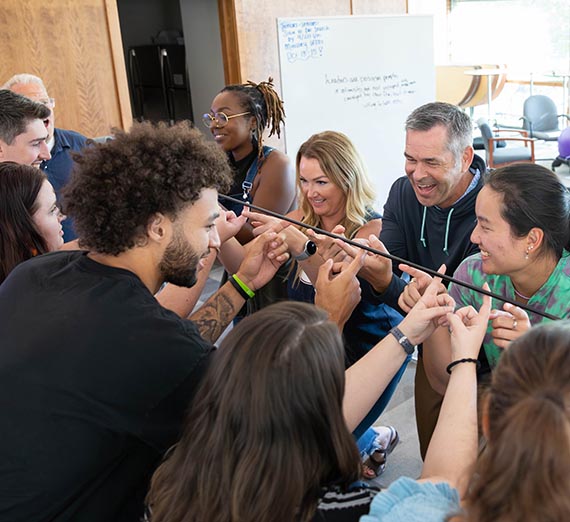
Group Activity
Readings for Sept. 19th meeting: The Necessity of Experience pp. 1 – 67; Nature of Leadership Chapters 1 – 8; Also read both articles by Meindl et al. (on Blackboard) and be prepared to discuss these articles in light of the Necessity of Experience.
For September 19th meeting: Traditional Classics on Leadership Group Assignment #1 (TCOL #1) – see Blackboard
Sept. 19 Meeting
Reading notes due on Blackboard
Class discussion on the Necessity of Experience and Meindl Readings
TCOL Presentation
Group Work – The Nature of Leadership
Readings for October 3. The Necessity of Experience pp. 68- 132; Nature of Leadership Chapters 9 – 12
For Oct. 3rd meeting: Traditional Classics on Leadership Group Assignment #2
October 3 Meeting
Reading notes due
Discussion of Readings
TCOL Presentation
Group Work – Nature of Leadership
Read for Oct. 17: The Necessity of Experience pp. 133 - 163; Nature of Leadership Chapters 13-14
For Oct. 17th meeting: Traditional Classics on Leadership Group Assignment #3
Oct. 17 Class
Reading notes due
Discussion of Readings
TCOL Presentation
Group Work
Read for Oct. 24: Mind as Action pp. 3 – 108
For Oct. 24th meeting: Traditional Classics on Leadership Group Assignment #4
Oct. 24 Class
Reading notes due
Discussion of Readings
TCOL Presentation
Group Work – Mind as Action
Read for Nov. 7: Mind as Action pp. 109 – end of book Servant Leadership pp. 1 – 146
For Nov. 7th meeting: Traditional Classics on Leadership Group Assignment #5
Nov. 7 Class
Reading notes due
Discussion of Readings
TCOL Presentation
Group Work – Servant Leadership
Read for Nov. 21: Servant Leadership pp. 147 – 359
For Nov. 21st meeting: Traditional Classics on Leadership Group Assignment #6
Nov. 21 Class
Reading notes due
Discussion of Readings
TCOL#6 Presentation
Group Work - Servant Leadership
Read for Dec. 5. TBA
Dec. 5 Class
Discussion of Readings
Group Work
Final Paper due December 10th.