

|
| CRIM 101 Intro to Criminal Justice |
3.00 credits |
|
 |
A critical analysis of the way the American criminal justice system operates, focusing on the nature of law, the police, and the courts. |
| |
|
| CRIM 240 Issues in Law Enforcement |
3.00 credits |
|
 |
Examines currents issues in law enforcement such as corruption, brutality, use of deadly force, politics and policy administration, resource management, stress, community relations, and major court decisions. |
| |
|
| CRIM 340 Policing in the U.S. |
3.00 credits |
|
 |
This course examines law enforcement in American society with a focus on empirical research and sociological and criminological theory. Students will review the historical development of policing in the United States, the role of the police in contemporary society, the structure and responsibility of law enforcement agencies in this country, and the interaction between institutional and individual aspects of police work. Students will also be expected to research and theory on controversial issues in law enforcement, including the use of force, police deviance, the use of discretion, the impact of social inequality on enforcement, and policing in the mass media. |
| |
|
| CRIM 352 Corrections |
3.00 credits |
|
 |
An examination of the American correctional system, from its origins to the present day. Focuses on philosophical and policy issues and debates that confront our society in attempting to deal with criminal offenders. Field trips to correctional facilities. |
| |
|
| CRIM 354 Extremism in America |
3.00 credits |
|
 |
What is extremism and terrorism? Are there differences in extremist and terrorist ideologies? What makes a person turn to terrorism? Is Right Wing terrorism similar to Left Wing or single issue terrorism/extremism? Should we be more afraid of international or domestic terrorism? What is the government and law enforcement doing to protect the American people? What does the future hold for terrorism in America? By the end of the course students will have working knowledge of the following: an understanding of extremism and terrorism in the United States, different American extremist ideologies and groups, law enforcement restrictions in investigating terrorism and past and future trends in American terrorism. |
| |
|
| CRIM 355 Elite and White Collar Crime |
3.00 credits |
|
 |
This course examines organizational crimes and the crimes of the rich and powerful. The nature and extent of various types of white collar crime are described, discussed and analyzed and methods of controlling this form of crime are presented. This course also provides a survey of various sociological explanations for white collar crime. |
| |
|
| CRIM 357 Inequality and Crime |
3.00 credits |
|
 |
This course reviews the relationship between criminal justice and race, class and gender in history and in contemporary America. The class examines whether members of one race, class or gender commit more crimes than members of other groups, and if so, why? It also explores how and why members of one race, class or gender are treated differently by the criminal justice system than members of other groups. The differential treatment in police work, in courts and in corrections are looked at, and the class assesses how and why these differences may occur more or less in one or another of these branches of the criminal justice system. |
| |
|
| CRIM 361 Crime & Gender |
3.00 credits |
|
 |
An exploration of the ways in which gender influences who is and is not considered criminal, why women are often socialized to be the victims of crime and men the perpetrators of such actions, and how such behaviors are used to maintain and support pre-existing inequalities. As such, special attention will also be paid to how issues of social class, ethnicity, and sexual orientation often temper these societal outcomes. |
| |
|
| CRIM 380 Crim/Civil Trial Procedure |
.00 - 3.00 credits |
|
 |
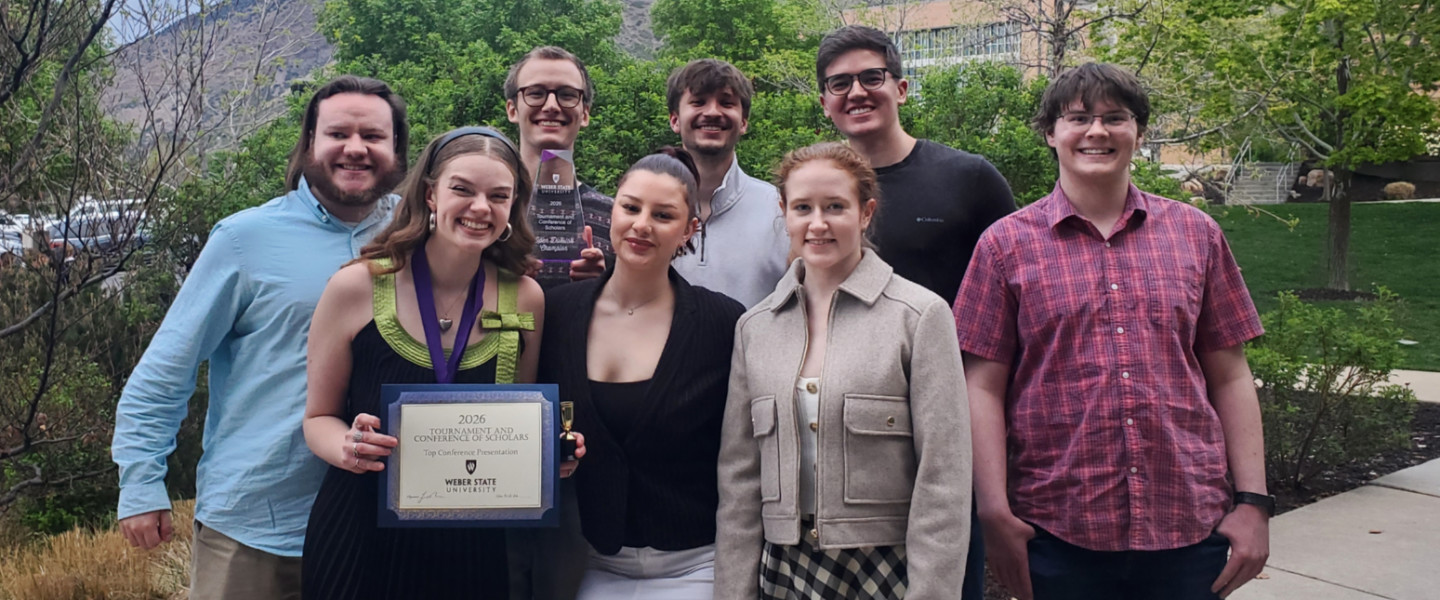
Full court case preparation in a year-long mock trial team environment, including knowledge of the law, opening and closing statements, directs, redirects, cross-examinations, courtroom procedure and demeanor. Formal American Mock Trial competition takes place during spring semester, at the end of which credit will be granted for successful completion of the course. Intended only for those with a serious interest in law. Cannot be repeated for credit. |
| |
|
| CRIM 386 Criminal Law |
3.00 credits |
|
 |
Substantive criminal law; principles, functions, and limits; basic crime categories with extensive case analysis; state and national legal research materials. |
| |
|
| CRIM 390 American Court System |
3.00 credits |
|
 |
A hands-on class conducted by a Superior Court Judge. Students observe actual trials and are instructed about the proceedings by the judge. |
| |
|
| CRIM 395 Topics in Criminal Justice |
3.00 credits |
|
 |
Specific topics to be chosen by faculty. |
| |
|
| CRIM 396 Topics in Criminal Justice |
3.00 credits |
|
 |
Specific topics to be chosen by faculty. |
| |
|
| CRIM 397 Topics in Criminal Justice |
3.00 credits |
|
 |
Specific topics to be chosen by faculty. |
| |
|
| CRIM 398 Topics in Criminal Justice |
3.00 credits |
|
 |
Specific topics to be chosen by faculty. |
| |
|
| CRIM 399 Topics in Criminal Justice |
3.00 credits |
|
 |
Specific topics to be chosen by faculty. |
| |
|
| CRIM 465 Comparative Criminal Justice |
3.00 credits |
|
 |
A comparison of criminal justice systems from around the world using the Internet and a seminar format. |
| |
|
| CRIM 490 Dir Read in Criminal Justice |
1.00 - 4.00 credits |
|
 |
Supervised readings in the criminal justice area. |
| |
|
| CRIM 494 Senior Thesis |
3.00 credits |
|
 |
Students with a 3.70 GPA in the Criminal Justice major and a 3.30 overall GPA who wish to graduate with departmental honors in criminal justice must enroll in this course two semesters prior to their graduation and complete an honors thesis. The thesis may be a significant expansion of the student's work in SOCI 304 or CRIM 499. A committee of three faculty members will direct the thesis. Two members of the committee must be from the Criminal Justice/Sociology Department, and one may be from another department. The chair of the committee will be the instructor of record. The committee's decision about whether to award Departmental Honors is independent of the course grade. |
| |
|
| CRIM 495 SPD Cooperative Education |
1.00 credit |
|
 |
The course involves a 40 hour training academy and a commitment of at least 20 hours a month to the Spokane Police Department. Students will provide low priority responses to citizen needs such as property recovery and accident reporting. |
| |
|
| CRIM 496 Practicum in Criminal Justice |
1.00 - 3.00 credits |
|
 |
Supervised experience for Criminal Justice majors in selected criminal justice agencies such as The Spokane County Prosecutor's Office, The Spokane County Public Defender's Office, or the Spokane County Juvenile Court. |
| |
|
| CRIM 497 Criminal Justice Summer Intern |
1.00 - 10.00 credits |
|
 |
This is a limited program for third and fourth year students who will spend a minimum of 40 hours per week for ten weeks in the summer with a participating criminal justice agency in varied work and observer experience with both line and staff assignments. |
| |
|
| CRIM 499 Criminal Theory & Measurement |
3.00 credits |
|
 |
An advanced class in criminological theory and methods. In a seminar format students will review and discuss current criminological research and theories. Required of all Criminal Justice majors and fulfills the comprehensive examination requirement. Spring. |
| |
| Prerequisite:
|
SOCI 304 Minimum Grade: D
and (SOCI 350 Minimum Grade: D
or SOCI 351 Minimum Grade: D
or SOCI 353 Minimum Grade: D) |
|
|
|
| |
|